6 Healthy Dinner Bowls for an Anti-Inflammatory Diet
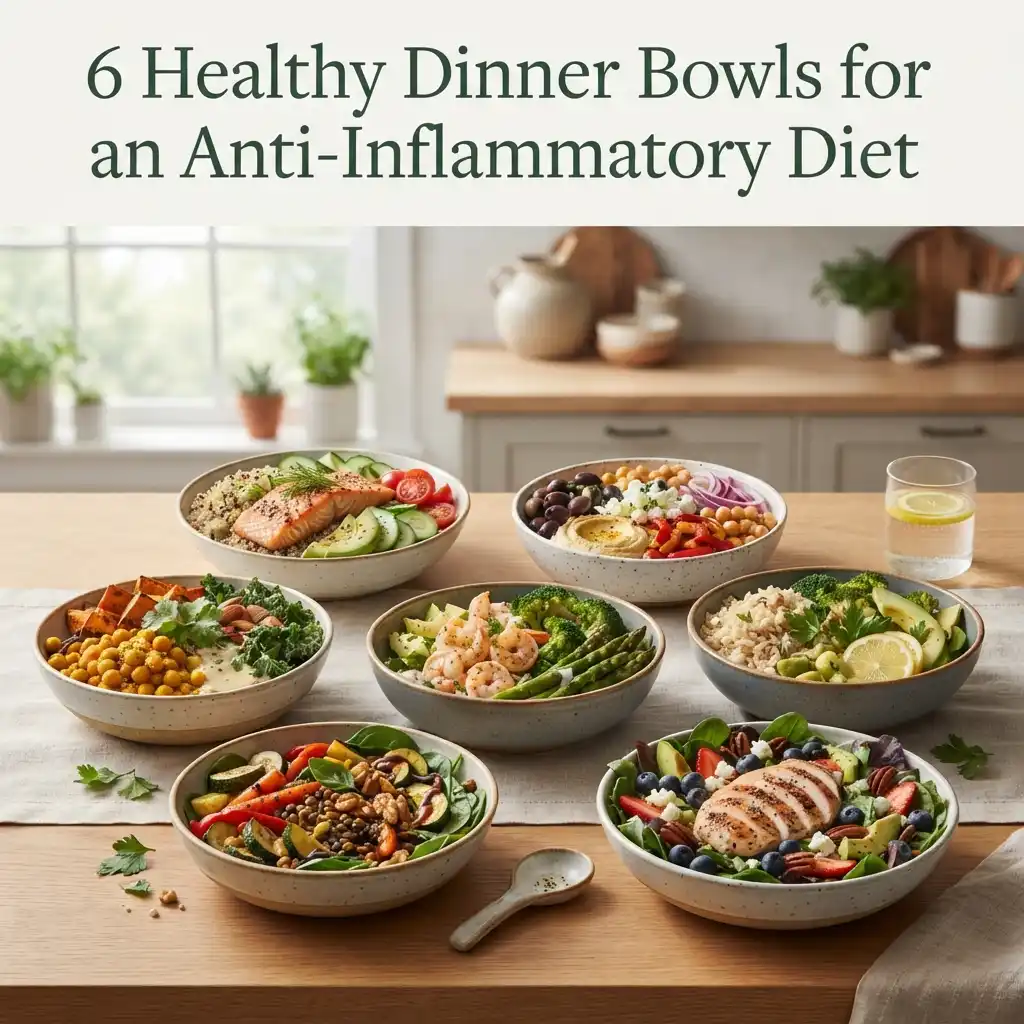
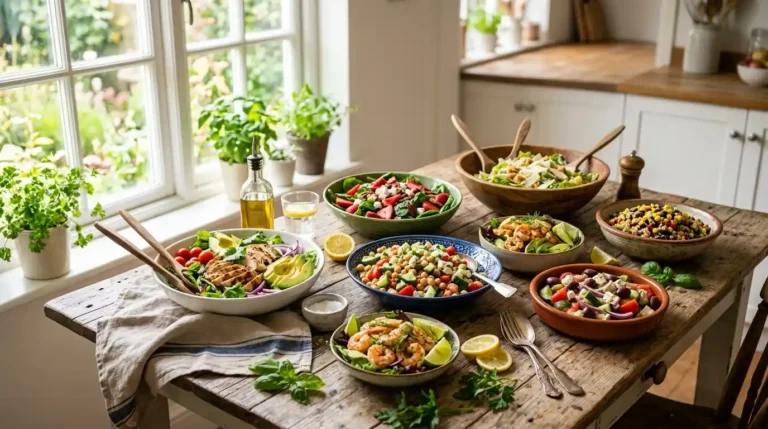
Craving a dinner that tastes genuinely delicious but still fits an anti-inflammatory eating style? These healthy dinner bowls make that goal ridiculously easy. Each bowl combines colorful vegetables, satisfying protein, fiber-rich carbohydrates, and healthy fats, so you can build a meal that feels hearty without feeling heavy.
I love dinner bowls because they give you plenty of room to improvise. You can swap ingredients based on what you already have in the fridge, which means fewer sad vegetables hiding in the back of the crisper drawer. Ready to make healthy eating feel a little less boring? Let’s get into it.
What Makes a Dinner Bowl Anti-Inflammatory?
An anti-inflammatory diet generally emphasizes whole foods such as vegetables, fruits, legumes, whole grains, nuts, seeds, fish, and healthy fats. These foods provide nutrients and plant compounds that can support overall health while helping you create balanced meals.
You don’t need to follow complicated food rules to build a nourishing bowl. Start with a protein, add plenty of colorful vegetables, choose a high-fiber carbohydrate, and finish with a source of healthy fat. FYI, you also don’t need to ban every food you enjoy just because someone online declared it “bad.” Balance still matters.
A Simple Bowl Formula
Use this easy formula whenever you want to create your own healthy dinner bowl:
- Protein: salmon, chicken, beans, lentils, tofu, or chickpeas
- Vegetables: spinach, broccoli, peppers, carrots, tomatoes, or cabbage
- Whole-food carbohydrate: quinoa, brown rice, sweet potato, or farro
- Healthy fat: avocado, olive oil, walnuts, pumpkin seeds, or tahini
- Flavor boosters: lemon, garlic, herbs, ginger, turmeric, or yogurt-based sauces
With that formula, you can create dozens of combinations without repeating the exact same dinner every night.
1. Lemon Garlic Salmon & Quinoa Bowl
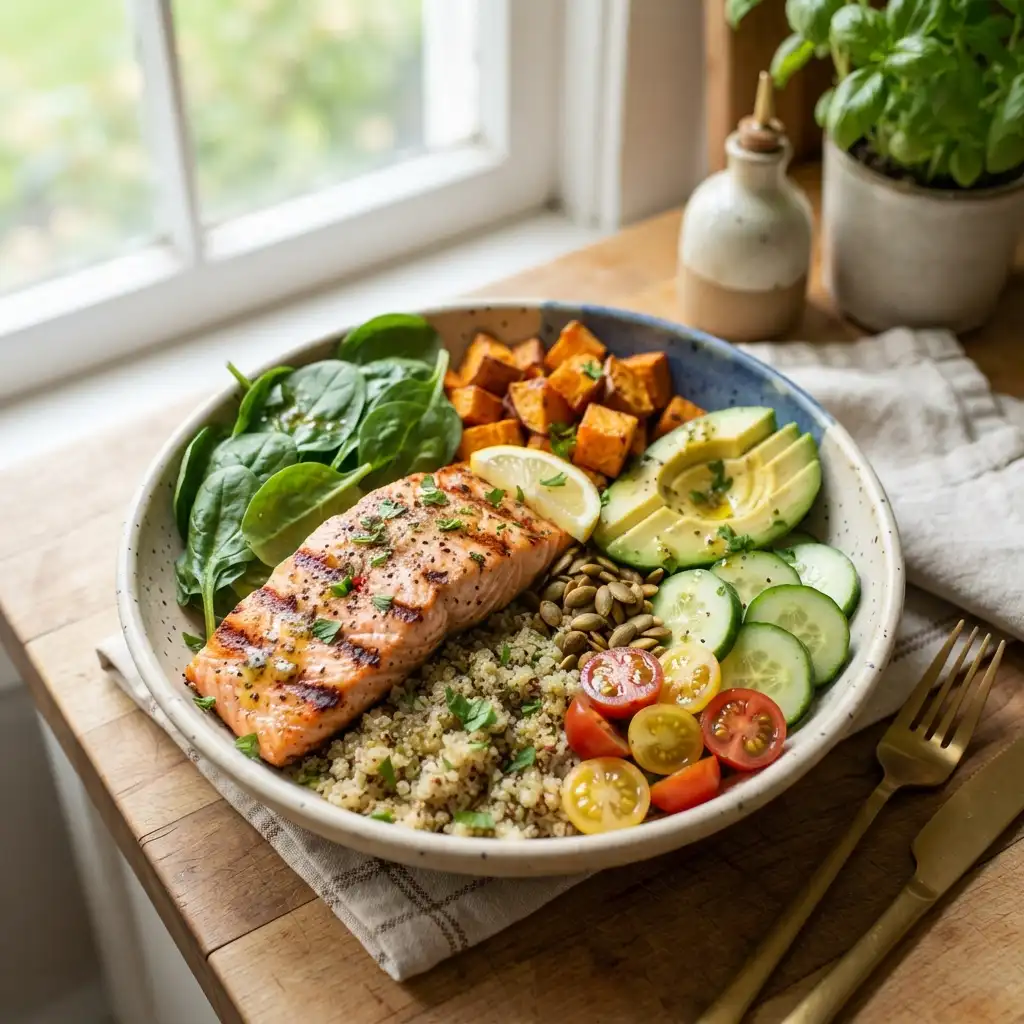
This salmon bowl deserves a permanent spot in your dinner rotation. Salmon provides protein and omega-3 fatty acids, while quinoa adds fiber and plant-based protein to create a satisfying foundation. Add roasted vegetables and a bright lemon dressing, and suddenly healthy dinner sounds much more exciting.
Start with cooked quinoa and top it with oven-roasted salmon, broccoli, cherry tomatoes, cucumber, and avocado. The combination gives you creamy avocado, flaky salmon, crisp cucumber, and caramelized vegetables in every bite. Honestly, that texture variety does half the work.
For the dressing, whisk together olive oil, fresh lemon juice, minced garlic, black pepper, and a little chopped parsley. Drizzle it over the bowl just before serving so the flavors stay fresh and bright. Want even more flavor? Add a small pinch of turmeric or grated ginger to the dressing.
Easy Swaps
You can replace quinoa with brown rice, farro, or another whole grain you enjoy. You can also use canned salmon when you need a faster option. Add spinach or arugula underneath everything if you want to sneak in even more greens.
2. Mediterranean Chickpea Power Bowl
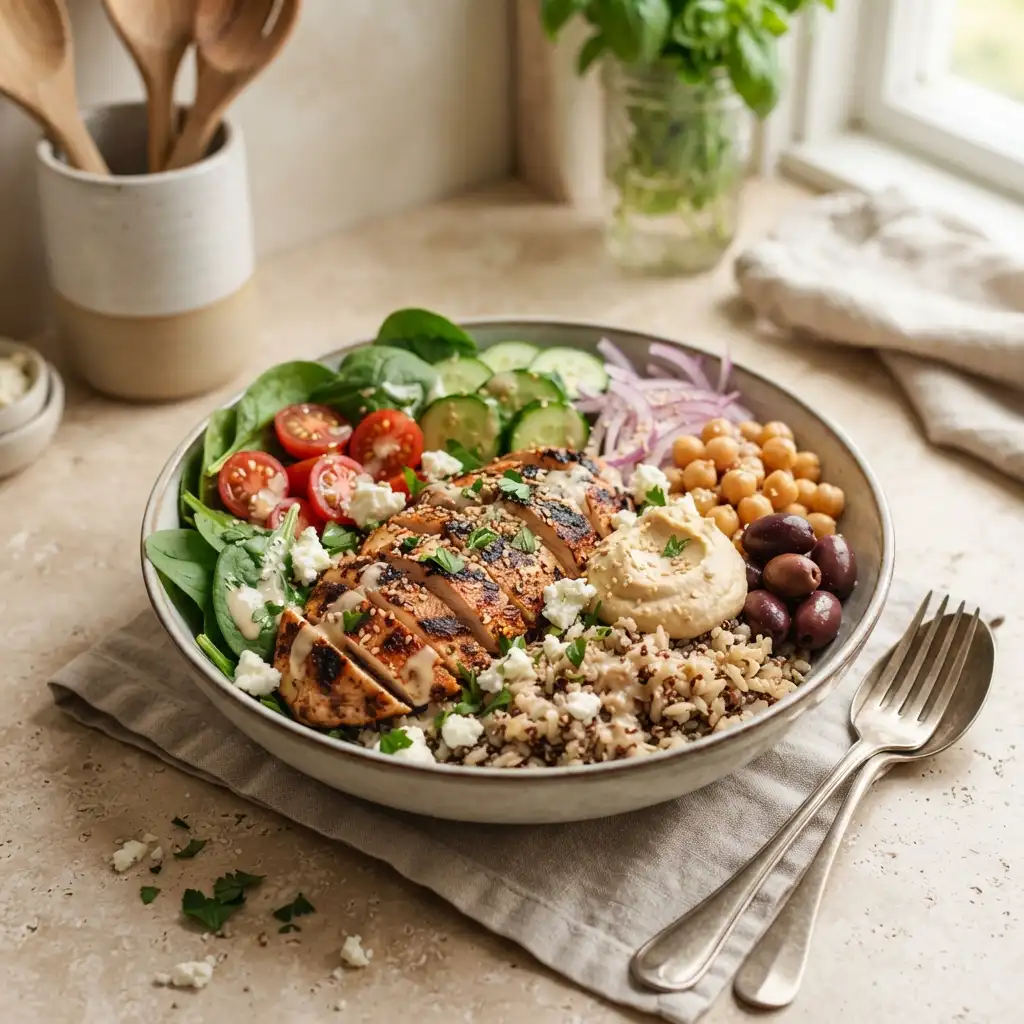
If you love Mediterranean flavors, this bowl might become your new favorite. Chickpeas provide plant-based protein and fiber, while tomatoes, cucumbers, greens, and herbs bring plenty of freshness. A little hummus or tahini sauce pulls everything together without requiring complicated cooking.
Build the bowl with chickpeas, quinoa or brown rice, cucumber, cherry tomatoes, spinach, red onion, and roasted red peppers. Add a spoonful of hummus in the center and sprinkle chopped parsley over the top. You can also add olives if you enjoy their salty, briny flavor.
For a quick dressing, combine tahini, lemon juice, water, garlic, and black pepper. Stir until the mixture becomes creamy and smooth, then drizzle it across the bowl. IMO, the dressing makes this meal feel far more indulgent than the ingredient list suggests.
Why This Bowl Works
The combination of legumes, vegetables, whole grains, and healthy fats creates a balanced dinner that can keep you satisfied. Chickpeas also add fiber, which makes them especially useful when you want a filling plant-based meal. You can prepare the ingredients ahead of time and assemble individual bowls throughout the week.
3. Turmeric Chicken & Sweet Potato Bowl
This colorful chicken bowl brings serious comfort-food energy without relying on heavy sauces. Sweet potatoes provide a naturally sweet base, while seasoned chicken adds plenty of protein. Add greens and avocado, and you have a balanced dinner that looks as good as it tastes.
Cube a sweet potato and roast it with olive oil, black pepper, garlic powder, and a little turmeric. Cook seasoned chicken breast or boneless chicken thighs until tender, then slice them into bite-sized pieces. Layer everything over spinach or kale and add avocado on top.
Make the Chicken Extra Flavorful
Mix turmeric with garlic, paprika, black pepper, and olive oil before coating the chicken. The spices create a warm, savory flavor without requiring a sugary sauce. A squeeze of lemon at the end also wakes up the entire bowl.
You can easily change this bowl depending on what you have available. Swap chicken for chickpeas, lentils, or tofu when you want a vegetarian option. You can also replace sweet potatoes with roasted butternut squash for a slightly different flavor.
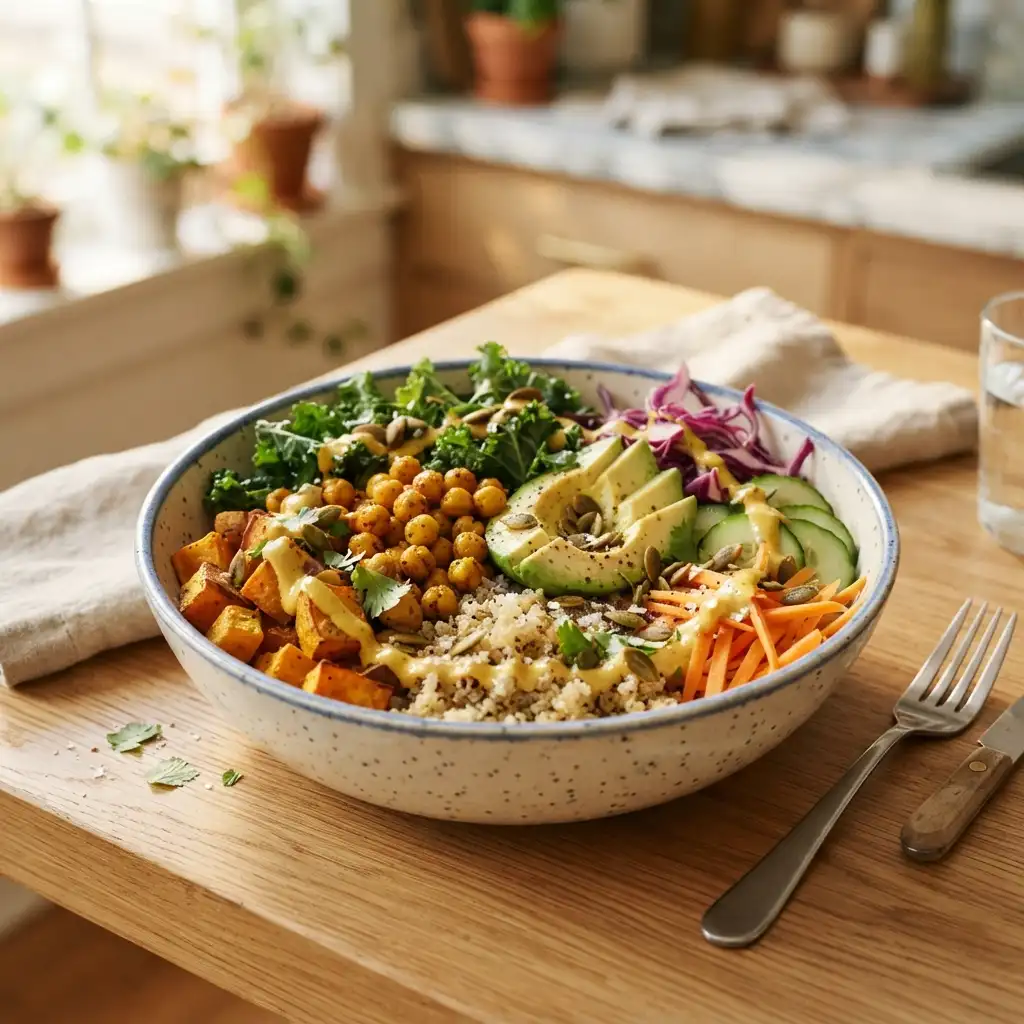
4. Lentil & Roasted Vegetable Bowl
Lentils might not sound glamorous at first, but give them the right toppings and they become surprisingly delicious. They provide plant-based protein, fiber, and a hearty texture that works beautifully in dinner bowls. Roasted vegetables add sweetness and depth, so you won’t miss a heavy sauce.
Start with cooked green or brown lentils and add roasted carrots, zucchini, broccoli, red peppers, and red onion. Place everything over a bed of leafy greens or quinoa. Finish the bowl with pumpkin seeds for crunch and a simple lemon-olive oil dressing.
Add More Flavor
Roast the vegetables until the edges become golden and slightly crisp. That little bit of caramelization makes a huge difference in flavor. You can also add fresh parsley, cilantro, or dill after cooking to give the bowl a brighter finish.
If you meal-prep regularly, this bowl works particularly well. Cook a large batch of lentils and roasted vegetables, then store them separately. When dinner arrives, you simply assemble everything and add your dressing.
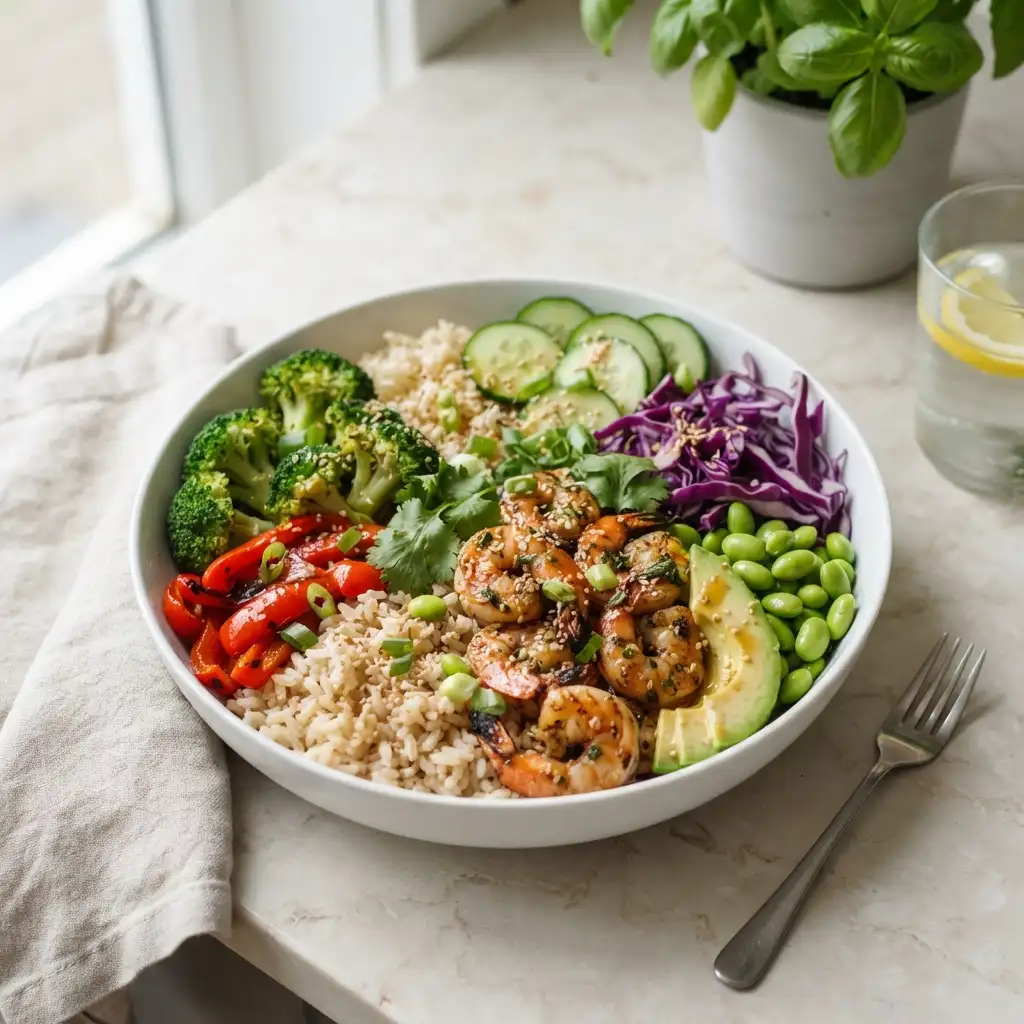
5. Ginger Tofu & Brown Rice Bowl
Tofu makes an excellent base for a plant-forward anti-inflammatory dinner bowl because it provides protein and absorbs sauces beautifully. Pair it with brown rice, colorful vegetables, and a ginger-forward dressing for a meal that feels fresh and satisfying. Even tofu skeptics might reconsider their position after trying crispy seasoned tofu.
Press firm tofu to remove excess moisture, then cut it into cubes. Toss the cubes with olive oil, garlic, ginger, and a little low-sodium soy sauce before roasting or pan-searing them until golden. The crisp edges give the tofu a much better texture than simply tossing plain cubes into a bowl.
Build the Bowl
Layer brown rice with crispy tofu, shredded cabbage, carrots, broccoli, edamame, and cucumber. Add sesame seeds or chopped walnuts for extra crunch. Finish everything with a ginger-lemon dressing for a bright, savory flavor.
You can use quinoa instead of brown rice if you prefer. You can also add avocado when you want extra creaminess. The best part? You can adjust the vegetables based on the season, so the bowl never has to taste exactly the same twice.
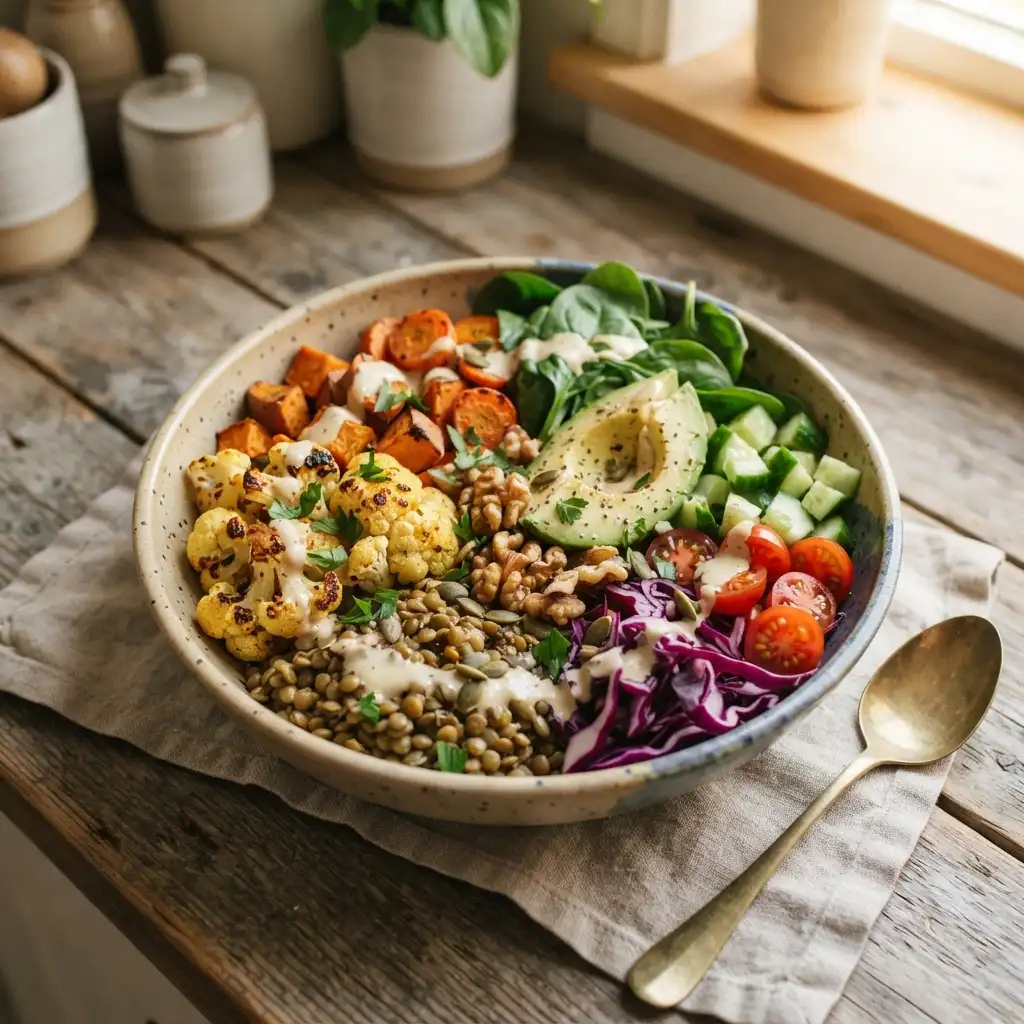
6. Berry, Walnut & Chicken Grain Bowl
Yes, berries can absolutely belong in a dinner bowl. Their natural sweetness pairs surprisingly well with savory chicken, leafy greens, crunchy walnuts, and whole grains. If you enjoy sweet-and-savory combinations, this bowl offers something a little different from the usual dinner routine.
Start with cooked farro, quinoa, or brown rice and add sliced grilled chicken. Then pile on baby spinach, blueberries or strawberries, cucumber, walnuts, and avocado. The colors alone make this bowl look like something you would happily photograph before eating.
For the dressing, whisk together extra-virgin olive oil, lemon juice, Dijon mustard, and a small amount of mashed berries. Add black pepper and fresh herbs if you like. Keep the dressing lightly tangy so it complements the fruit instead of turning the bowl into dessert.
Easy Vegetarian Version
Skip the chicken and add chickpeas, lentils, or edamame instead. You can also sprinkle hemp seeds or pumpkin seeds over the top for extra texture. This simple swap turns the bowl into a satisfying vegetarian dinner without changing the overall flavor profile.
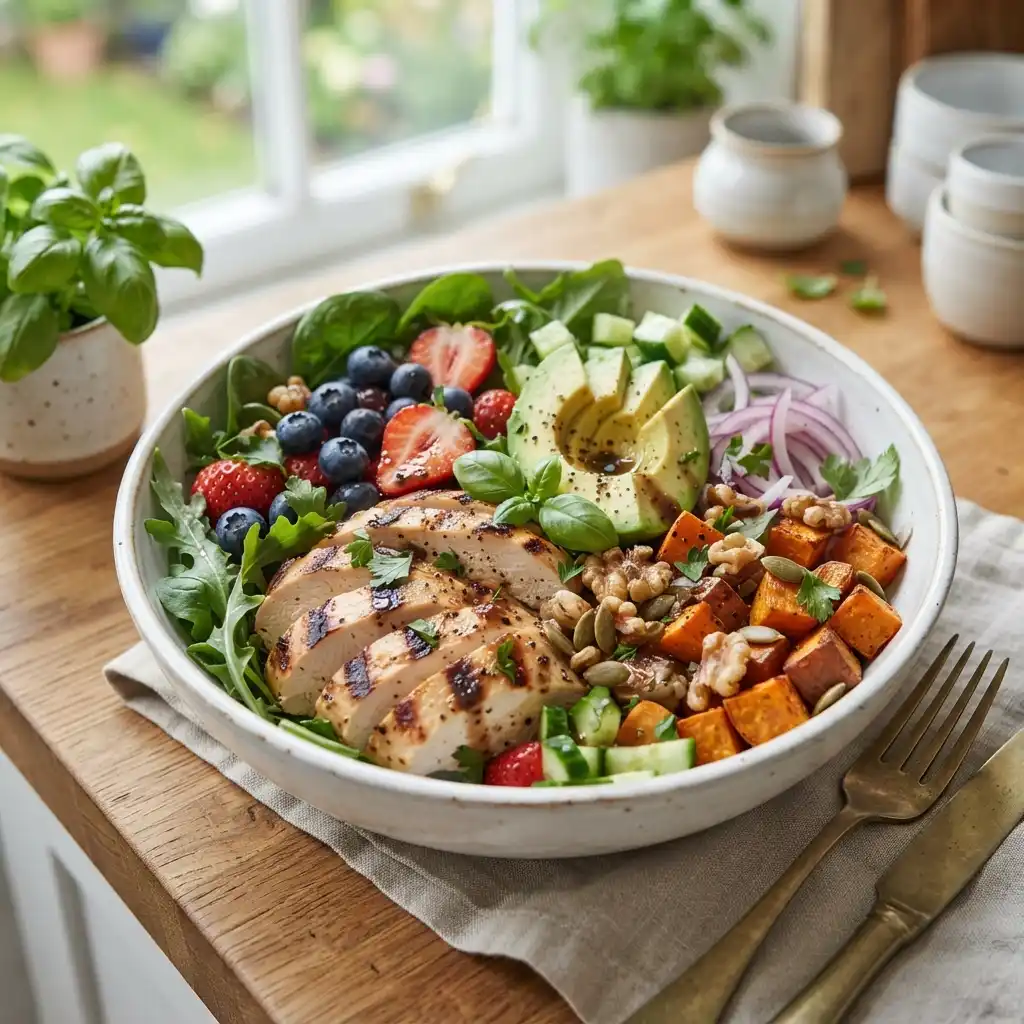
How to Build Better Anti-Inflammatory Dinner Bowls
The secret to a great bowl doesn’t involve complicated cooking techniques. You simply need variety, balance, color, and texture. When you combine different food groups, you create meals that feel much more satisfying than a plate containing one lonely vegetable and a sad piece of chicken.
Try to include several colors whenever possible. Dark leafy greens, orange sweet potatoes, red peppers, purple cabbage, berries, tomatoes, and green avocado all bring different nutrients and textures to your meal. Ever noticed how a colorful bowl instantly looks more appetizing? Your eyes eat first, after all.
Keep These Ingredients Handy
A well-stocked kitchen makes healthy dinner bowls much easier to prepare. Keep a few flexible staples available so you can mix and match meals throughout the week.
- Canned chickpeas and lentils
- Quinoa and brown rice
- Frozen broccoli and spinach
- Sweet potatoes
- Avocados
- Canned or frozen salmon
- Chicken breast or thighs
- Firm tofu
- Walnuts and pumpkin seeds
- Extra-virgin olive oil
- Lemons and fresh garlic
- Ginger and turmeric
You don’t need every ingredient at once. Choose a few proteins, two or three vegetables, one or two grains, and a couple of flavorful toppings. That small collection can create surprisingly many combinations.
Easy Meal Prep for Healthy Dinner Bowls
Meal prep can save you from the classic “I’m hungry, so I guess cereal counts as dinner” situation. Cook your grains and proteins ahead of time, then roast a large tray of vegetables while they cook. Store each component separately so you can create different combinations throughout the week.
Prepare sauces and dressings in small jars and keep them refrigerated. Add them right before eating so your vegetables and grains maintain their texture. You can also prepare chopped vegetables in advance and keep them ready for quick assembly.
A Simple Prep Routine
Try this routine once or twice each week:
- Cook one large batch of quinoa, rice, or another whole grain.
- Roast two trays of mixed vegetables.
- Prepare one protein such as chicken, tofu, salmon, or lentils.
- Wash and chop fresh vegetables.
- Mix one or two simple dressings.
- Store everything separately in airtight containers.
With those ingredients ready, you can assemble a nutritious dinner in minutes. That convenience makes it much easier to stick with healthy eating when life gets busy.
How to Keep Anti-Inflammatory Bowls Interesting
Eating the same bowl every day can get boring fast. Change your sauces, herbs, vegetables, and protein sources instead of rebuilding the entire meal from scratch. One week you might use lemon and garlic, while the next week you might reach for ginger, tahini, or fresh herbs.
Texture also matters more than people realize. Combine creamy avocado with crunchy seeds, tender grains with crisp vegetables, and roasted ingredients with fresh greens. Those little contrasts make each bite more interesting.
Don’t forget seasoning. Garlic, ginger, turmeric, cinnamon, cumin, paprika, black pepper, fresh herbs, and citrus can transform simple ingredients without adding complicated sauces. Good seasoning can make healthy food taste like something you actually wanted to eat, which sounds obvious but somehow gets forgotten constantly.
Final Thoughts on Healthy Anti-Inflammatory Dinner Bowls
These six healthy dinner bowls prove that an anti-inflammatory eating style doesn’t have to feel restrictive or repetitive. Salmon and quinoa offer a protein-rich option, while chickpeas and lentils make excellent plant-based choices. Chicken, tofu, sweet potatoes, whole grains, colorful vegetables, berries, nuts, and healthy fats give you plenty of combinations to explore.
The biggest takeaway? Build your bowl around whole, minimally processed foods and choose plenty of colorful plant foods. You don’t need perfection at every meal, and you certainly don’t need to turn dinner into a chemistry experiment.
Start with one bowl you genuinely want to eat, prepare a few ingredients ahead of time, and make small changes as you go. Which one would I make first? Probably the lemon garlic salmon bowl—because healthy dinner should still make you excited to sit down and eat. 🙂