6 Anti-Inflammatory Recipes That Are Healthy & Delicious
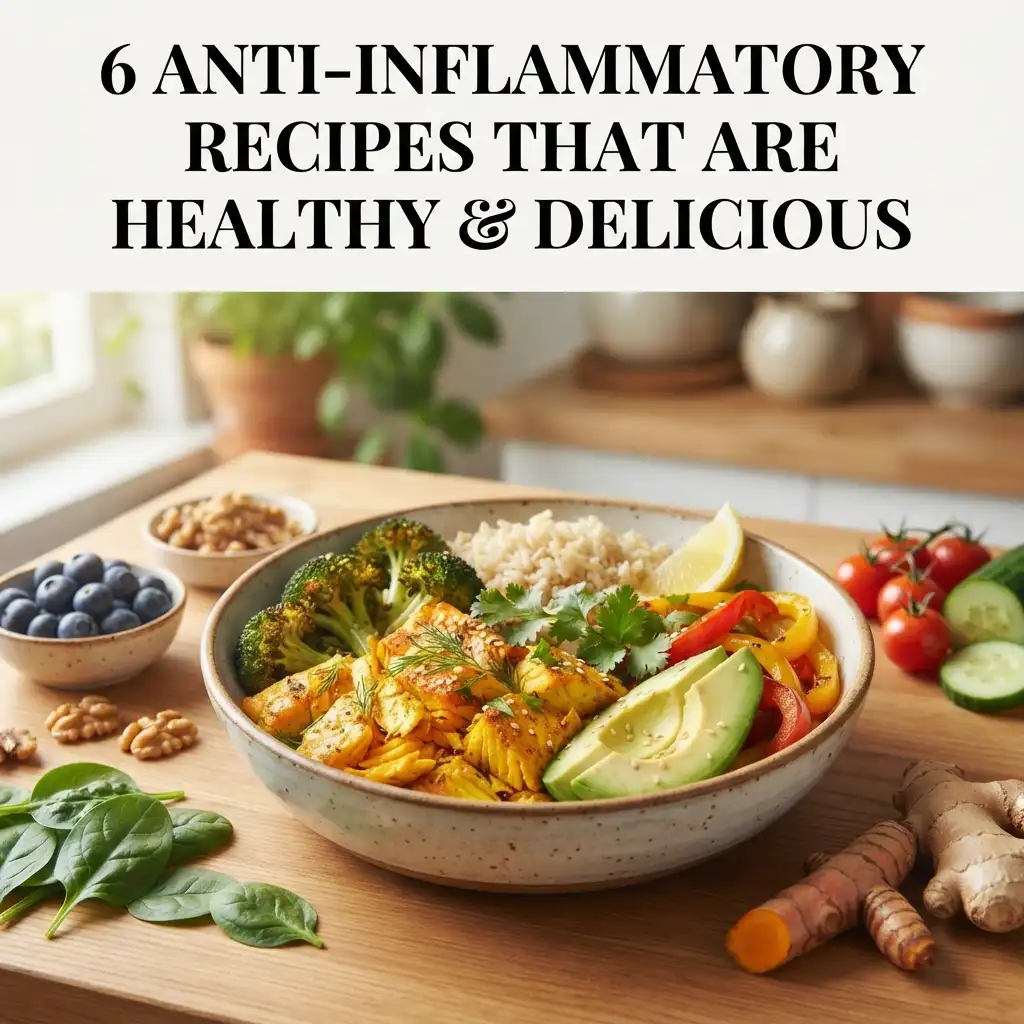
Healthy food doesn’t need to taste like punishment. If you want meals that support a balanced, nutrient-rich diet without giving up flavor, these anti-inflammatory recipes make a seriously good place to start.
I love recipes that bring together colorful vegetables, herbs, spices, healthy fats, and satisfying proteins. Why eat another boring bowl of greens when you can make something warm, flavorful, and genuinely exciting? 🙂
What Makes a Recipe Anti-Inflammatory?
Before we start cooking, let’s clear up one thing: no single food magically “turns off” inflammation. Your overall eating pattern matters much more than one ingredient or one meal.
Many foods commonly featured in an anti-inflammatory diet provide fiber, antioxidants, omega-3 fats, vitamins, minerals, and plant compounds. Foods such as berries, leafy greens, tomatoes, beans, whole grains, nuts, seeds, olive oil, and fatty fish can fit beautifully into that pattern.
I like to focus on what you can add to your meals instead of obsessing over what you need to remove. That approach feels much easier to maintain, especially when you actually enjoy the food.
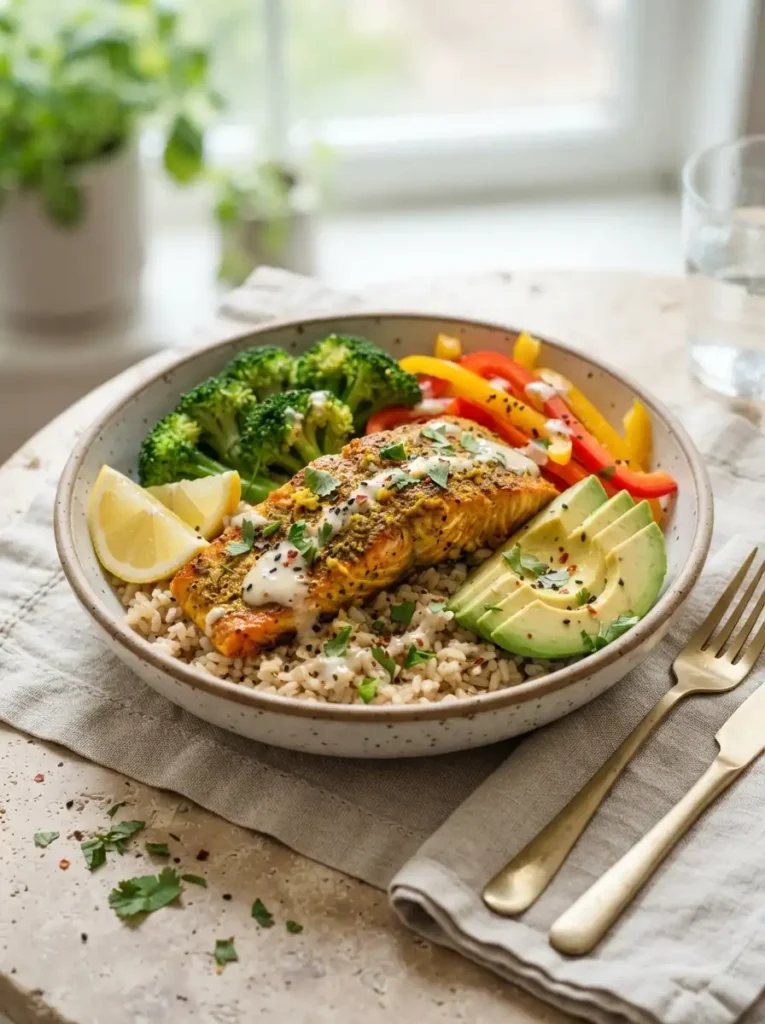
1. Turmeric Ginger Salmon Bowl
If you want an anti-inflammatory dinner that looks restaurant-worthy but doesn’t require restaurant-level effort, start here. This salmon bowl combines flaky salmon with turmeric, ginger, colorful vegetables, and a creamy yogurt sauce.
The salmon provides omega-3 fatty acids, while turmeric and ginger bring bold flavor and useful plant compounds. Add whole grains and vegetables, and you get a balanced meal that can keep you satisfied.
Ingredients
- 2 salmon fillets
- 1 teaspoon turmeric
- 1 teaspoon grated fresh ginger
- 1 tablespoon extra-virgin olive oil
- 1 cup cooked brown rice or quinoa
- 1 cup broccoli florets
- 1 cup sliced bell peppers
- ½ avocado
- Fresh lemon juice
- Salt and black pepper
For the quick sauce:
- ½ cup plain Greek yogurt
- 1 tablespoon lemon juice
- ½ teaspoon grated ginger
- Small pinch of black pepper
How to Make It
- Heat your oven to 400°F.
- Rub the salmon with olive oil, turmeric, ginger, black pepper, and a little salt.
- Roast the salmon for about 10–15 minutes, depending on thickness.
- Steam or roast the broccoli and bell peppers until tender-crisp.
- Build your bowl with rice or quinoa, vegetables, salmon, and avocado.
- Mix the yogurt sauce ingredients and drizzle it over the bowl.
- Finish with fresh lemon juice.
Tip: Don’t drown the salmon in seasoning. Let the fish, ginger, and turmeric work together instead of turning dinner into a spice competition.
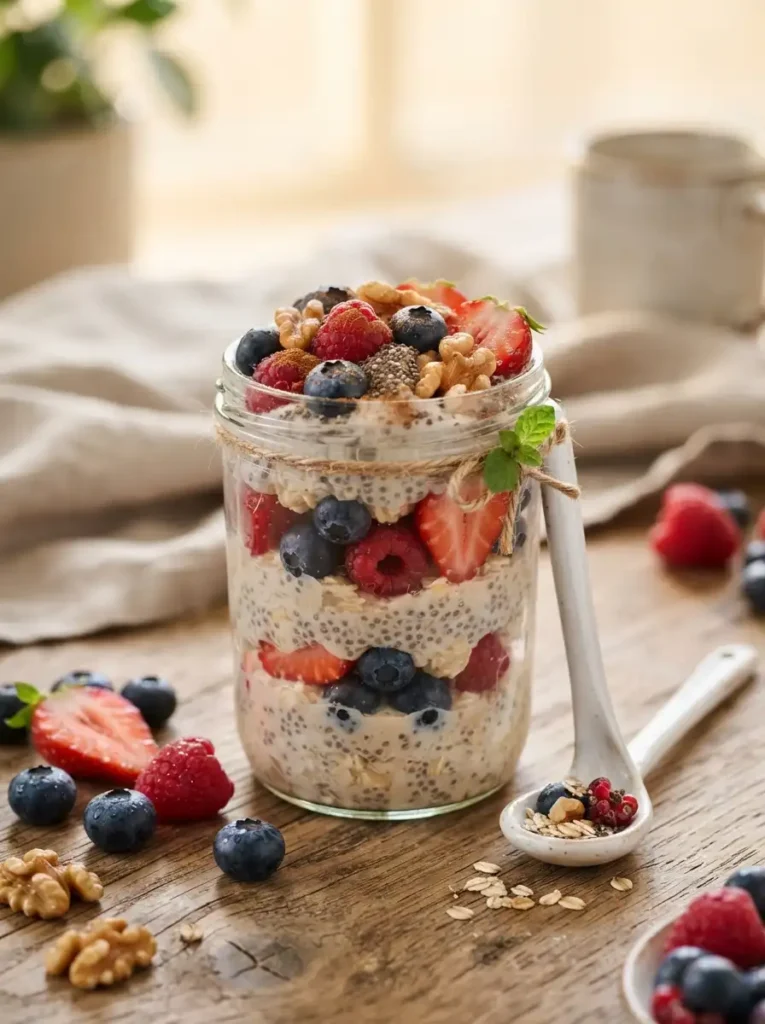
2. Berry Chia Overnight Oats
Who says healthy breakfast needs complicated cooking? These berry chia overnight oats take only a few minutes to prepare, which makes them perfect for busy mornings.
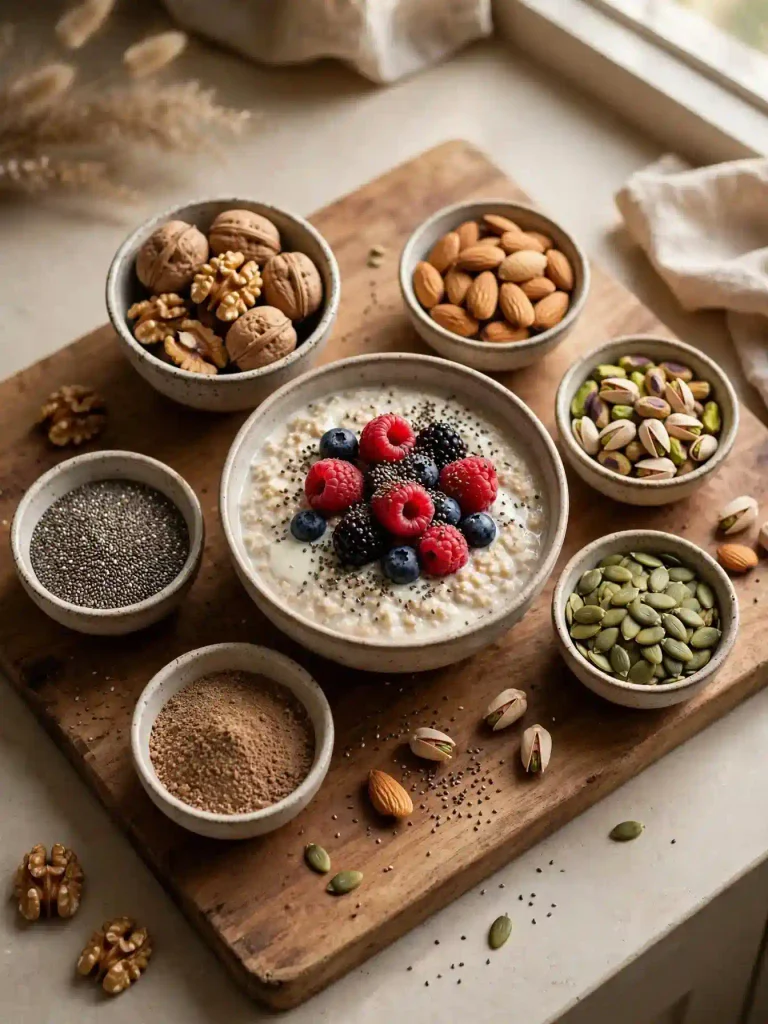
The combination of berries, chia seeds, oats, and walnuts provides fiber, healthy fats, and plenty of flavor. You can prepare individual jars at night and grab one straight from the refrigerator the next morning.
Ingredients
- ½ cup rolled oats
- 1 tablespoon chia seeds
- ¾ cup unsweetened milk
- ½ cup mixed berries
- 1 tablespoon chopped walnuts
- ½ teaspoon cinnamon
- 1 teaspoon honey or maple syrup, optional
- ½ teaspoon vanilla extract
How to Make It
Add the oats, chia seeds, milk, cinnamon, and vanilla to a jar. Stir everything thoroughly so the chia seeds don’t clump together at the bottom.
Add half of the berries and give the mixture another quick stir. Cover the jar and refrigerate overnight.
In the morning, top your oats with the remaining berries and walnuts. Add a small drizzle of honey if you want extra sweetness.
FYI: You can swap the berries depending on what you have available. Frozen berries work perfectly well and often cost less than fresh ones.
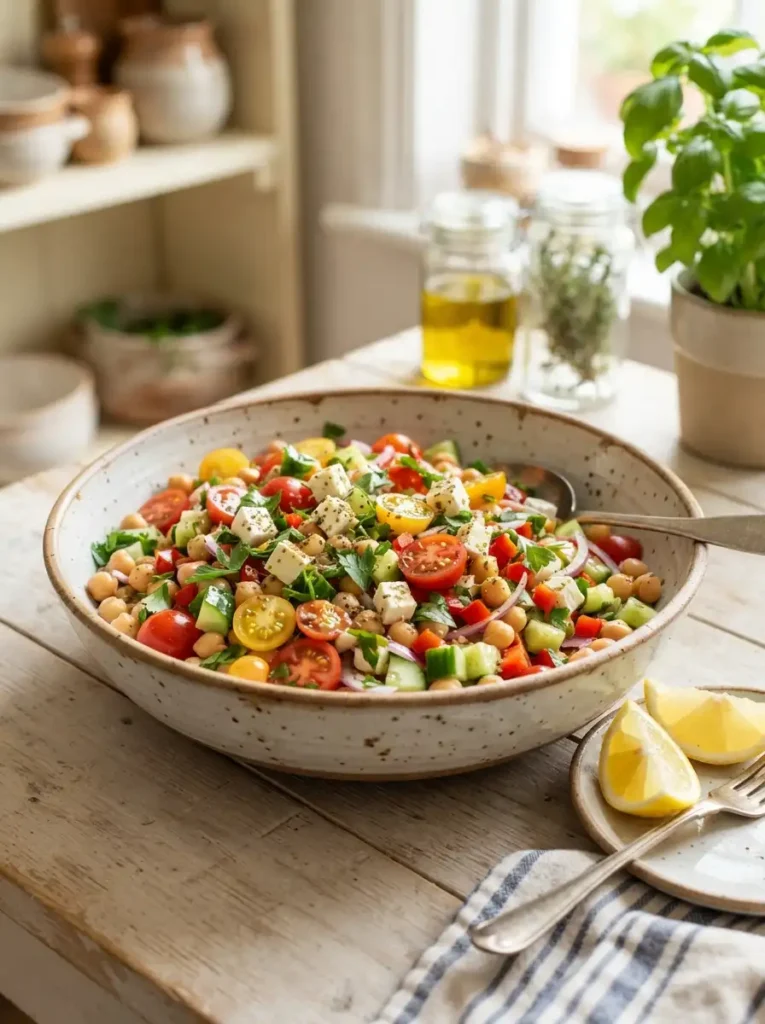
3. Mediterranean Chickpea Salad
This Mediterranean-inspired chickpea salad proves that a quick lunch can still taste exciting. It combines creamy chickpeas, crunchy vegetables, fresh herbs, olive oil, and lemon for a bright and satisfying meal.
Chickpeas provide plant-based protein and fiber, while vegetables add color, texture, and nutrients. Extra-virgin olive oil also gives the salad a rich flavor without requiring a heavy dressing.
Ingredients
- 1 can chickpeas, drained and rinsed
- 1 cup chopped cucumber
- 1 cup cherry tomatoes
- ½ red bell pepper
- ¼ red onion
- ¼ cup chopped parsley
- 2 tablespoons extra-virgin olive oil
- Juice of 1 lemon
- 1 teaspoon dried oregano
- Black pepper
- Optional: a small amount of feta cheese
How to Make It
Add the chickpeas, cucumber, tomatoes, bell pepper, onion, and parsley to a large bowl. Toss everything gently so the vegetables keep their crunch.
Whisk the olive oil, lemon juice, oregano, and black pepper in a small bowl. Pour the dressing over the salad and toss again.
Let the salad sit for about 10 minutes before serving. That short resting time allows the flavors to mingle without turning your vegetables into sad, soggy leftovers.
Serve it alone, spoon it over greens, or pair it with whole-grain pita.
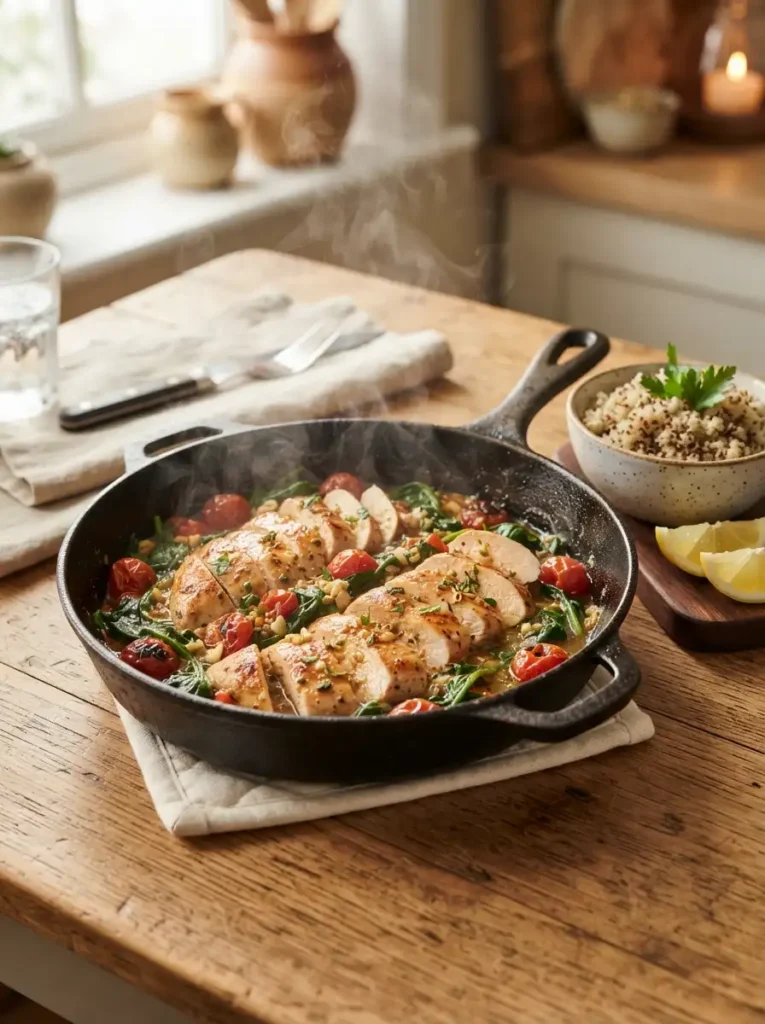
4. Garlic Spinach Chicken Skillet
Need dinner fast? This garlic spinach chicken skillet deserves a spot in your weekly rotation.
Lean chicken provides protein, while spinach and tomatoes bring vegetables, fiber, and colorful plant foods to the plate. Garlic, olive oil, and herbs create enough flavor that you won’t need a heavy sauce.
Ingredients
- 2 boneless, skinless chicken breasts
- 2 cups fresh spinach
- 1 cup cherry tomatoes
- 3 garlic cloves, minced
- 1 tablespoon extra-virgin olive oil
- ½ teaspoon dried oregano
- ½ teaspoon paprika
- Juice of ½ lemon
- Black pepper
- Small pinch of salt
How to Make It
Slice the chicken into thin pieces so it cooks quickly. Season it with paprika, oregano, black pepper, and a small amount of salt.
Heat olive oil in a large skillet over medium heat. Add the chicken and cook until it reaches a safe internal temperature and develops a light golden exterior.
Add the garlic and tomatoes, then cook for a couple of minutes. Add the spinach and stir until it wilts.
Finish everything with fresh lemon juice. Serve the skillet with quinoa, brown rice, or roasted sweet potatoes for a more filling meal.
My favorite trick: Add the lemon at the end rather than at the beginning. The fresh acidity wakes up all the other flavors.
5. Lentil Sweet Potato Curry
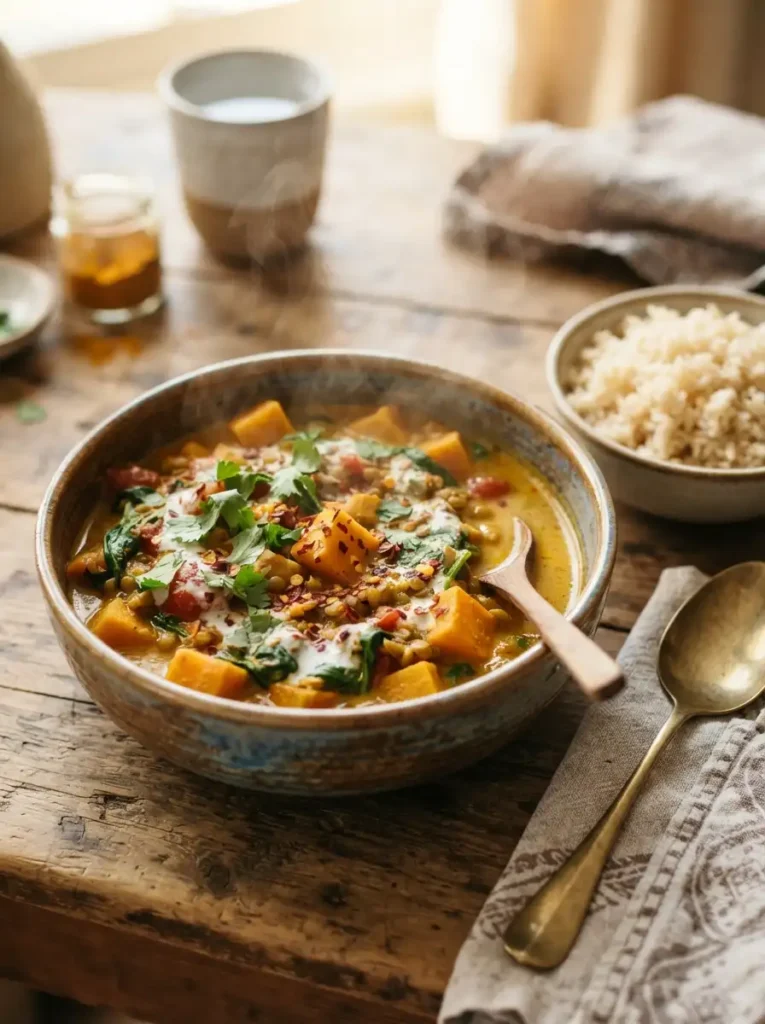
This lentil and sweet potato curry delivers serious comfort-food energy without relying on heavy ingredients. The creamy texture comes from the vegetables and coconut milk, while spices provide plenty of personality.
Lentils bring fiber and plant-based protein, while sweet potatoes provide a naturally sweet contrast to the savory spices. You can also add spinach for an extra serving of greens.
Ingredients
- 1 cup cooked lentils
- 1 medium sweet potato, peeled and cubed
- 1 cup spinach
- 1 cup diced tomatoes
- ½ cup light coconut milk
- 1 small onion
- 2 garlic cloves
- 1 teaspoon turmeric
- 1 teaspoon grated ginger
- ½ teaspoon cumin
- ½ teaspoon curry powder
- 1 tablespoon olive oil
- Black pepper
How to Make It
Heat olive oil in a large pot and sauté the onion until soft. Add garlic, ginger, turmeric, cumin, and curry powder, then stir for about 30 seconds.
Add the sweet potato, tomatoes, coconut milk, and a splash of water. Cover the pot and simmer until the sweet potato becomes tender.
Stir in the cooked lentils and spinach. Cook for another few minutes until everything becomes warm and the spinach wilts.
Taste and adjust the seasoning before serving. Spoon the curry over brown rice or quinoa, or enjoy it on its own.
Want more heat? Add red pepper flakes or a little fresh chili. Life feels better when dinner has some personality.
6. Walnut Blueberry Spinach Salad
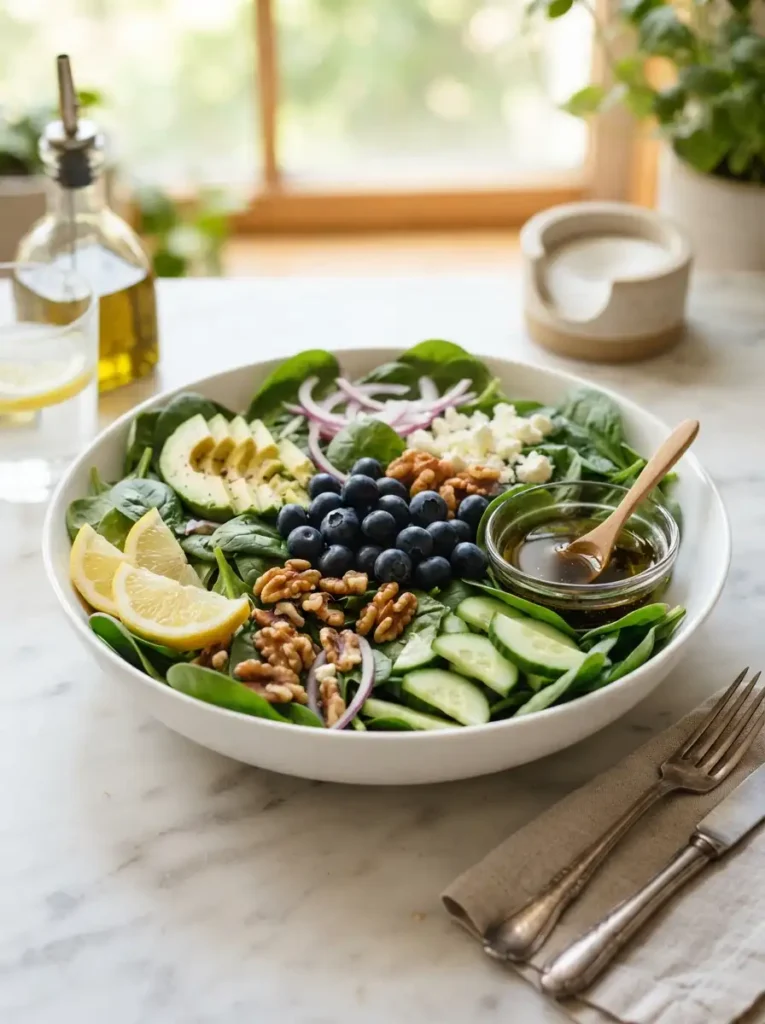
Sometimes you want something light, fresh, and colorful instead of another heavy dinner. This blueberry walnut spinach salad brings together sweet berries, crunchy walnuts, creamy avocado, and fresh greens.
The combination offers leafy greens, berries, nuts, healthy fats, and plenty of texture. It also takes almost no time to assemble, which makes it ideal for lunch.
Ingredients
- 3 cups baby spinach
- ½ cup fresh blueberries
- ¼ avocado, sliced
- 2 tablespoons walnuts
- ¼ cup sliced cucumber
- 2 tablespoons red onion
- Optional: 2 tablespoons crumbled feta
For the dressing:
- 1 tablespoon extra-virgin olive oil
- 1 tablespoon lemon juice
- 1 teaspoon balsamic vinegar
- ½ teaspoon Dijon mustard
- Black pepper
How to Make It
Place spinach, blueberries, cucumber, red onion, avocado, and walnuts into a large bowl. Add feta if you want a little extra creaminess and salty flavor.
Whisk the dressing ingredients together in a small bowl. Drizzle the dressing over the salad just before serving.
Toss everything gently and serve immediately. The contrast between sweet blueberries, crunchy walnuts, creamy avocado, and tangy dressing makes this salad much more interesting than the usual pile of lettuce.
Easy Ways to Build an Anti-Inflammatory Meal
You don’t need to follow complicated rules every time you cook. Instead, try building meals around a few simple categories.
Aim to include:
- Colorful vegetables and fruits
- Whole grains or other minimally processed carbohydrates
- Beans, lentils, fish, poultry, or other protein sources
- Healthy fats such as olive oil, nuts, seeds, and avocado
- Flavorful herbs and spices
I find this approach much easier than memorizing endless food rules. You can create hundreds of different combinations once you understand the basic formula.
Common Mistakes to Avoid
One common mistake involves treating an anti-inflammatory diet like a collection of bland “health foods.” Healthy food can taste fantastic when you use herbs, spices, citrus, garlic, and quality ingredients.
Another mistake involves focusing on one so-called superfood while ignoring the rest of your diet. A balanced eating pattern matters more than any single ingredient.
You also don’t need to eliminate every food you enjoy. IMO, a realistic approach works much better than a strict plan that makes you miserable by Wednesday.
How to Make These Recipes Meal-Prep Friendly
Several of these anti-inflammatory recipes work beautifully for meal prep. Cook a batch of quinoa, brown rice, lentils, or roasted vegetables at the beginning of the week.
Store ingredients separately when possible so they maintain better texture. Keep salad dressing in small containers and add it just before eating.
You can also prepare overnight oats several days ahead. That little bit of planning can make healthy meals much easier when your schedule gets chaotic.
FAQ About Anti-Inflammatory Recipes
What foods work well in an anti-inflammatory diet?
Focus on vegetables, fruits, whole grains, beans, lentils, nuts, seeds, olive oil, and fish. Herbs and spices such as ginger and turmeric can also add flavor and useful plant compounds.
Can I eat meat while following an anti-inflammatory eating pattern?
Absolutely. You can include lean poultry and fish as part of a balanced diet. Fatty fish such as salmon can provide omega-3 fats that fit particularly well into this style of eating.
Are these recipes good for weight management?
These recipes emphasize nutrient-dense ingredients, fiber, protein, and healthy fats. Your overall portions and total dietary pattern still matter, so no recipe automatically guarantees weight loss.
Can I make these recipes vegetarian?
Yes. The chickpea salad, lentil curry, overnight oats, and berry salad already work well without meat. You can also replace chicken with beans, lentils, tofu, or another protein source.
Can I use frozen fruits and vegetables?
Definitely. Frozen produce can offer convenience and reduce food waste. Use frozen berries in overnight oats or frozen vegetables in cooked recipes when fresh options aren’t available.
Does turmeric automatically make a meal anti-inflammatory?
Turmeric can contribute beneficial plant compounds, but one ingredient cannot transform an otherwise unbalanced meal. Think of turmeric as one flavorful piece of a much bigger dietary pattern.
Final Thoughts
Eating more anti-inflammatory foods doesn’t mean you need to give up flavor, comfort, or variety. These six recipes show how easily you can combine vegetables, fruits, whole grains, legumes, healthy fats, herbs, spices, and quality protein into meals you’ll actually want to eat.
Start with one recipe this week. Maybe make the turmeric salmon bowl for dinner or prep the berry chia oats for busy mornings.
Once you find a few favorites, rotate them with your own healthy combinations. Good food should nourish you and make you excited to sit down at the table—because nobody needs another sad desk salad pretending to be lunch.