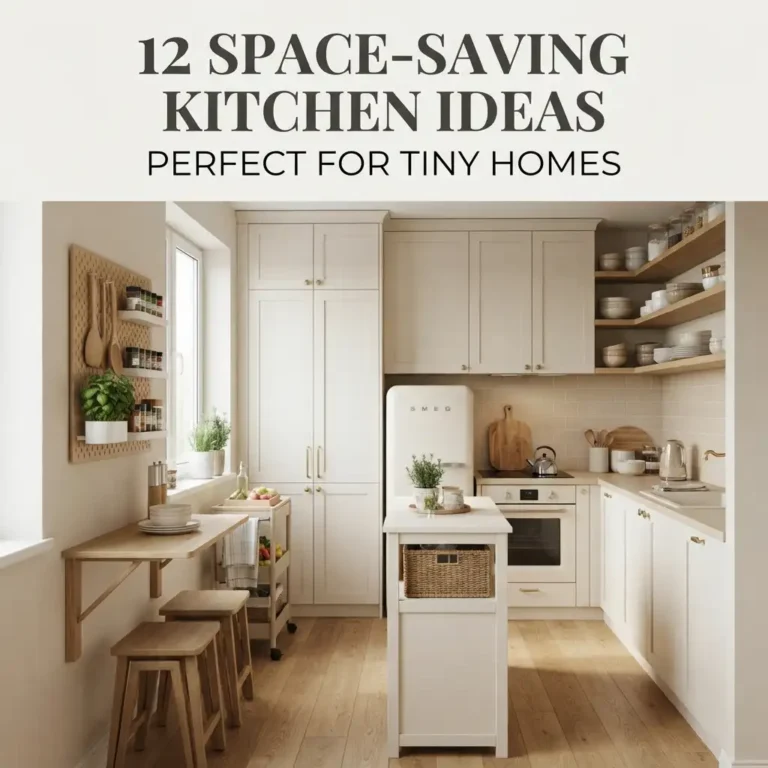
18 Designer-Inspired Small Living Room Ideas You’ll Love
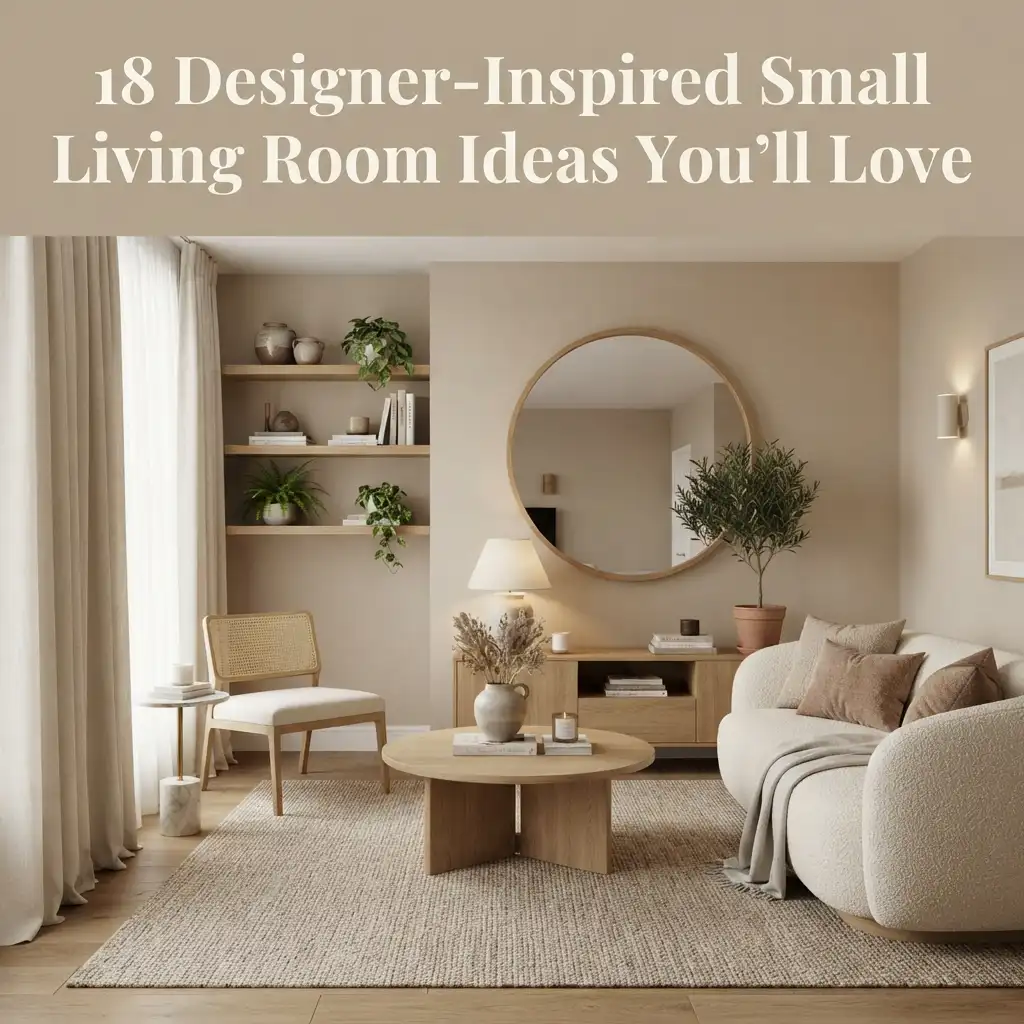
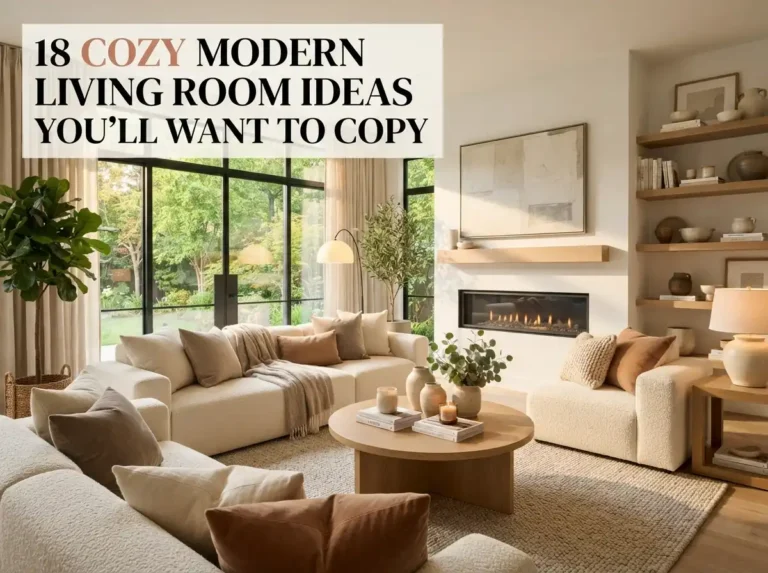
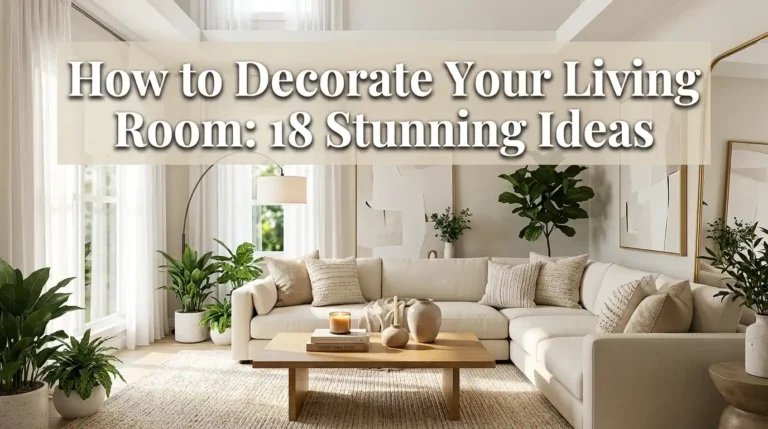
A small living room doesn’t need to feel cramped, boring, or like your sofa personally declared war on your walking space. With the right furniture, colors, lighting, and layout, even a tiny room can look polished and surprisingly spacious. I’ve always loved rooms that prove you don’t need a huge footprint to create a beautiful home.
The trick comes down to making every design choice work a little harder. A slim sofa can open up the floor, a large mirror can bounce light around the room, and smart storage can keep clutter from taking over. So, if you’re hunting for small living room ideas that look designer-approved, these 18 ideas should give you plenty to work with.
1. Choose a Slim, Streamlined Sofa
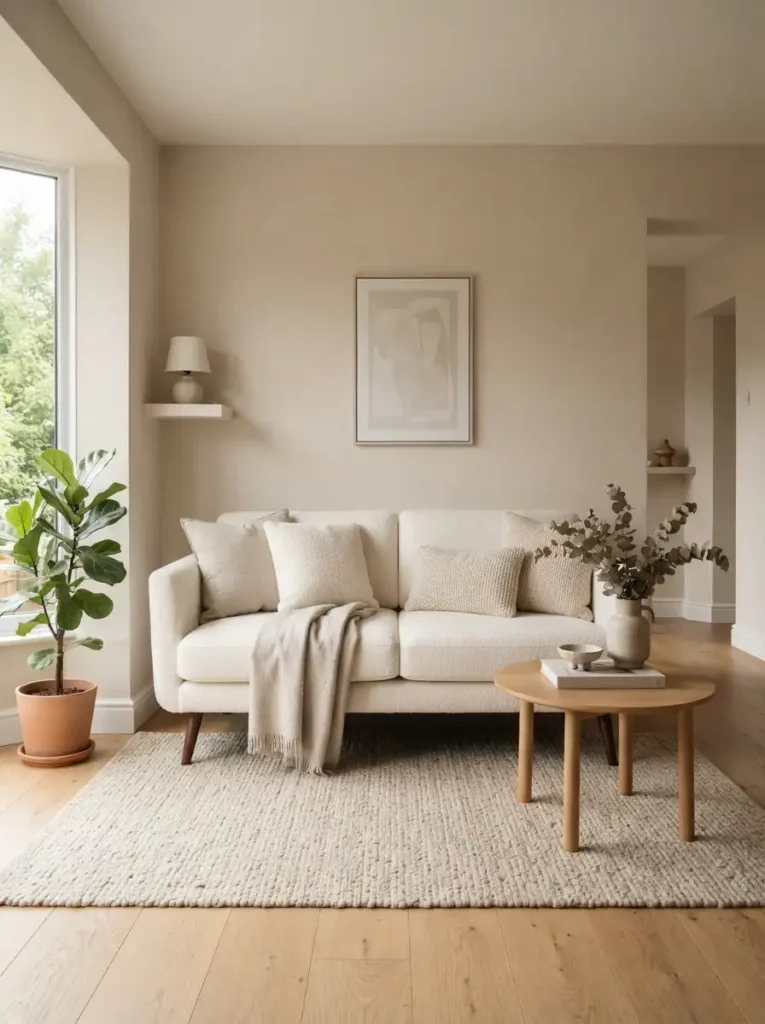
A bulky sofa can swallow a small living room faster than you can say, “Where did all my floor space go?” Instead, choose a sofa with slim arms, a compact profile, and raised legs. The visible floor underneath creates a lighter appearance and helps the room breathe.
Look for upholstery in cream, beige, soft gray, or another light neutral if you want an airy effect. You can then add personality with colorful cushions, a patterned throw, or a small piece of statement art. IMO, this approach gives you the comfort of a full sofa without making the room feel stuffed.
2. Add a Large Statement Mirror
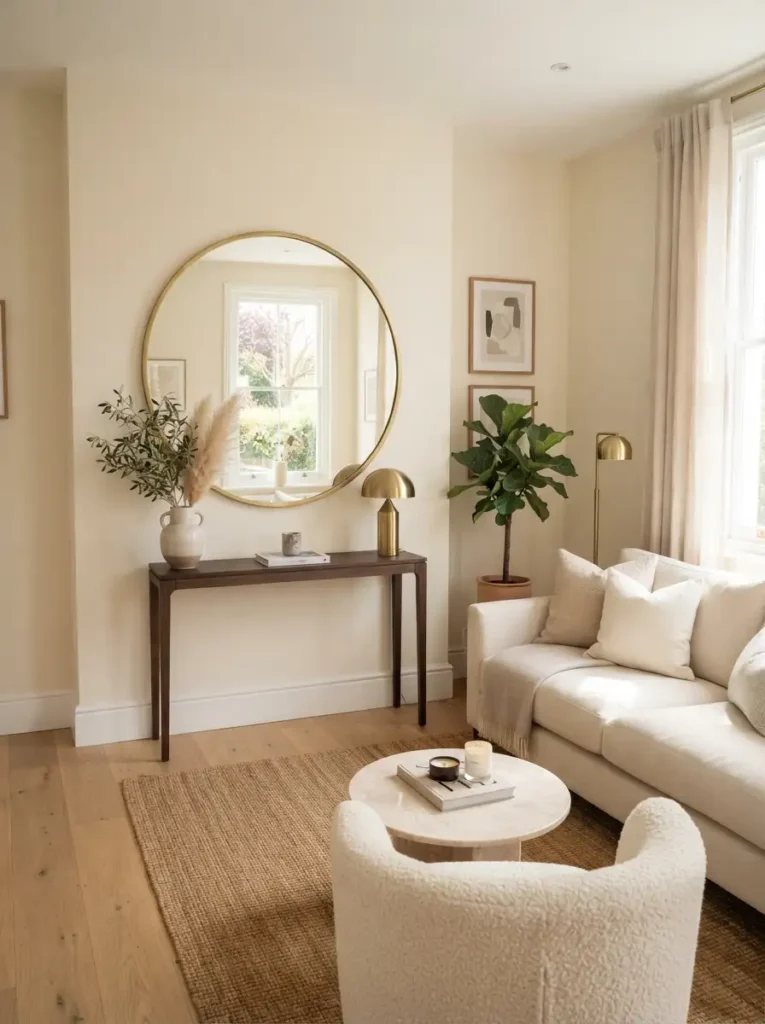
Designers love mirrors for small rooms because mirrors can create the illusion of extra space without knocking down a single wall. Place a large mirror opposite or near a window so it can reflect natural light throughout the room.
You don’t need ten tiny mirrors scattered around the walls either. One oversized mirror often creates a stronger visual impact than several small pieces. Choose a simple black frame for a modern look or a brass frame for something warmer and more luxurious.
3. Use a Light Neutral Color Scheme
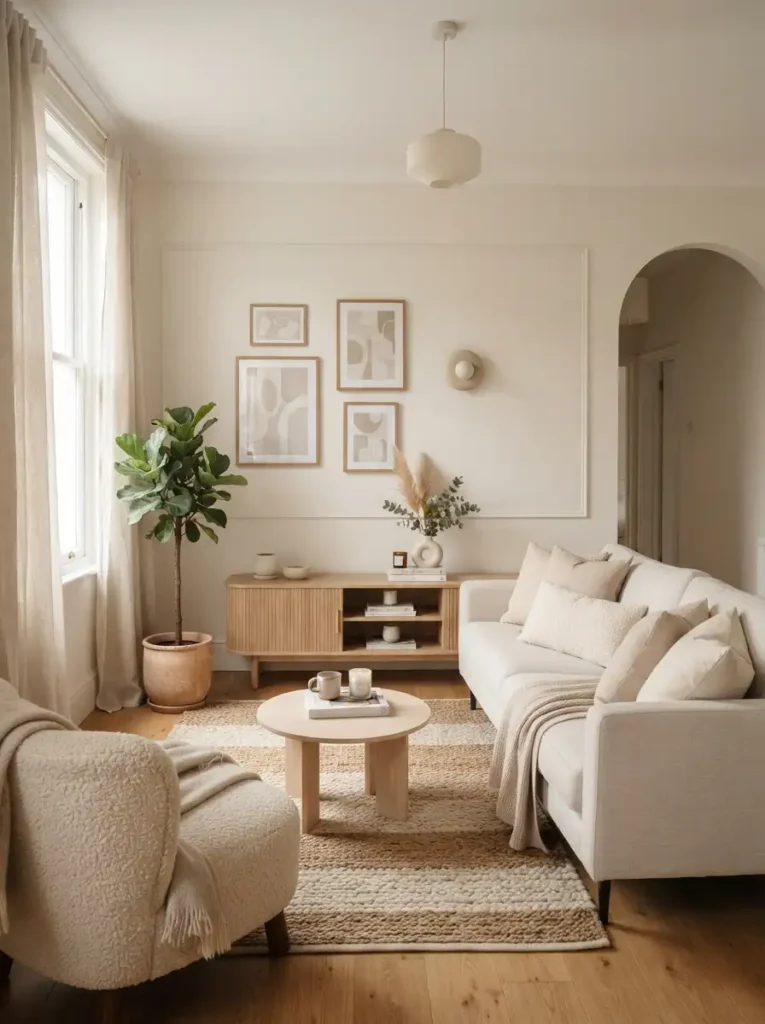
Light colors can make a compact living room feel brighter and more open. Try warm white walls with cream upholstery, pale wood, beige textiles, and soft taupe accents for a sophisticated designer-inspired palette.
But don’t assume neutral means boring. Mix different textures to create depth and interest. Think boucle cushions, woven baskets, linen curtains, textured rugs, and smooth ceramic accessories.
4. Try a Compact Sectional Sofa
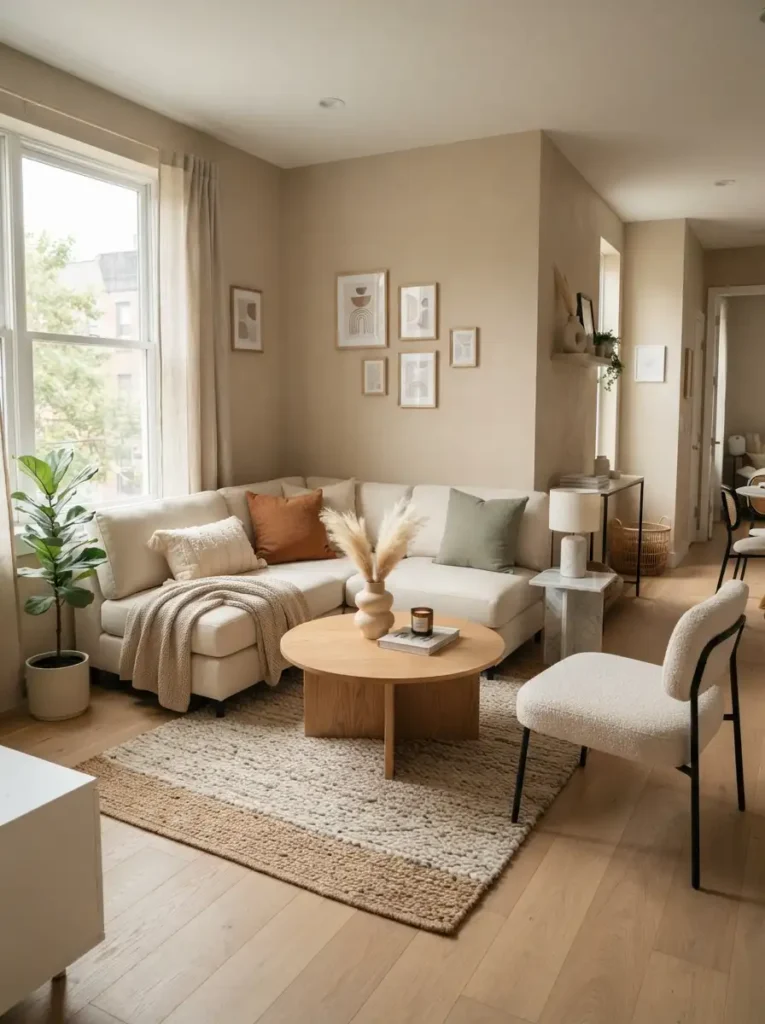
Think you can’t fit a sectional into a small living room? Think again. A carefully sized L-shaped sectional can actually make better use of awkward corners than multiple separate chairs and sofas.
Push the sectional neatly into a corner and keep the central floor area open. Add a small round coffee table in front, then use one lightweight accent chair if you still need extra seating. Just measure everything first because “close enough” furniture measurements rarely end well. 🙂
5. Pick a Round Coffee Table
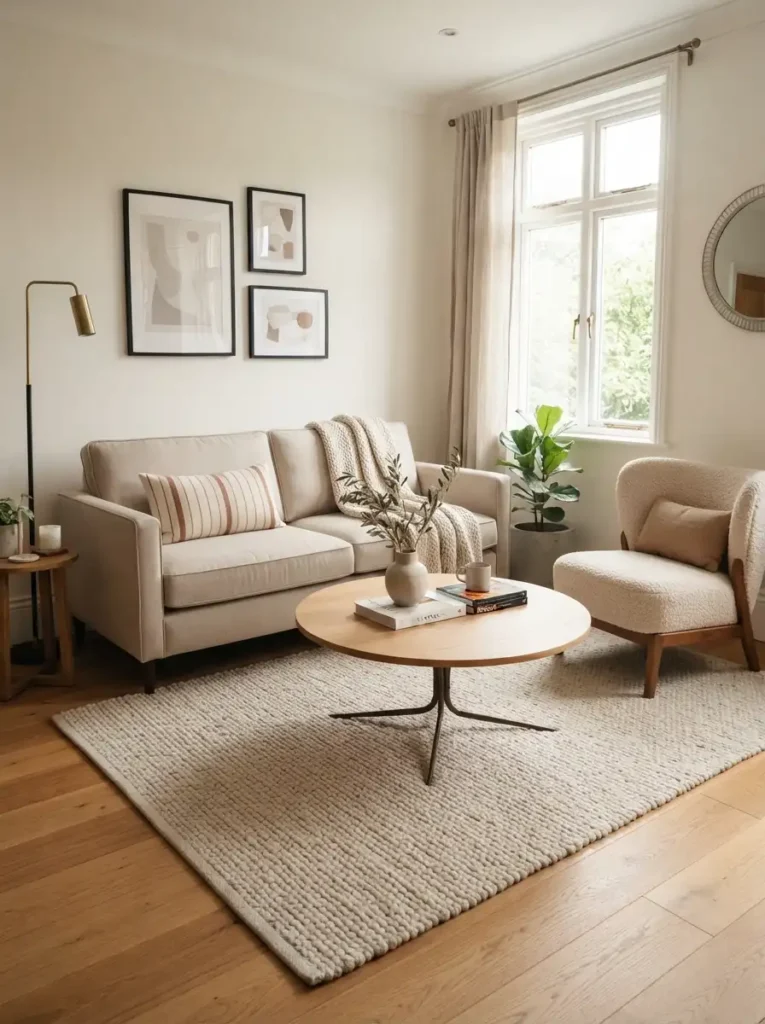
Sharp corners can make a tight room feel even more crowded. A round coffee table creates smoother traffic flow and gives you more flexibility when people move around the seating area.
Choose a table with a slim frame or an open base so the room retains a sense of visual space. Wood works beautifully in warm interiors, while glass or stone can create a more contemporary feel. Which option works best? Match the table to your existing textures rather than simply copying a trend.
6. Install Floating Shelves
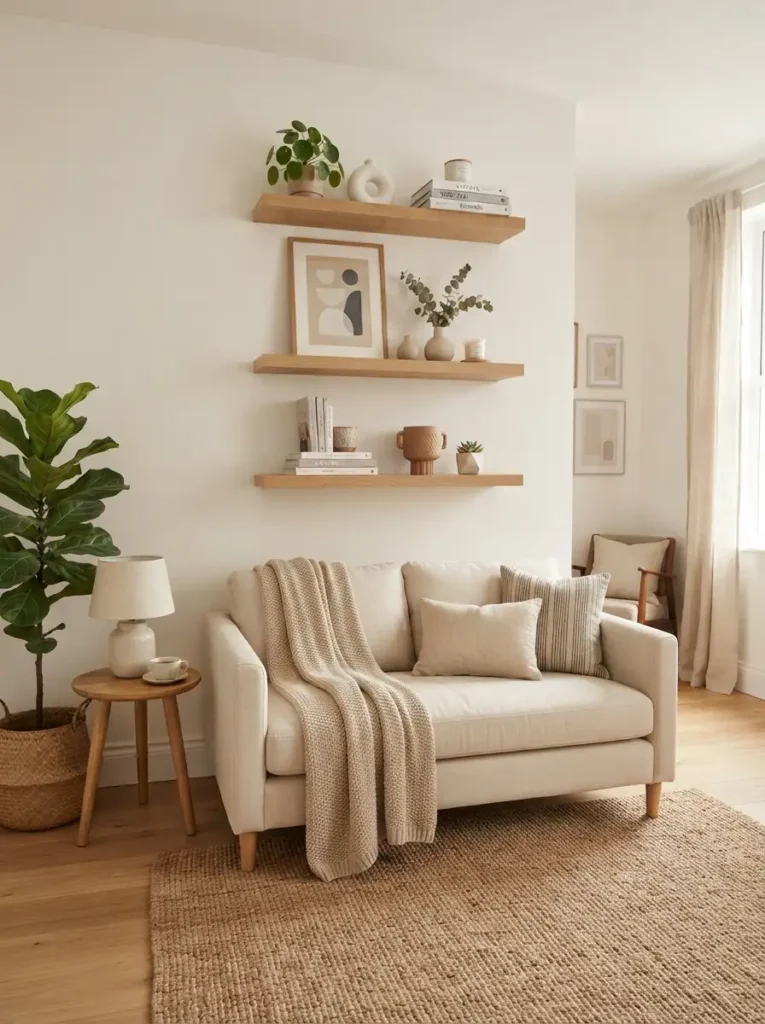
Floating shelves give you storage and display space without adding the visual weight of a large cabinet. Mount two or three shelves above the sofa and style them with books, small artwork, ceramics, and plants.
Keep the arrangement edited rather than filling every inch. Negative space matters just as much as decoration in a small living room. A few well-chosen objects can look far more expensive than a shelf packed with random accessories.
7. Take Storage Upward
When floor space feels limited, look toward the ceiling. Tall shelving, narrow bookcases, and floor-to-ceiling storage can use vertical space while keeping your footprint relatively small.
Use closed cabinets for things you don’t want on display and open shelves for attractive pieces. This strategy works especially well in apartments where every square foot matters. FYI, vertical storage can also make the ceiling appear taller.

8. Choose Furniture With Hidden Storage
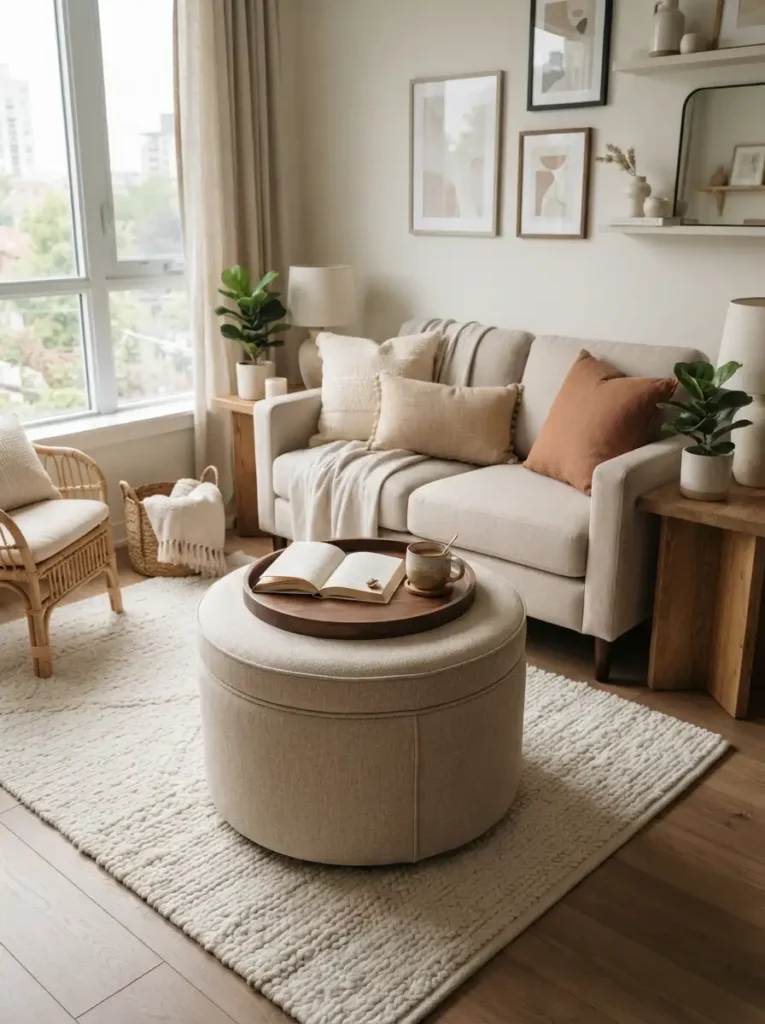
Why let an ottoman sit there doing one job when it can quietly handle two? Choose a storage ottoman or upholstered bench that can hold blankets, magazines, remotes, or other living-room clutter.
You can also look for coffee tables with drawers or lift-top surfaces. These pieces help you maintain a clean appearance without adding another bulky storage cabinet. The result feels organized without looking overly minimalist.
9. Hang Curtains Close to the Ceiling
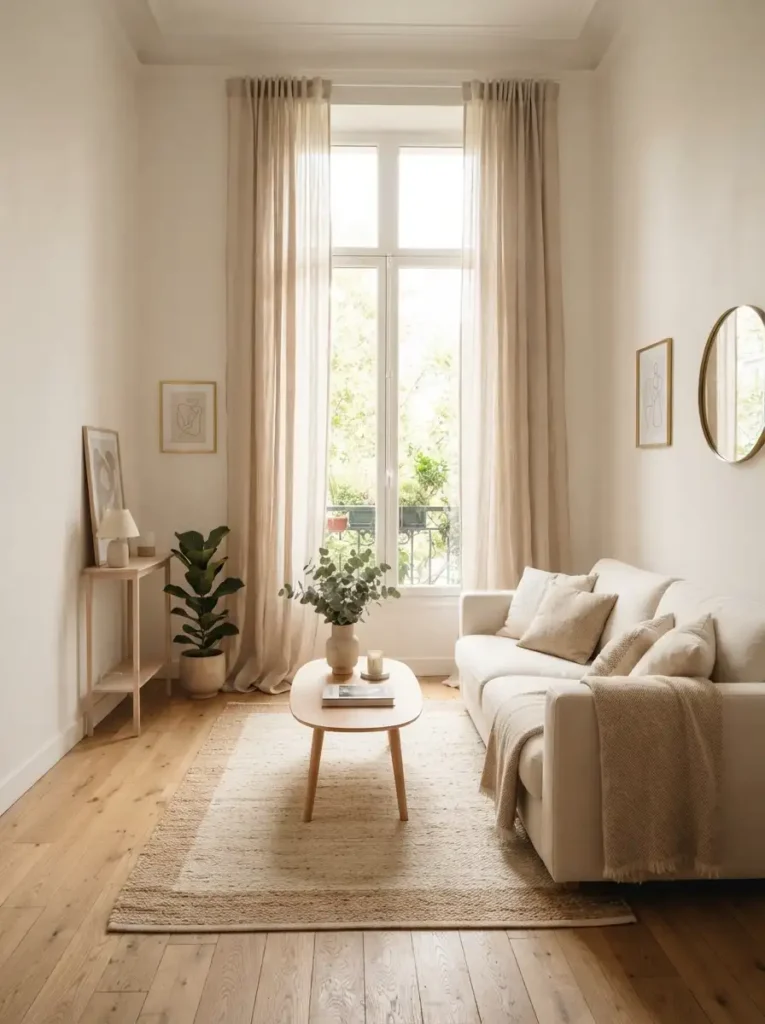
Your curtains can change the entire proportion of a small living room. Instead of mounting the curtain rod directly above the window, place it closer to the ceiling and let the fabric fall all the way to the floor.
This simple trick draws the eye upward and creates the impression of taller walls. Choose lightweight linen or sheer curtains if you want to maximize daylight. Avoid overly heavy fabrics if your room already has limited natural light.
10. Keep the Layout Minimal
A small living room needs breathing room more than it needs another decorative chair. Start with the essentials: comfortable seating, a coffee table, lighting, and perhaps one or two storage pieces.
Then create clear walking paths around the furniture. A thoughtful layout often matters more than expensive furniture because even beautiful pieces can make a room uncomfortable when they block movement.
11. Add One Stylish Accent Chair
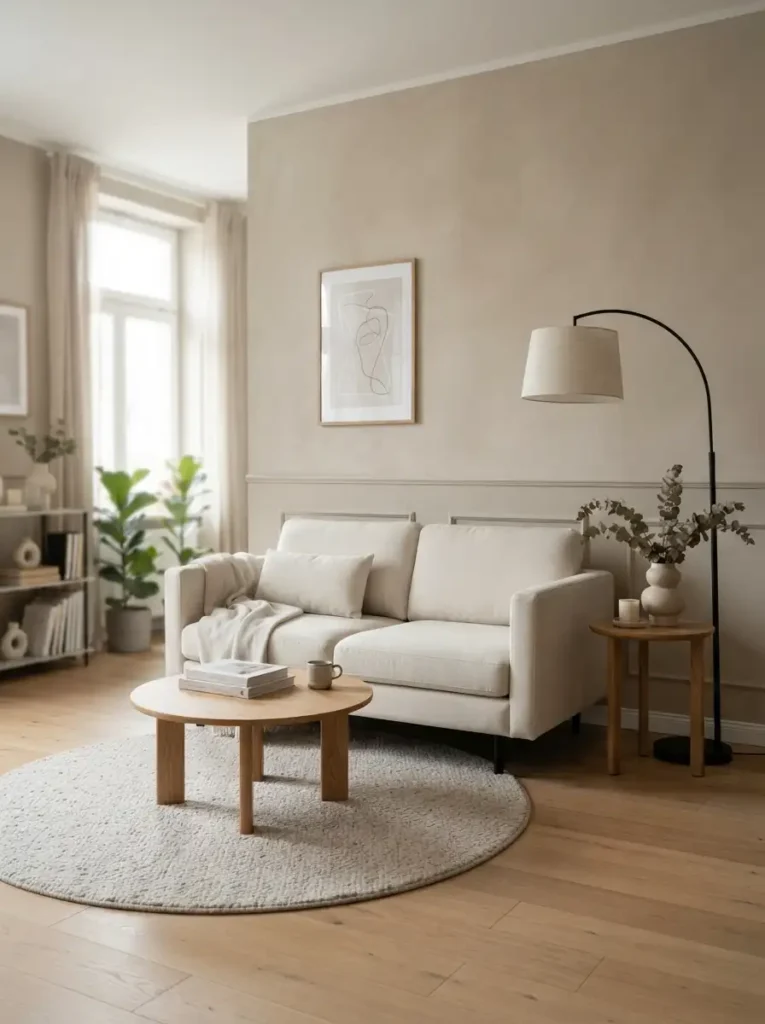
If you need additional seating, skip the oversized armchair and choose a compact accent chair. A chair with a slim frame and exposed legs can provide personality without dominating the room.
Place it beside the sofa with a small side table or floor lamp nearby. You can also choose a contrasting fabric to create a focal point. A deep green, muted blue, warm rust, or patterned upholstery can instantly wake up a neutral space.
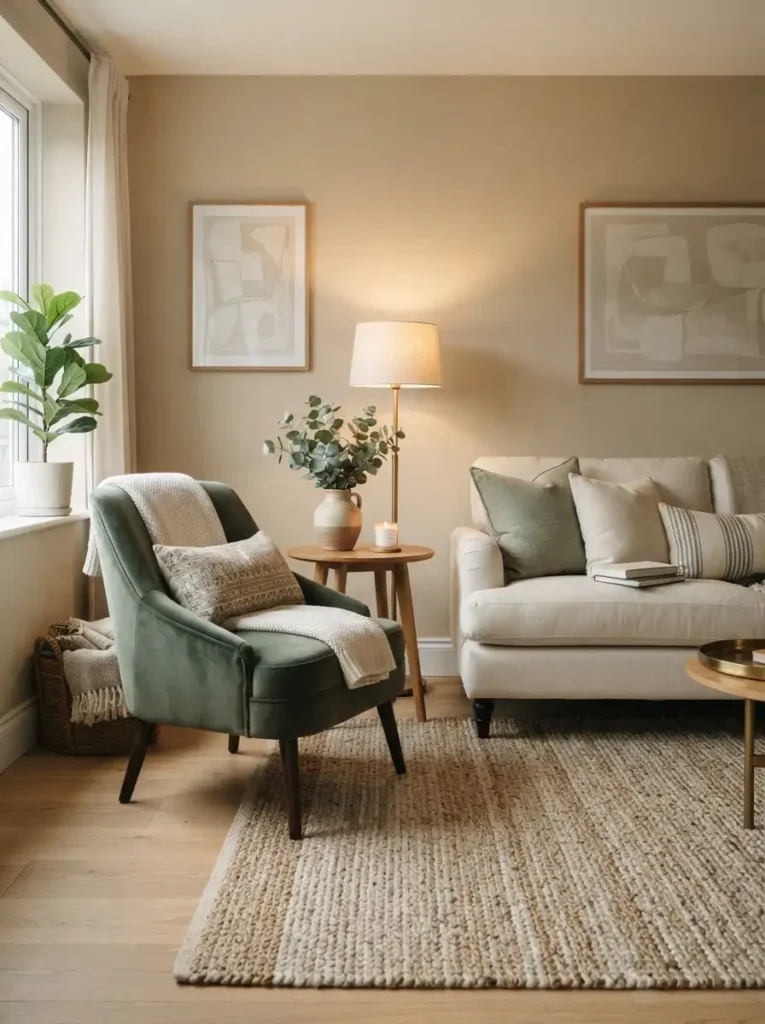
12. Use a Large Area Rug
Many people assume a small room needs a tiny rug, but that approach can actually make the space feel more fragmented. A larger area rug that connects the main furniture pieces can create one cohesive seating zone.
Place at least the front legs of the sofa and chairs on the rug. Choose subtle patterns or low-contrast designs if you want a calm appearance. A larger rug can visually unite the room instead of creating several disconnected sections.
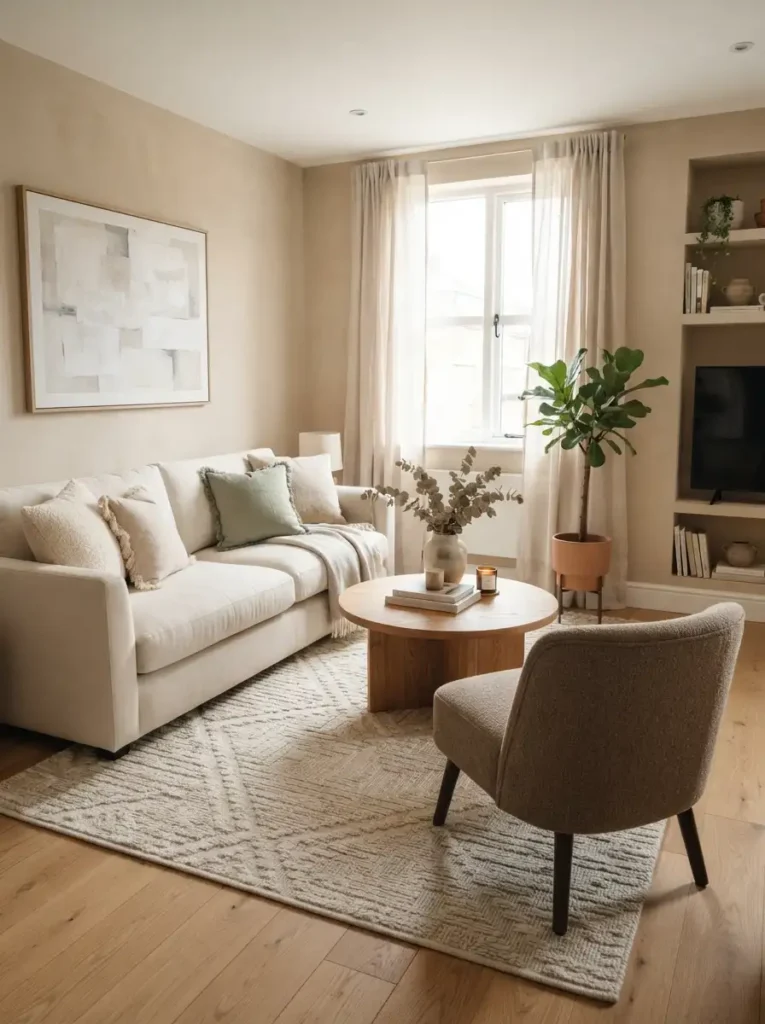
13. Bring in a Narrow Console Table
A narrow console can add function without consuming much floor space. Place one behind the sofa, against a wall, or beneath a television depending on your layout.
Use the surface for a table lamp, framed artwork, books, or a small plant. Choose a design with drawers if you need extra hidden storage. Slim furniture works especially well when you need function but lack width.
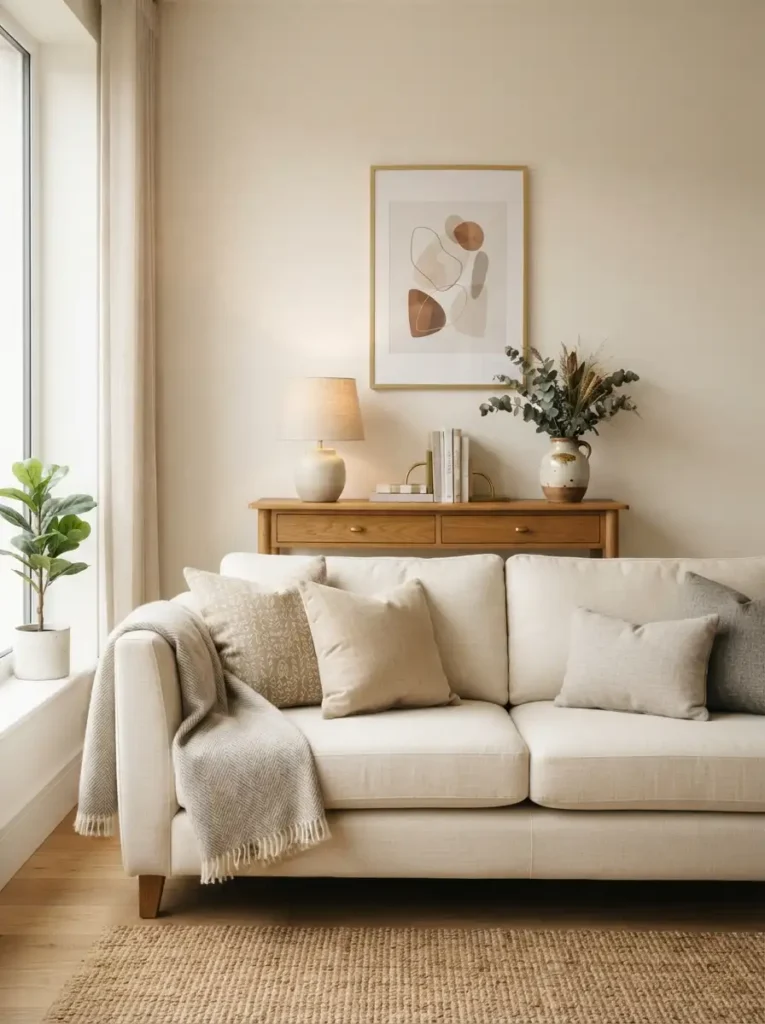
14. Mix Warm Wood With Soft Neutrals
Wood instantly adds warmth to a minimalist living room. Pair light oak furniture with cream walls, beige upholstery, and natural woven accessories for a relaxed designer-inspired atmosphere.
You can use darker wood if you want more contrast. Just balance it with lighter textiles so the room doesn’t feel visually heavy. I especially like this combination because it feels polished without looking like you tried too hard.
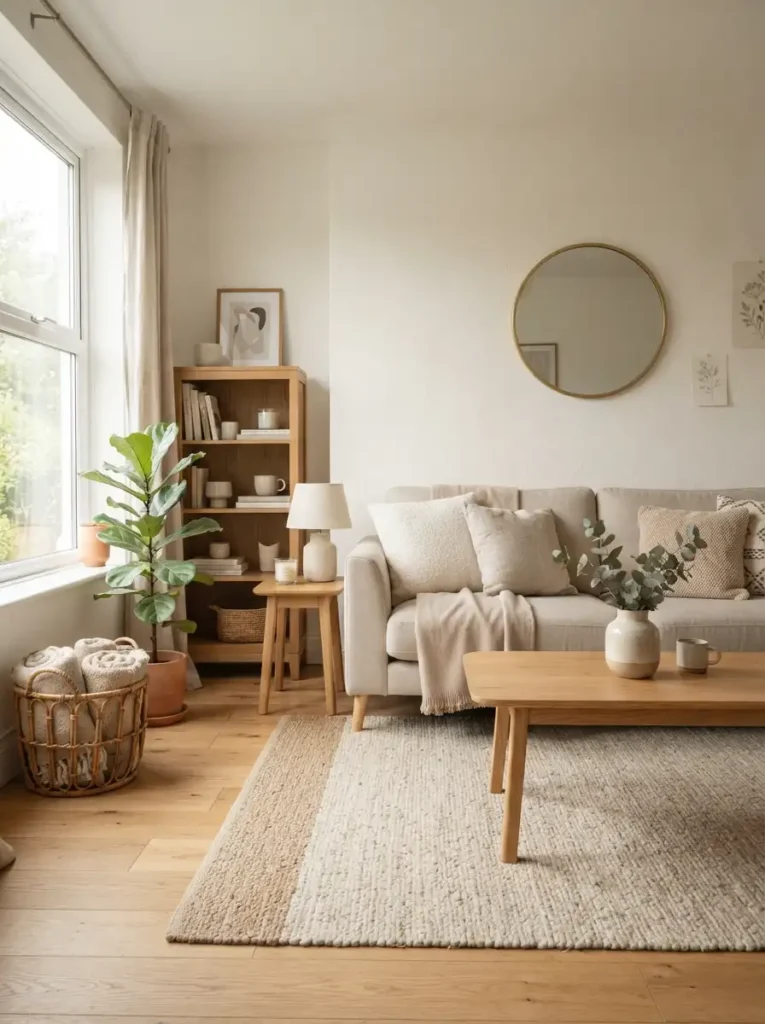
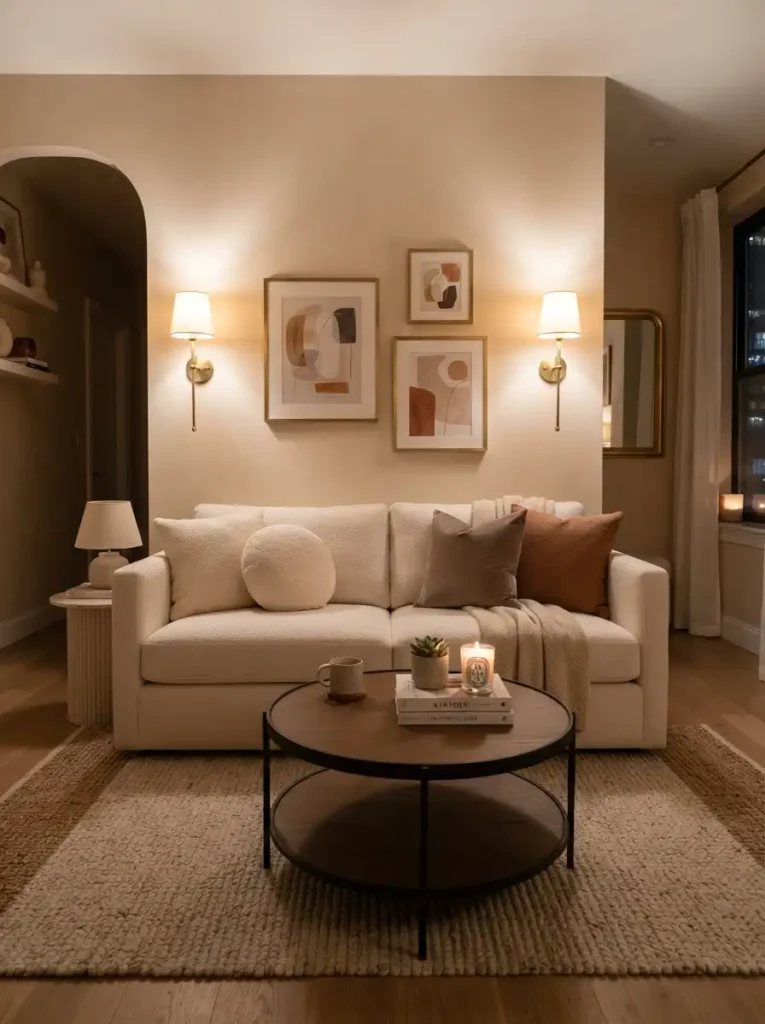
15. Use Wall-Mounted Lighting
Floor lamps can look fantastic, but they also occupy valuable floor space. Wall sconces can provide the same layered lighting effect while leaving the floor completely open.
Install sconces beside the sofa, above artwork, or near a reading chair. Choose adjustable fixtures if you want practical task lighting. Layered lighting makes a small living room feel warmer and more sophisticated, especially after sunset.
16. Create a Built-In Media Wall
A built-in media wall can combine entertainment, storage, and visual interest in one compact feature. Use closed cabinets along the lower section and open shelving above for books and decorative objects.
Paint the entire unit in the same color as the wall for a seamless appearance. This approach makes the furniture feel like part of the architecture rather than another object taking up space.

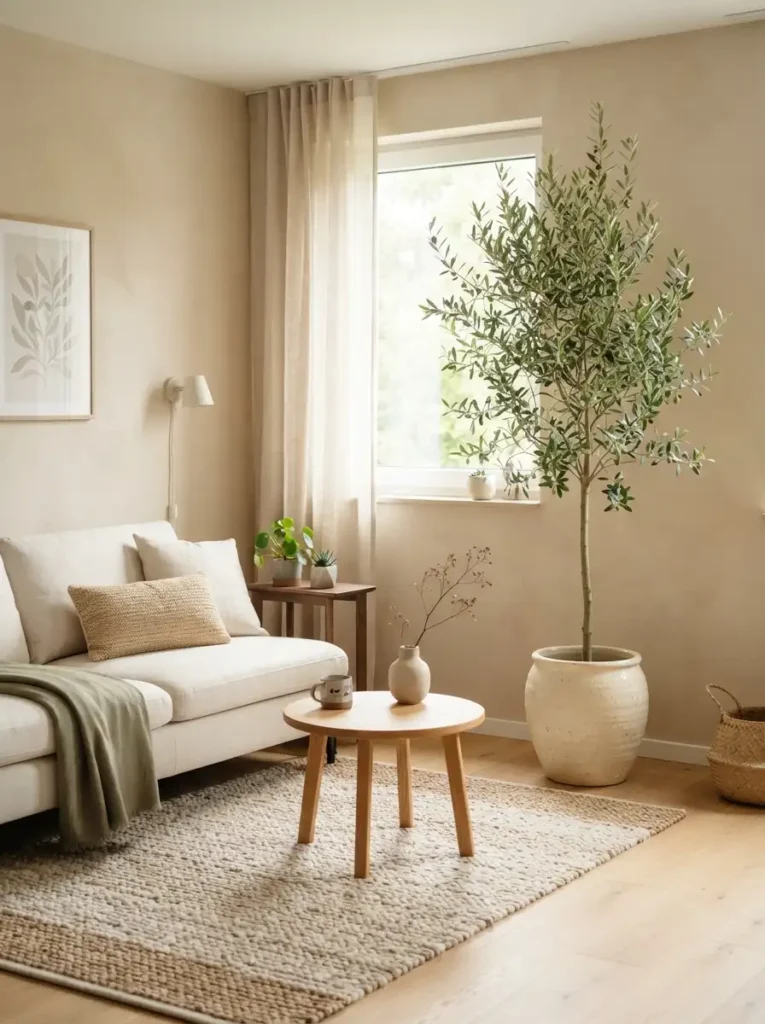
17. Add Greenery Without Overcrowding
Plants can make a small living room feel fresh and welcoming, but you don’t need a miniature jungle. Choose one tall plant for an empty corner and perhaps a couple of smaller plants for shelves or tables.
Try plants with interesting shapes, such as an olive tree, rubber plant, or fiddle-leaf fig. If natural light proves tricky, choose varieties that tolerate your room’s conditions. The goal involves adding life without creating another collection of things to trip over.
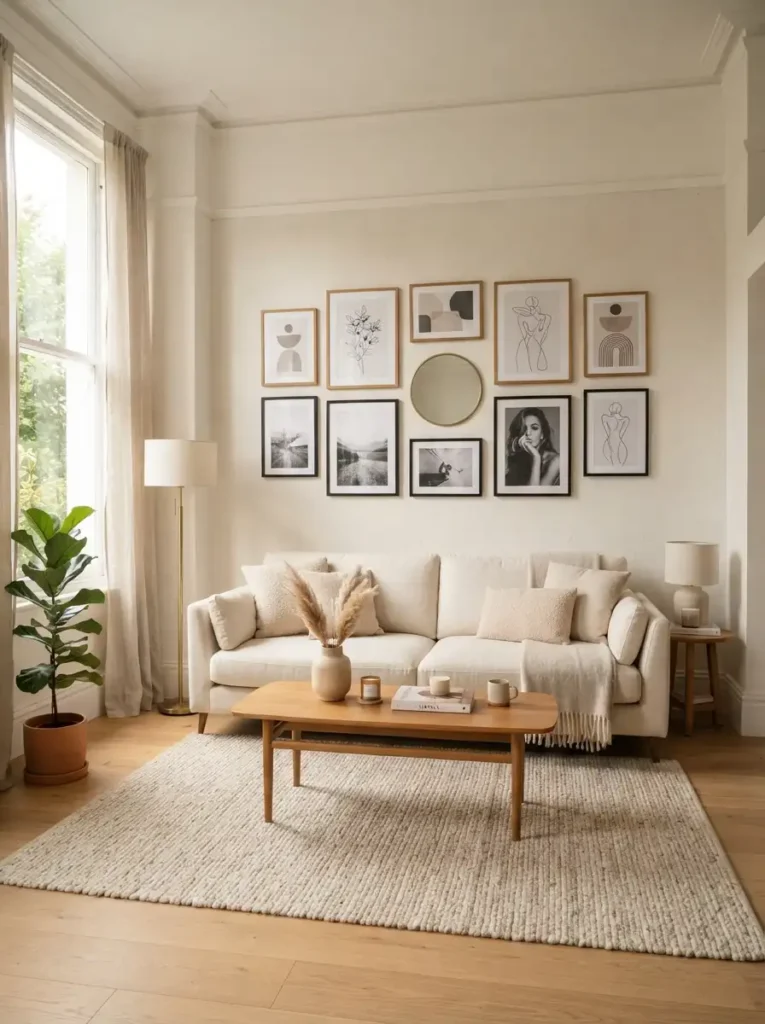
18. Create a Designer-Looking Gallery Wall
A gallery wall can give your small living room personality without consuming floor space. Choose artwork that shares a common color palette so the collection feels intentional rather than chaotic.
You can mix photographs, abstract prints, line drawings, and small mirrors for variety. Keep the spacing consistent and anchor the arrangement above the sofa or on the largest empty wall. A well-planned gallery wall can become the room’s focal point without making the space feel smaller.
How to Make a Small Living Room Feel More Expensive
You don’t need a giant budget to create a designer-inspired living room. Focus on proportion, texture, lighting, and consistency rather than buying every trendy accessory you see online.
Try these simple upgrades:
- Choose fewer, better-looking accessories
- Use matching or complementary textures
- Add warm layered lighting
- Keep clutter hidden
- Repeat two or three colors throughout the room
- Mix inexpensive pieces with one or two standout items
- Leave some surfaces intentionally empty
The biggest mistake involves trying to decorate every corner. A designer-inspired room often looks expensive because it feels edited and intentional, not because it contains a ridiculous number of decorative objects.
Small Living Room Layout Tips That Actually Help
Before buying anything, measure your room and sketch a basic layout. Mark windows, doors, outlets, and walking paths so you know exactly how much usable space you have.
Then think about how you actually use the room. Do you watch television every night, entertain friends, read, work, or simply relax there? Your lifestyle should determine the furniture arrangement, not a staged photograph from a showroom.
Keep the main pathway clear and avoid pushing every piece against the walls just because the room feels small. Sometimes pulling a sofa slightly away from the wall creates a more intentional seating zone.
Final Thoughts on Designer-Inspired Small Living Rooms
A small living room can absolutely deliver big style. The right sofa, smart storage, strategic lighting, mirrors, layered textures, and carefully chosen accessories can transform even a compact space into something polished and comfortable.
Remember, you don’t need to copy every designer trend to create a beautiful room. Pick the ideas that fit your lifestyle, measure before you buy, and give your favorite pieces enough room to shine.
So, which small living room idea would you try first? If you ask me, I’d start with the layout and sofa size, then build everything else around those two decisions. Get those right, and suddenly your tiny living room starts looking a whole lot less tiny.