12 Space-Saving Living Room Ideas Perfect for Tiny Homes
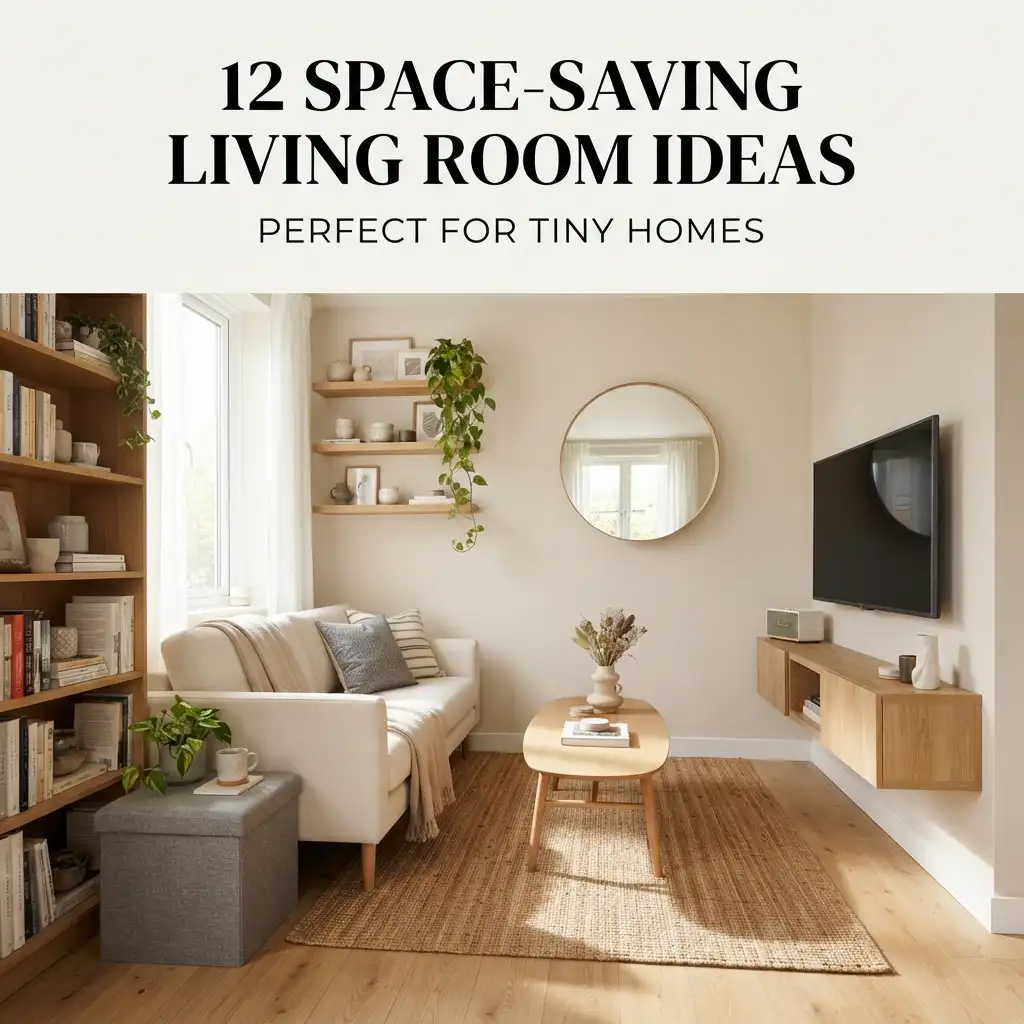
Tiny living room? No problem. The trick isn’t squeezing more furniture into the room; it’s choosing pieces that work harder without making the space feel cramped. A small room can feel stylish, comfortable, and surprisingly spacious when you use the right layout and storage tricks.
I’ve always loved small-space decorating because it forces you to get creative. Instead of buying a giant sofa and hoping everything magically fits, you can choose clever furniture, use vertical space, and create little storage opportunities that make a huge difference.
If your living room currently feels like every piece of furniture fights for the same three feet of floor space, these 12 space-saving living room ideas for tiny homes can help. And yes, you can have style without sacrificing every square inch of your floor.
1. Choose A Compact Sofa
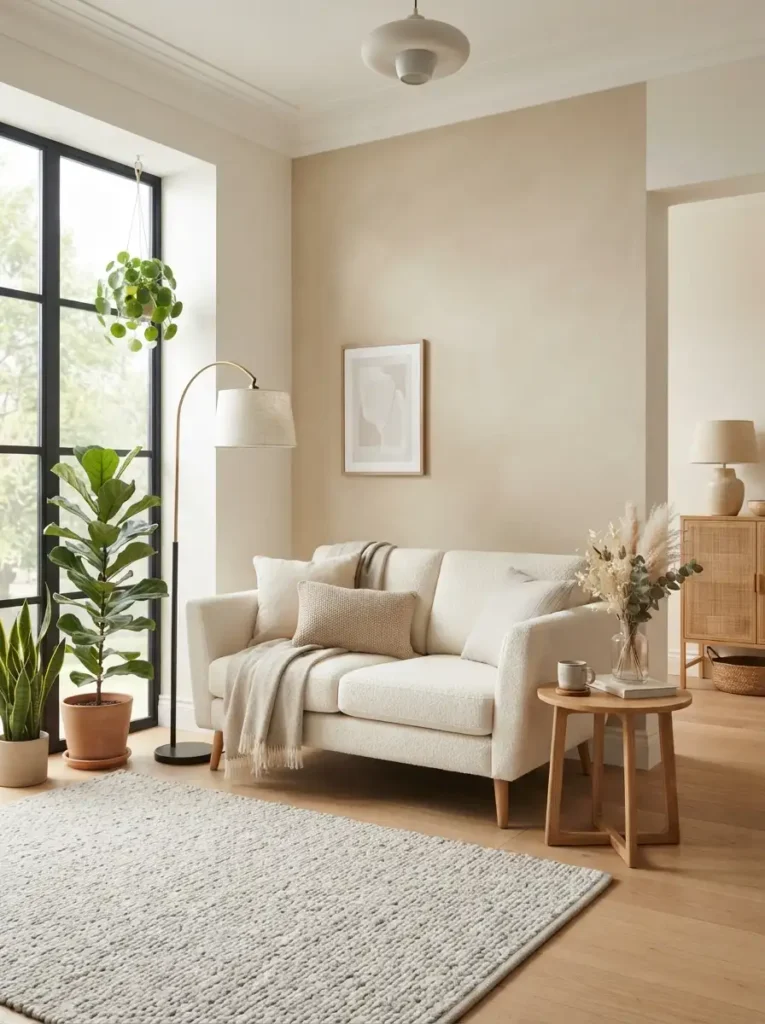
A massive sectional might look gorgeous online, but tiny living rooms often need something a little more sensible. Choose a compact sofa with a streamlined silhouette instead of oversized arms, deep cushions, or bulky upholstery.
A two-seater sofa or apartment-sized loveseat can give you comfortable seating while leaving enough room to move around. Look for raised legs because the visible floor underneath can make the room feel more open.
I especially like sofas with simple shapes because they don’t visually overwhelm a small room. Why let your sofa become the main character when the entire room deserves some attention?
2. Use A Storage Ottoman
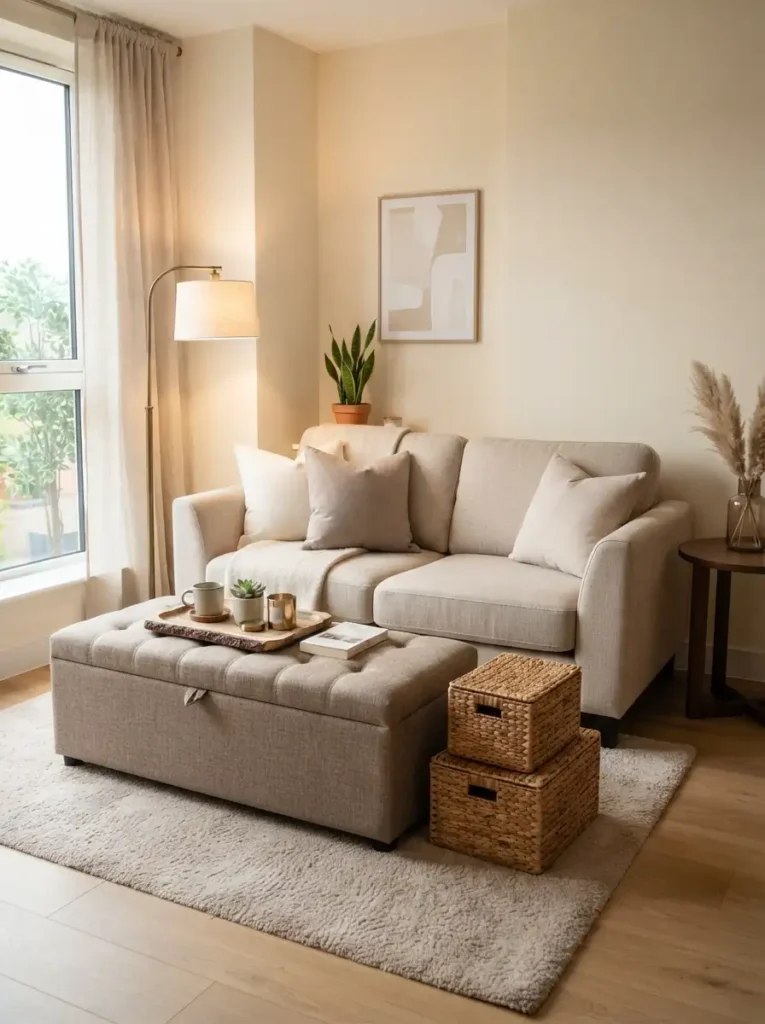
A storage ottoman can handle several jobs at once, which makes it perfect for a tiny living room. You can use it as a footrest, extra seating, coffee table, or hidden storage container depending on your needs.
Choose a style with a flat, sturdy top so you can place a tray on it for drinks and accessories. Then store blankets, books, games, or extra cushions inside.
FYI, multifunctional furniture can save more space than decorative storage alone. Every piece should earn its square footage in a small home.
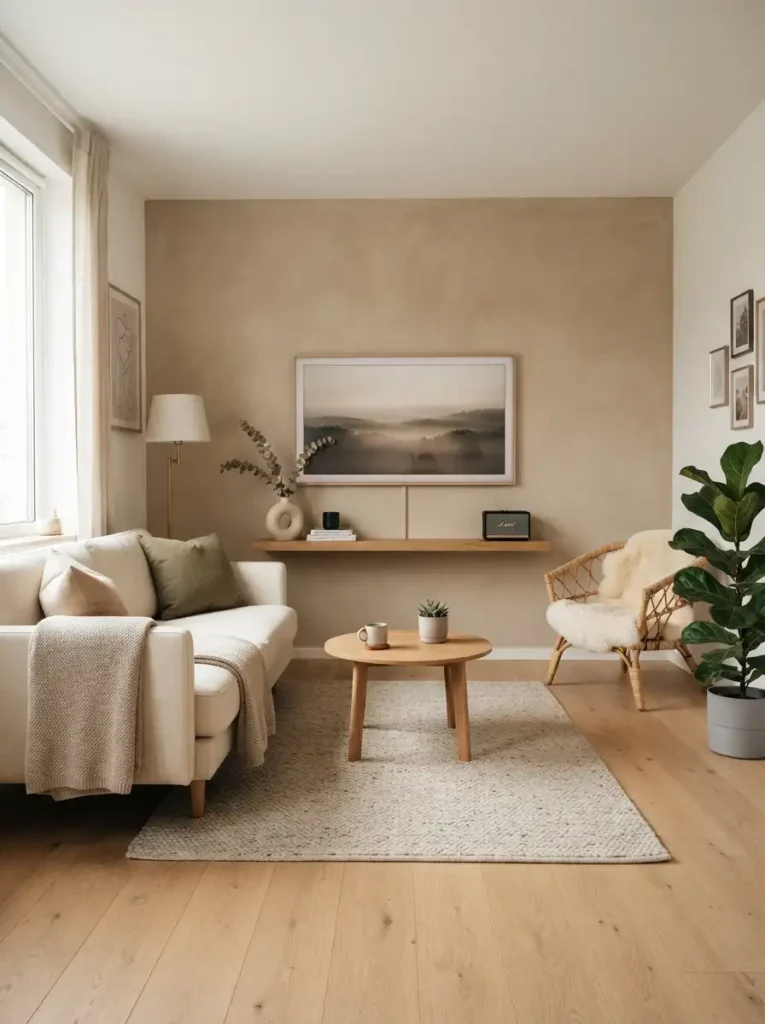
3. Mount Your TV On The Wall
A television stand can consume valuable floor space, especially in a narrow living room. Mounting the TV directly on the wall gives you a cleaner setup and opens up the area underneath.
You can install a slim floating shelf or wall-mounted cabinet below the television for media equipment and small accessories. This approach keeps cords organized while creating a more streamlined appearance.
The wall becomes useful storage and display space without taking away from your walking area. Isn’t that exactly what a tiny living room needs?
4. Take Advantage Of Vertical Space
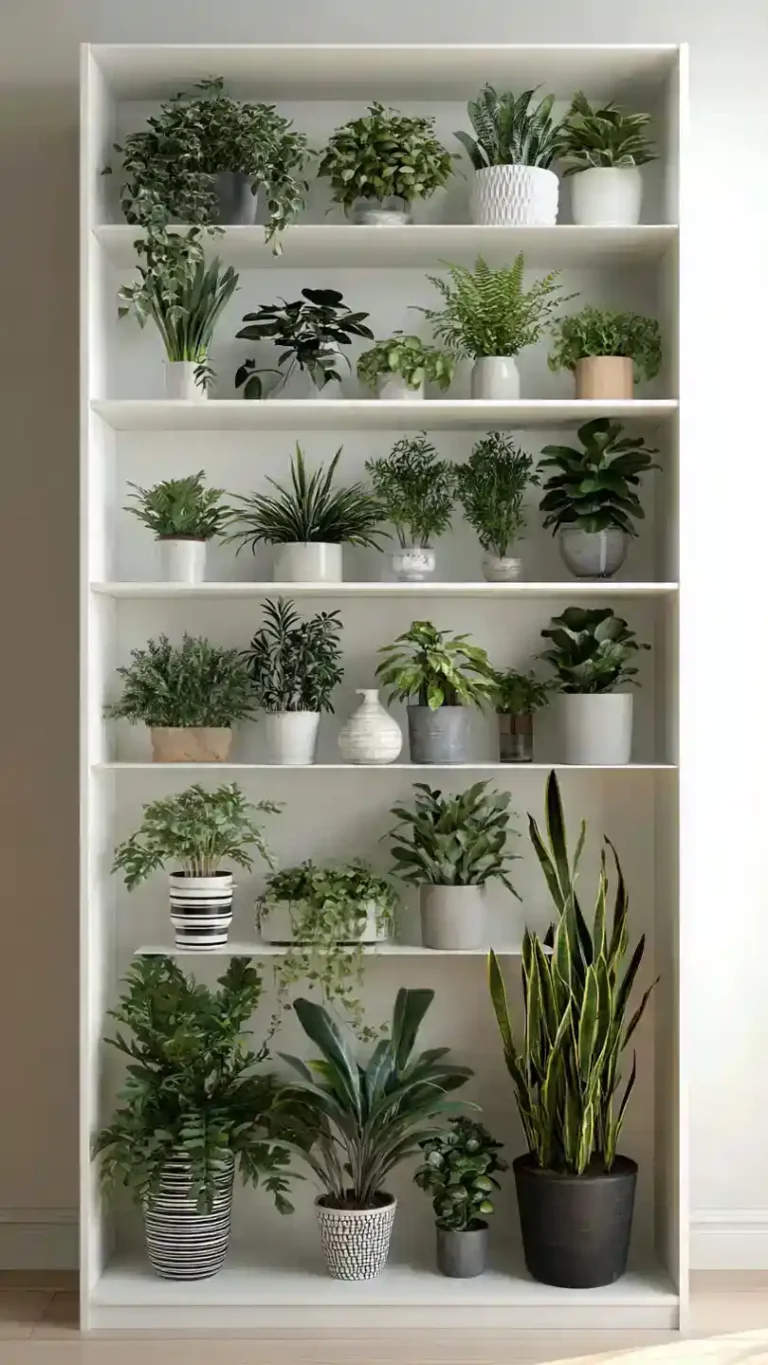
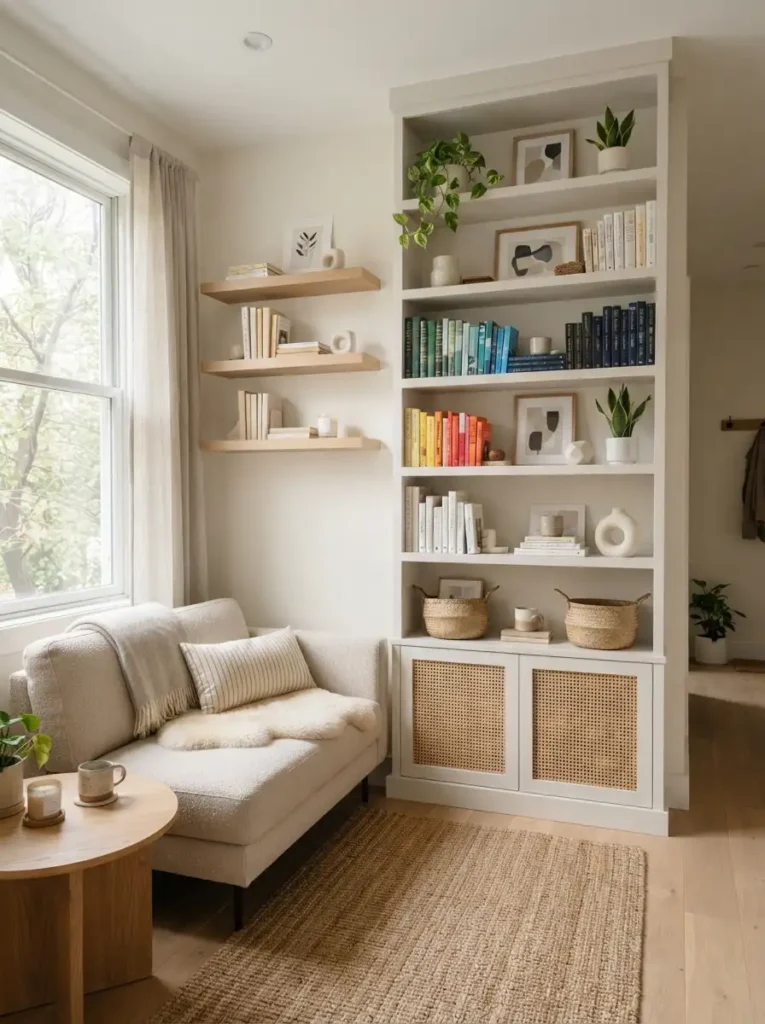
When floor space feels limited, look up. Vertical storage can give you plenty of room for books, plants, artwork, and decorative objects without crowding the floor.
Install tall bookcases, floating shelves, or narrow wall cabinets that take advantage of unused wall space. Keep heavier storage items toward the bottom and use higher shelves for lighter decorative pieces.
You can also draw the eye upward with tall curtains or vertically arranged artwork. This simple trick can make a small living room feel taller and more spacious.
5. Pick A Slim Coffee Table
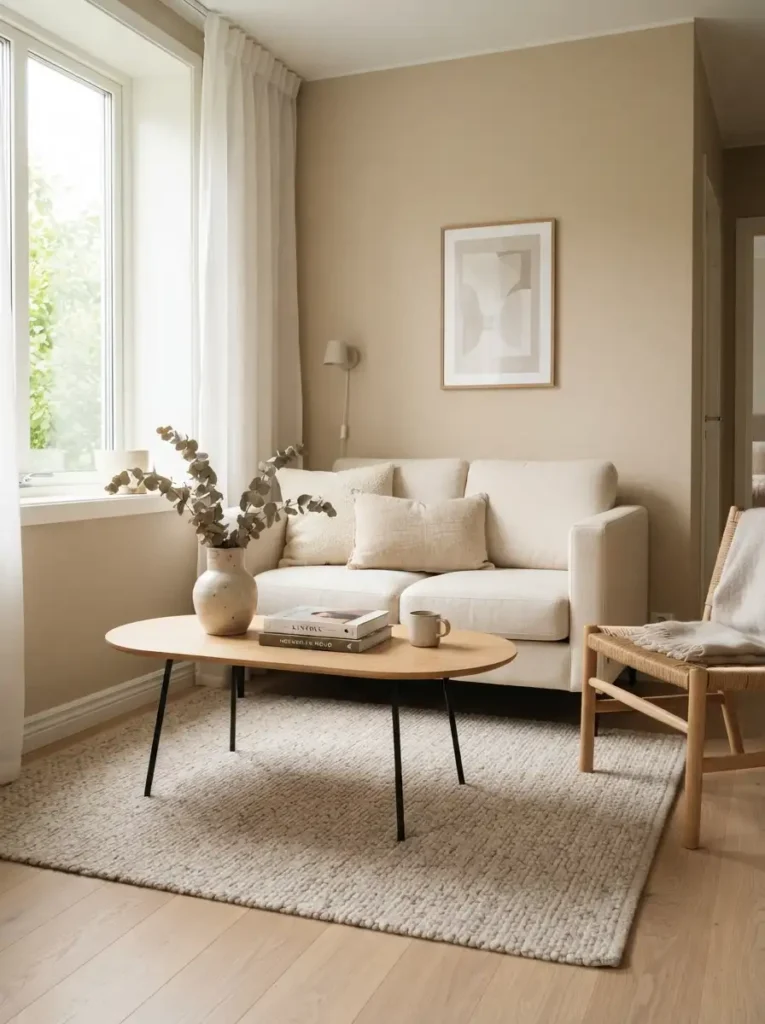
A bulky coffee table can quickly make a tiny living room feel crowded. Instead, choose a slim coffee table with a small footprint that leaves enough room around the sofa for comfortable movement.
Round and oval tables work particularly well because they eliminate sharp corners and create smoother walking paths. Nesting tables offer another smart option because you can separate them when guests arrive and stack them when you need more floor space.
Glass or acrylic tables can also reduce visual heaviness. Just keep your fingerprints under control because apparently tiny furniture still attracts giant amounts of cleaning.
6. Try A Wall-Mounted Desk
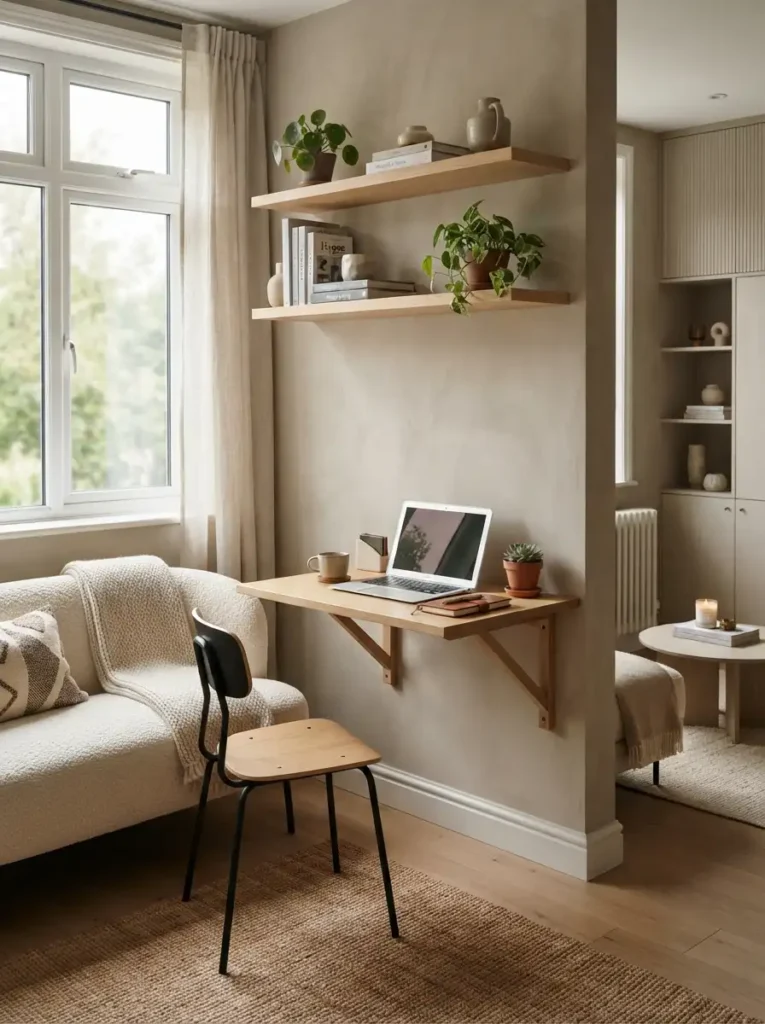
If your living room doubles as a home office, a traditional desk can steal far too much space. A wall-mounted folding desk gives you a practical workspace without permanently occupying the floor.
Choose a compact design with a shallow depth and enough room for your laptop. Fold it away when you finish working and reclaim the space for relaxing.
You can also install a floating shelf above the desk for notebooks and small office supplies. This arrangement creates a functional workstation without turning your living room into a full-time office.
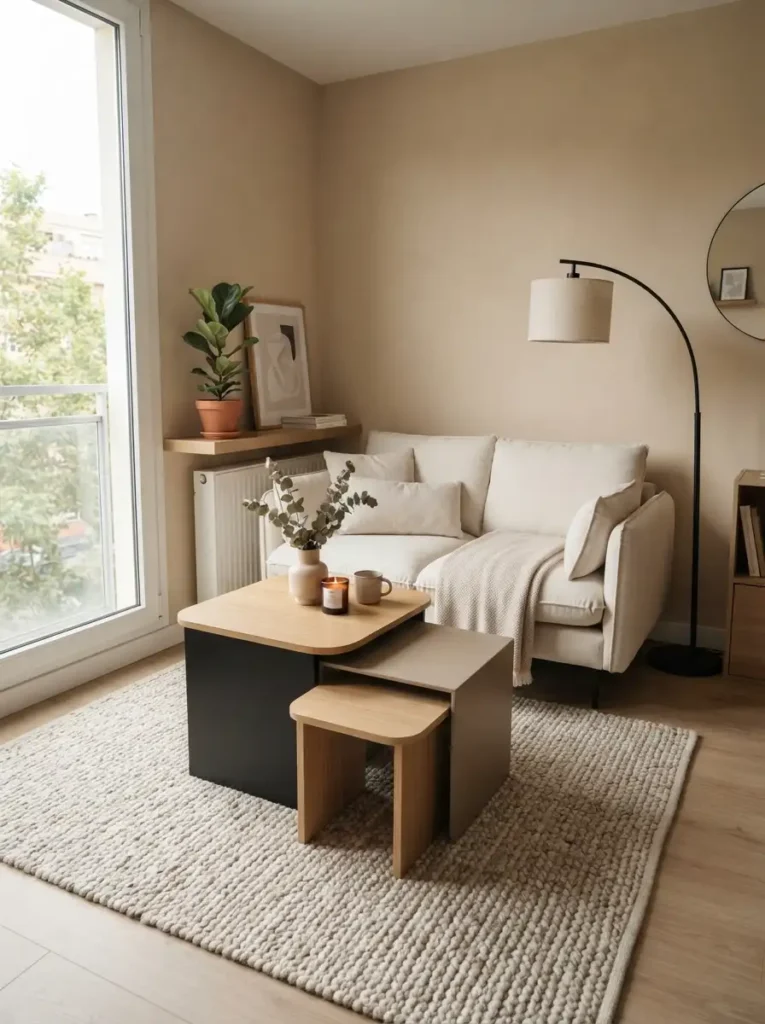
7. Use Nesting Tables
Nesting tables give you flexibility without demanding permanent floor space. You can stack the smaller tables underneath the larger one when you need room or pull them apart when guests need extra surfaces.
Look for tables with simple legs and compact proportions so they don’t visually overwhelm the room. Matching finishes can create a cohesive appearance, while mixed materials can add personality.
I love this idea for tiny homes because the furniture adapts to the situation. You get several surfaces without committing the entire room to several tables.
8. Add A Slim Console Behind The Sofa
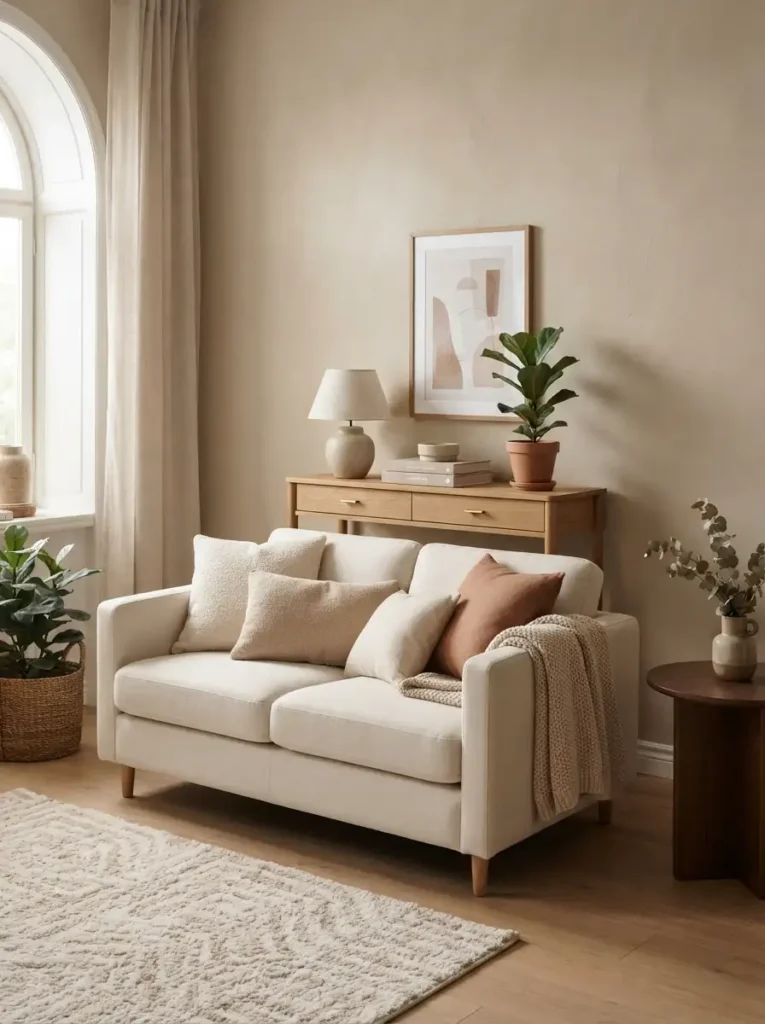
If you have a small gap behind your sofa, don’t automatically treat it as wasted space. A narrow console table can provide a useful surface for lamps, books, plants, or decorative baskets.
Choose a console that stays close to the wall and doesn’t extend too far into the walkway. You can also select one with drawers or shelves for additional hidden storage.
This trick works particularly well when you position the sofa slightly away from the wall. The console then creates both function and visual structure without requiring another large furniture piece.
9. Choose Furniture With Hidden Storage
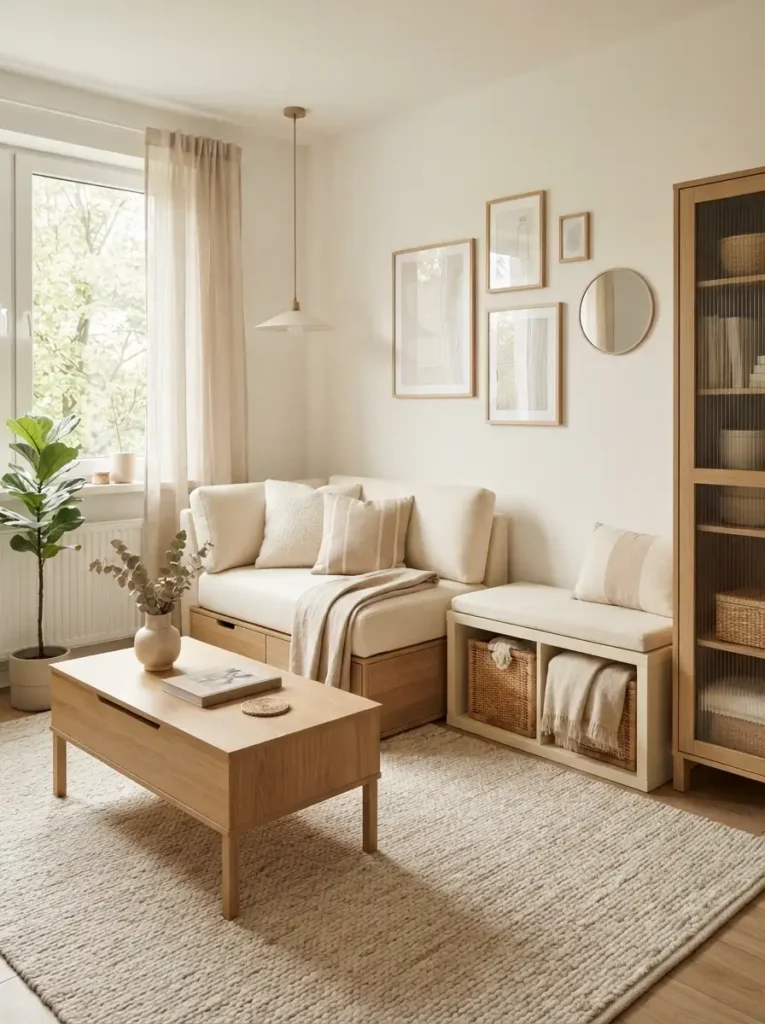
Tiny homes need storage, but that doesn’t mean every wall needs a cabinet. Look for furniture that hides storage inside its design, such as benches with lift-up seats, beds with drawers, or coffee tables with compartments.
In a living room, consider storage benches, ottomans, side tables with drawers, and cabinets with closed doors. These pieces help you hide everyday clutter while keeping the room visually calm.
A clutter-free room almost always feels larger. If you can put something away instead of staring at it all day, your tiny living room will thank you.
10. Use Mirrors To Open Up The Room
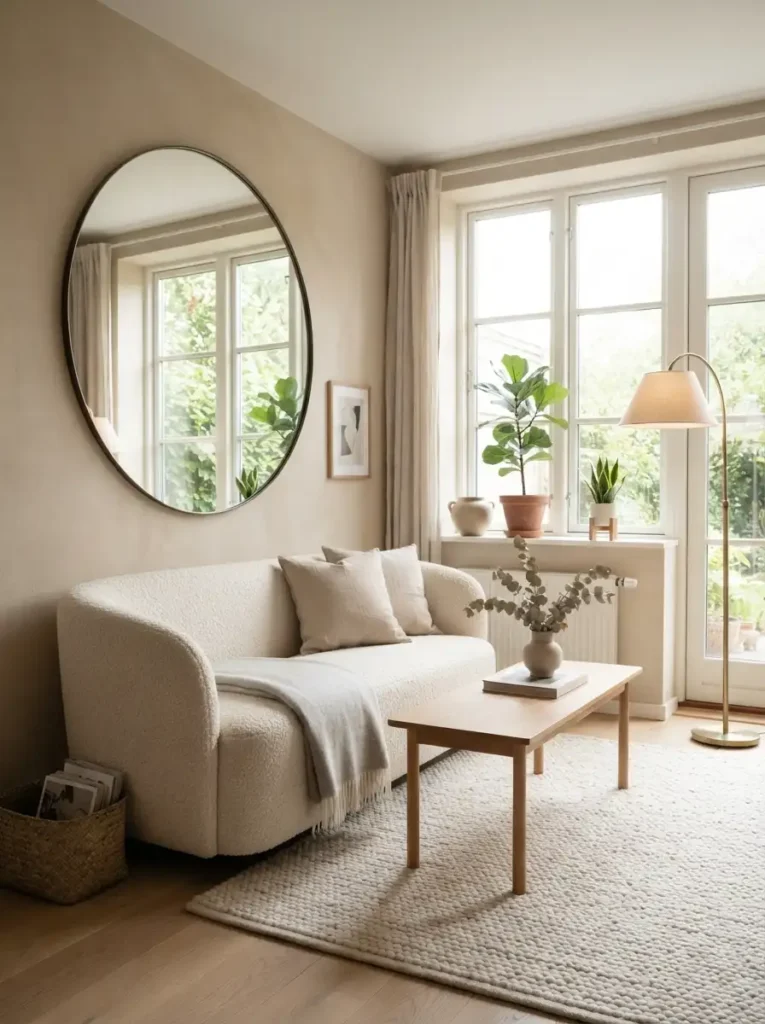
Mirrors can make a small living room feel brighter and more spacious by reflecting light and creating the impression of additional depth. A large mirror placed opposite a window can work especially well.
Choose one oversized mirror rather than covering every wall with tiny decorative mirrors. A single strong piece usually creates a cleaner visual effect.
You can also use mirrored cabinet doors or furniture with subtle reflective surfaces. Just avoid turning your living room into a funhouse unless that happens to be your decorating goal.
11. Keep The Color Palette Light And Cohesive
Color can dramatically affect how a small living room feels. Light neutrals such as warm white, cream, beige, soft gray, and pale taupe can help create an airy atmosphere.
You don’t need to make everything the same color. Instead, choose a consistent palette and introduce contrast through pillows, artwork, rugs, or small accessories.
A cohesive color scheme prevents the room from feeling visually fragmented. If you love bold colors, use them as accents instead of covering every available surface.
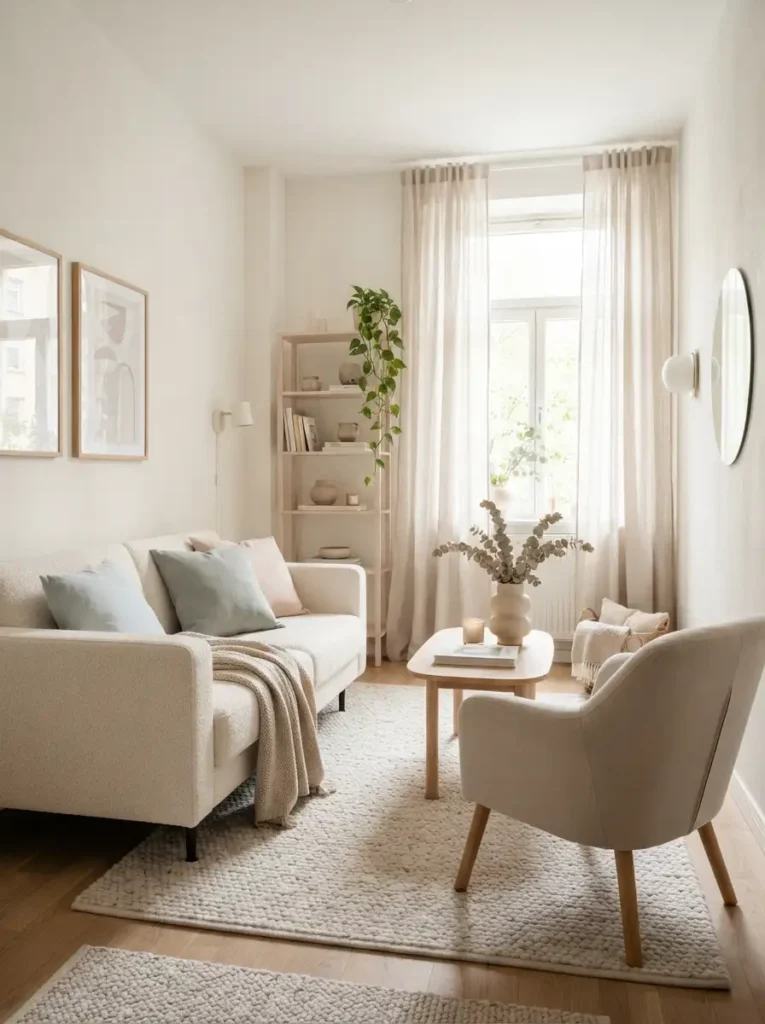
12. Create A Flexible Furniture Layout
Sometimes the biggest space-saving improvement doesn’t involve buying anything at all. Rearranging your existing furniture can open up surprisingly large areas.
Start by creating clear walking paths between the main entrance, sofa, seating area, and other frequently used spaces. Avoid pushing every piece against the wall simply because you think that automatically creates more room.
Try different arrangements before deciding what works best. IMO, a small room often needs less furniture rather than smaller versions of everything you already own.
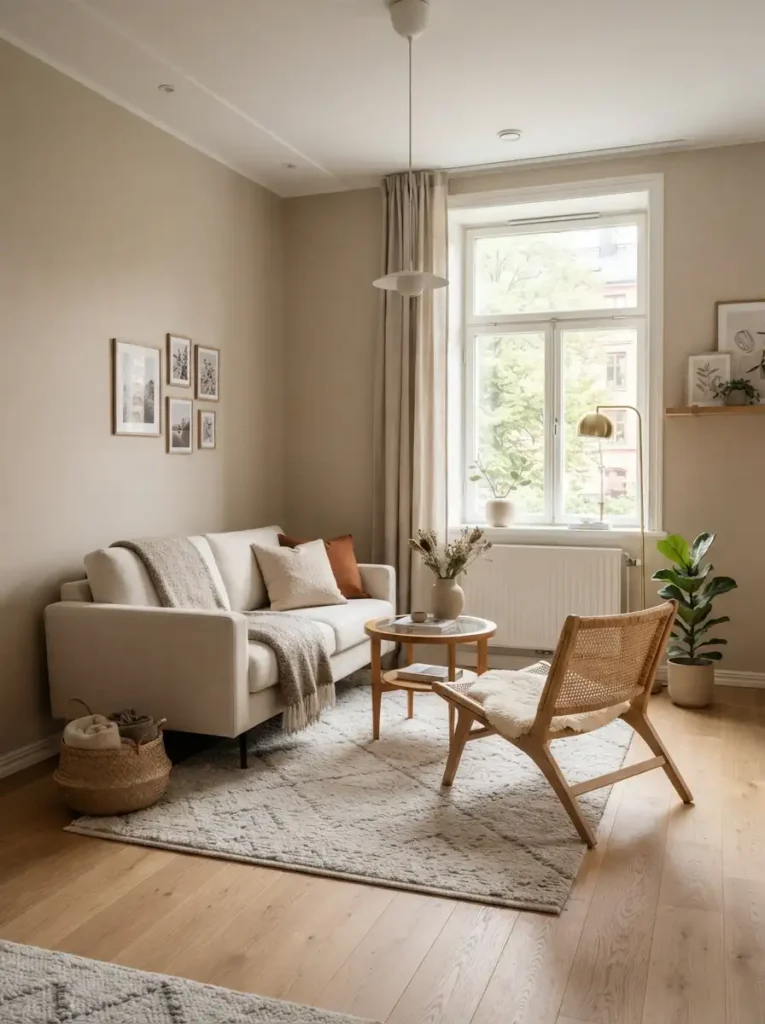
How To Make A Tiny Living Room Feel Bigger
Once you choose your furniture, focus on visual space. Keep surfaces relatively clear and avoid filling every shelf, wall, and corner with accessories.
Try these simple tricks:
- Use light-colored upholstery to create an airy look.
- Choose furniture with visible legs.
- Hang curtains closer to the ceiling.
- Keep walking paths clear.
- Use one large rug instead of several tiny rugs.
- Add mirrors where they can reflect natural light.
- Choose furniture with multiple functions.
- Keep everyday clutter inside baskets, drawers, or cabinets.
These changes don’t require a major renovation. Sometimes moving one chair or removing one unnecessary table can make a bigger difference than buying another storage unit.
How To Choose Furniture For A Tiny Living Room
Before buying anything, measure the room and the furniture carefully. A beautiful chair doesn’t help much if you can’t open the door after placing it inside.
Pay attention to:
- Furniture width and depth
- Door and window placement
- Walking paths
- Storage requirements
- Seating needs
- Available wall space
- Clearance around tables
I recommend measuring twice before ordering large furniture. Returning an oversized sofa because it refuses to fit through the doorway makes for a very expensive comedy routine.
Small Living Room Mistakes To Avoid
Even good furniture can create problems when you arrange it poorly. The biggest mistake involves trying to fit too many pieces into the room.
You don’t need a sofa, two armchairs, three side tables, a huge coffee table, a cabinet, and a giant floor lamp just because a showroom says the combination looks complete. Choose the pieces you actually use.
Also avoid blocking windows with tall furniture, filling every corner with decor, or using several small rugs that visually chop the floor into pieces. Keep the layout simple and let the room breathe.
Make Your Tiny Living Room Feel Like Home
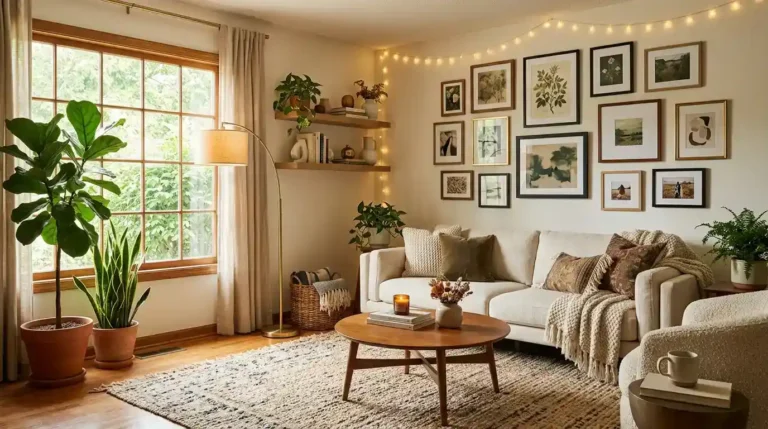
Space-saving design doesn’t mean creating a room that feels cold or empty. You can still add personality through cushions, artwork, plants, books, textured throws, and meaningful decorative pieces.
The key involves choosing fewer items and giving each one a purpose. A beautiful lamp that provides useful lighting makes more sense than three decorative objects that simply collect dust.
Try mixing practical pieces with a few things you genuinely love. Your living room should feel like your home, not like a furniture showroom waiting for someone to buy it.
Final Thoughts On Small Living Room Ideas
A tiny living room can feel surprisingly comfortable when you make every inch work smarter. Compact sofas, multifunctional furniture, vertical storage, nesting tables, wall-mounted solutions, mirrors, and cohesive colors can transform the way your space feels.
You don’t need to sacrifice style just because your home has limited square footage. Start by removing pieces you rarely use, then add furniture that serves more than one purpose.
Most importantly, remember that good small-space design focuses on how you live. Create clear pathways, keep clutter under control, and choose pieces that make everyday life easier. A tiny living room may have less space, but with the right choices, it certainly doesn’t have to feel small.