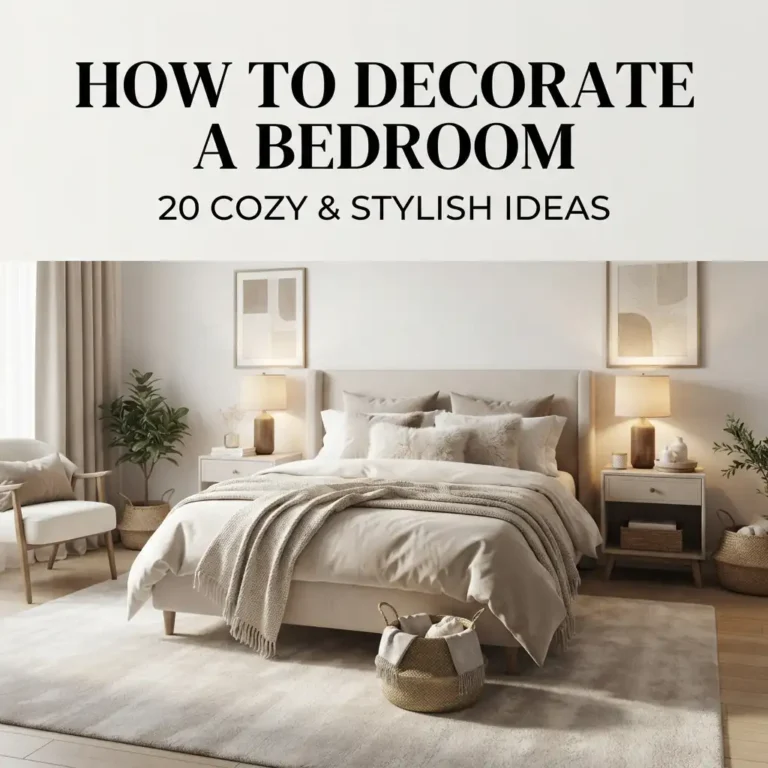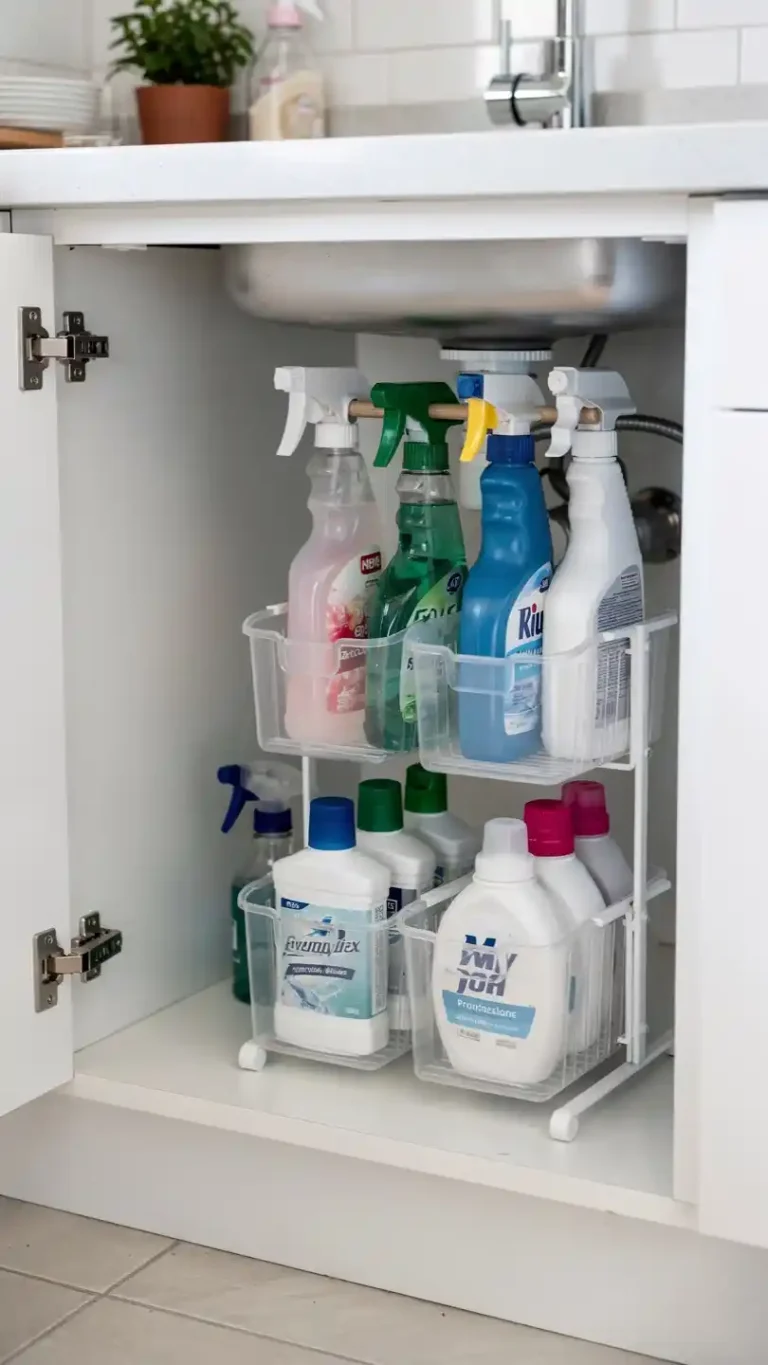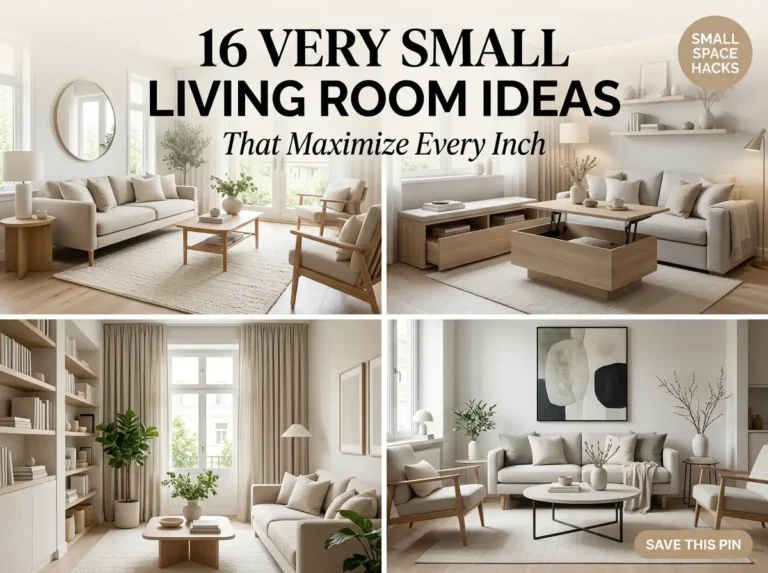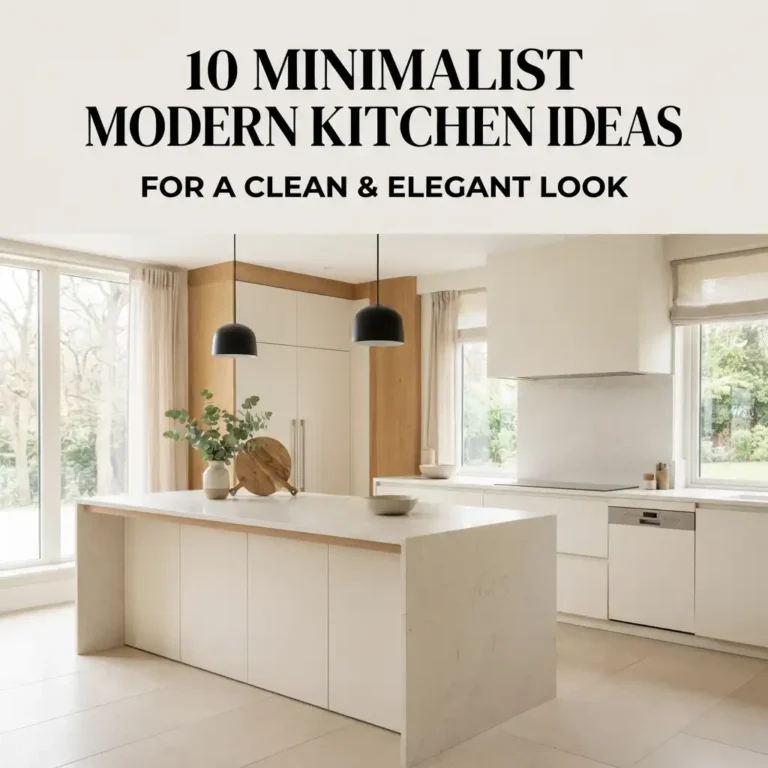
20 Small Living Room Ideas That Instantly Transform Your Home
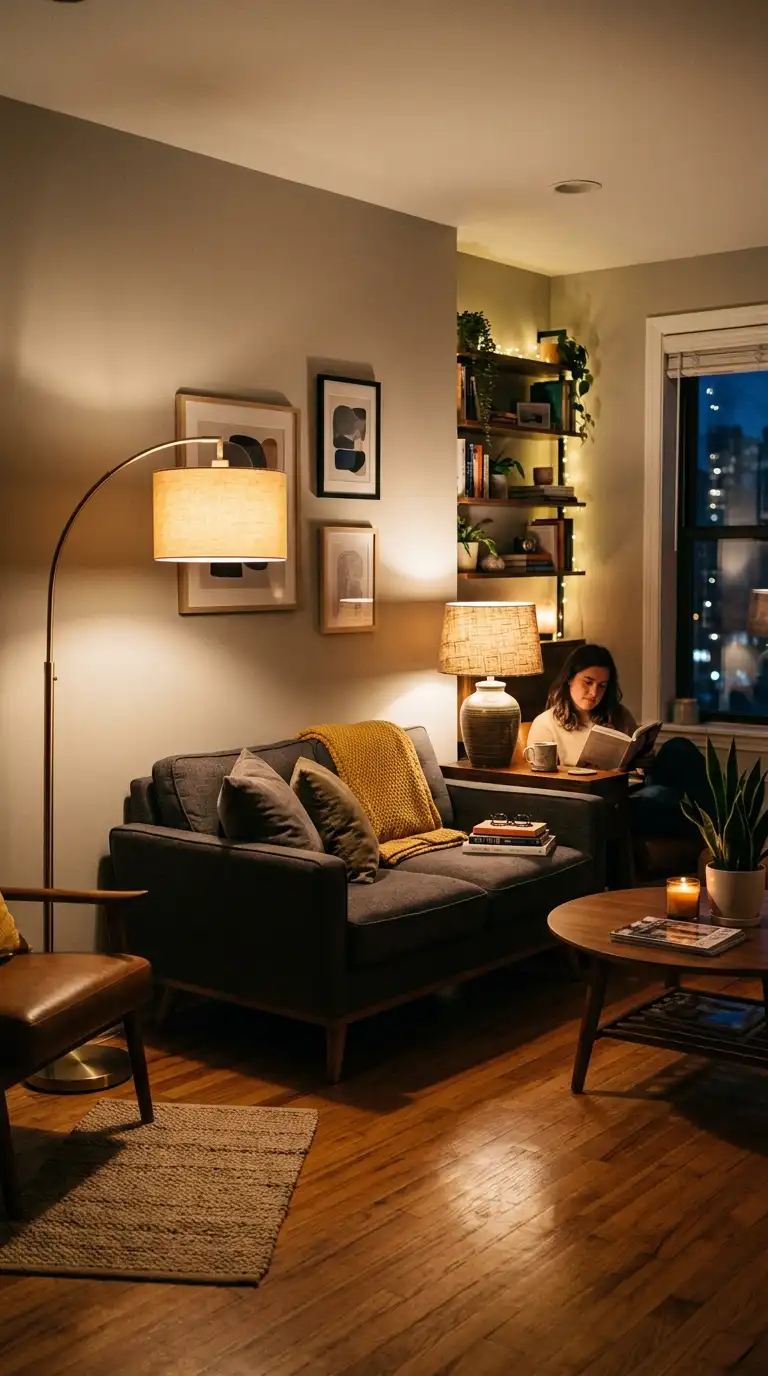
My first living room was so small that my couch touched three walls at once—and I’m only slightly exaggerating. If your living room feels more like a hallway with a TV in it, I promise you’re not stuck with it forever. A few smart moves can make that space feel twice as big.
I’ve rearranged, downsized, and re-decorated more small living rooms than I care to admit, mostly because I kept moving into apartments with the same tiny floor plan. So IMO, I’ve picked up a few tricks that actually work versus the ones that just look nice in a photo. Here are 20 small living room ideas that genuinely transform the space.
1. Float Your Furniture Away From the Walls
Pushing every piece against the wall seems logical, but it often leaves an awkward, empty void in the middle of the room. Pulling your sofa even a few inches away creates a more intentional layout. A floating arrangement makes the room feel designed instead of just filled.
2. Choose a Sofa With Exposed Legs
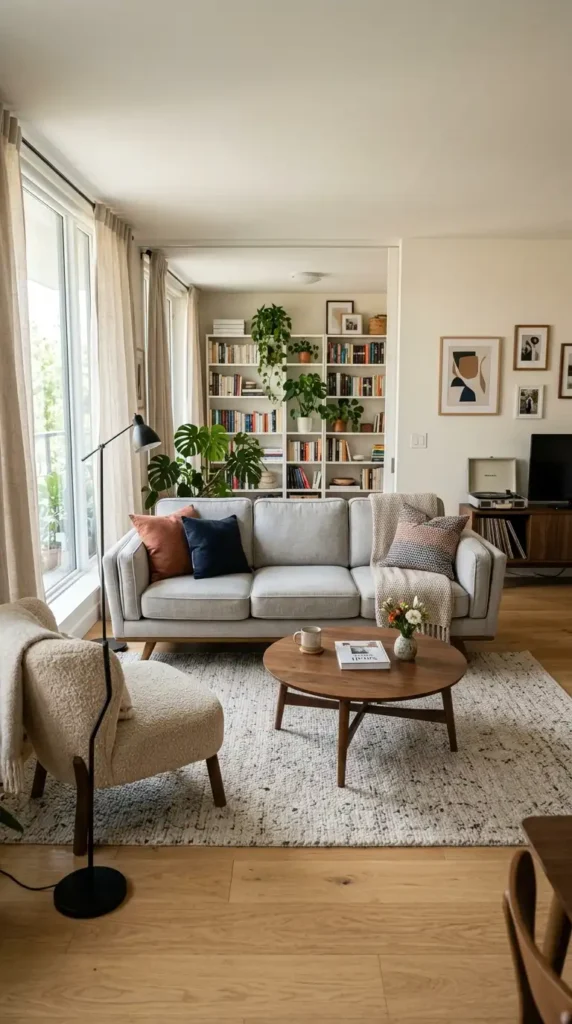
A sofa that sits flush on the floor blocks your view of the ground and makes the room feel heavier. One with visible legs lets light and sightlines pass underneath it. You see more floor, and more floor always reads as more space.
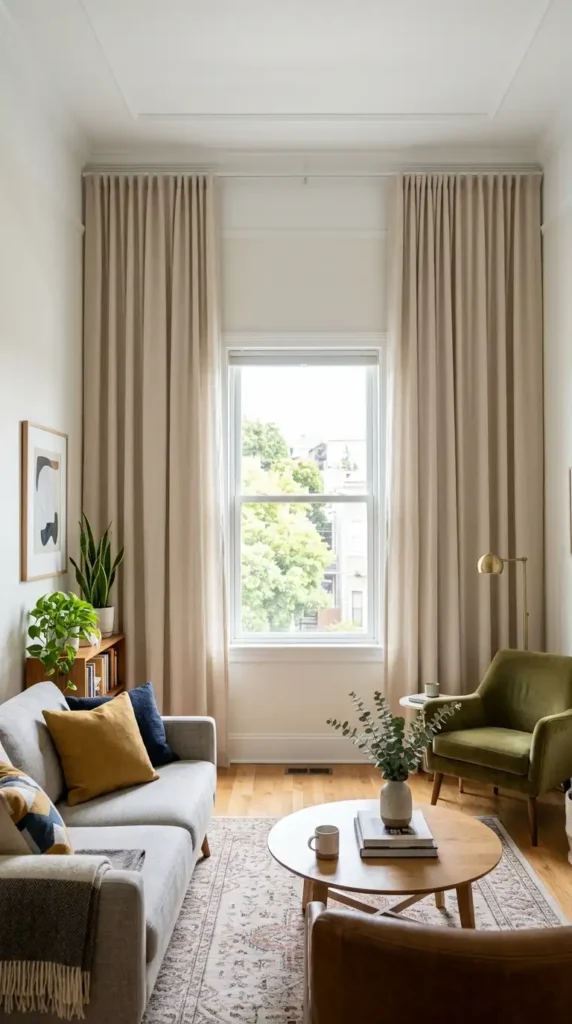
3. Hang Curtains Higher Than the Window Frame
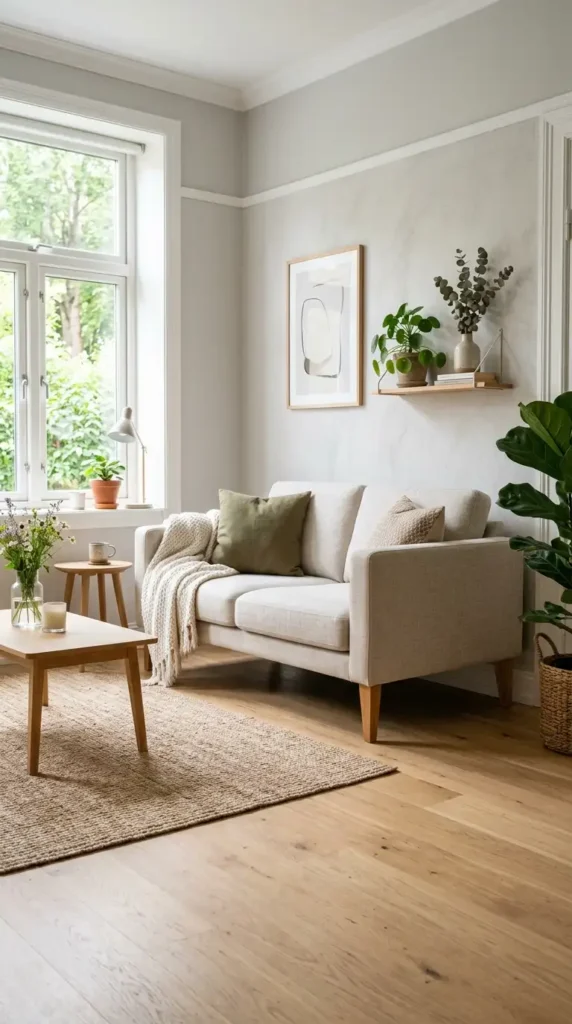
Mounting curtain rods close to the ceiling rather than right above the window makes your ceilings look taller than they are. It’s a two-second fix with a surprisingly big visual payoff. Ever notice how the best-looking rooms almost always have tall curtains?
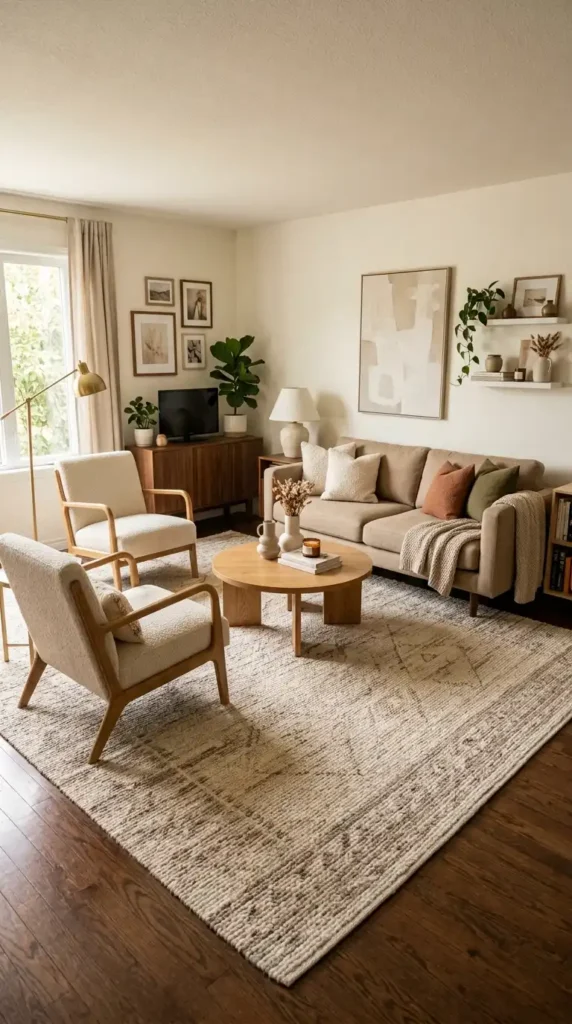
4. Use a Large Area Rug, Not a Small One
A tiny rug floating in the middle of the room makes the space look chopped up and awkward. A rug big enough for all your furniture legs to sit on ties the whole room together. Size matters more than pattern here—go bigger than you think you need.
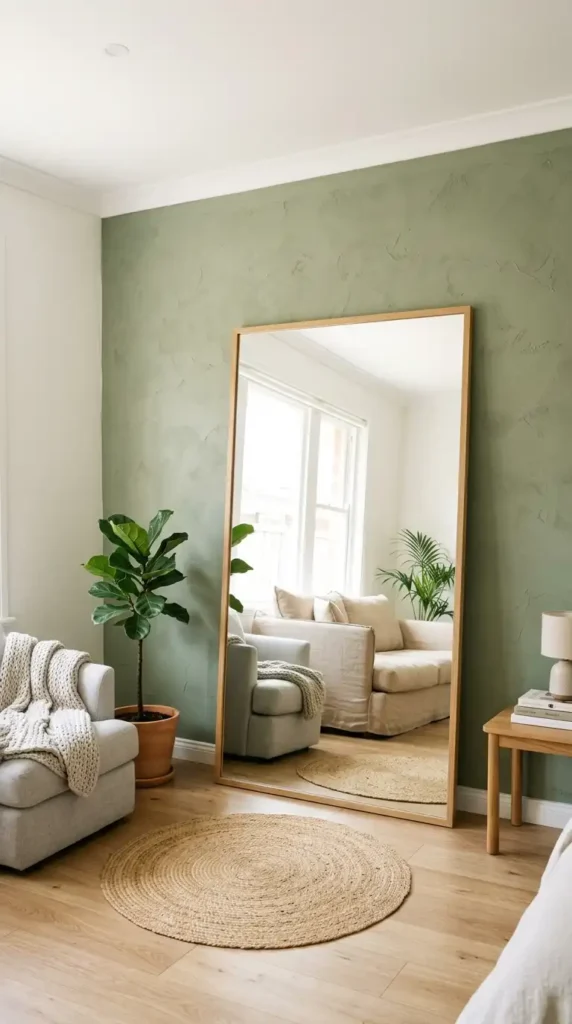
5. Add a Large Mirror on a Feature Wall
Mirrors reflect light and visually double the depth of a room, and living rooms benefit just as much as bathrooms do. Lean a large, floor-length mirror against a wall for an instant sense of openness. It’s one of the cheapest tricks on this list and one of the most effective.
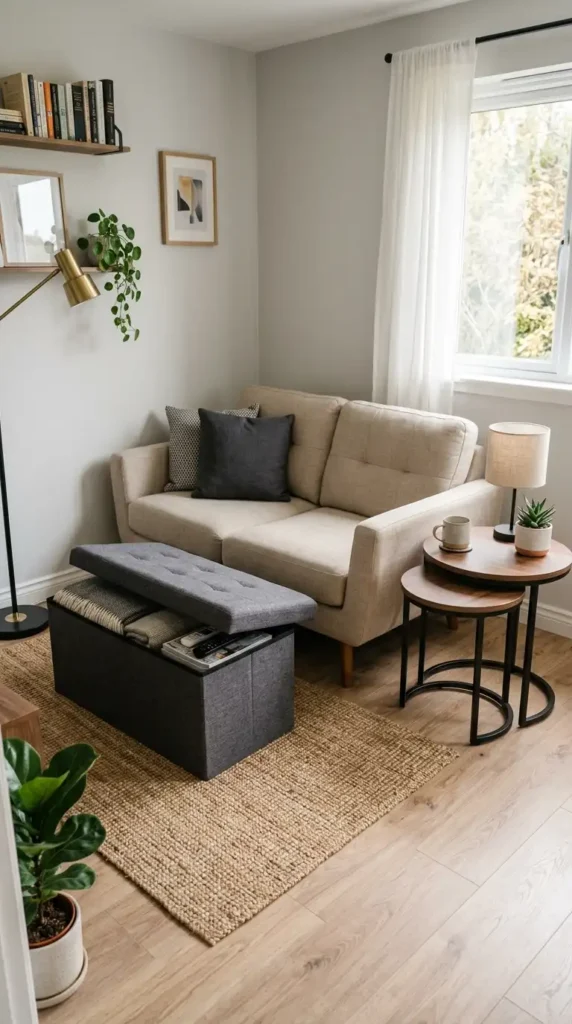
6. Pick Multi-Functional Furniture
A coffee table with hidden storage or an ottoman that doubles as extra seating saves you from cluttering the room with separate pieces. Multi-functional furniture means fewer items taking up floor space overall.
- Storage ottomans for blankets and remotes
- Nesting tables that tuck away when not needed
- A daybed that works as both seating and a guest bed
7. Stick to a Light, Cohesive Color Palette
Dark walls absorb light and visually shrink a room, while light, cohesive colors keep everything feeling open and connected. I learned this the hard way after painting a small room navy blue—gorgeous in photos, claustrophobic in real life.
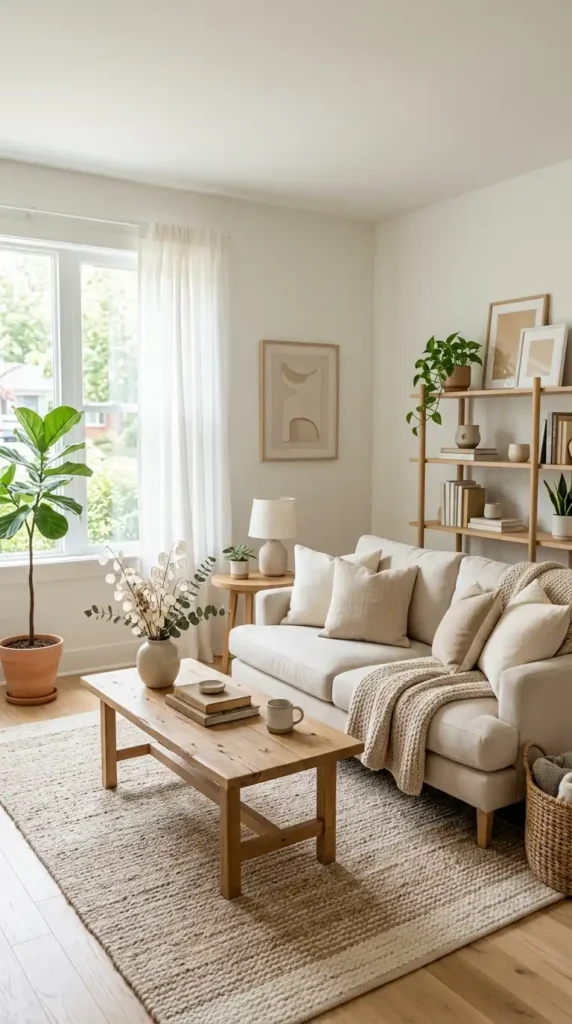
8. Use Vertical Shelving Instead of Wide Bookcases
Wide, low bookcases eat up valuable floor space that a small living room can’t spare. Tall, narrow shelving units store just as much while taking up a fraction of the footprint. Going vertical is basically the golden rule of small-space design.
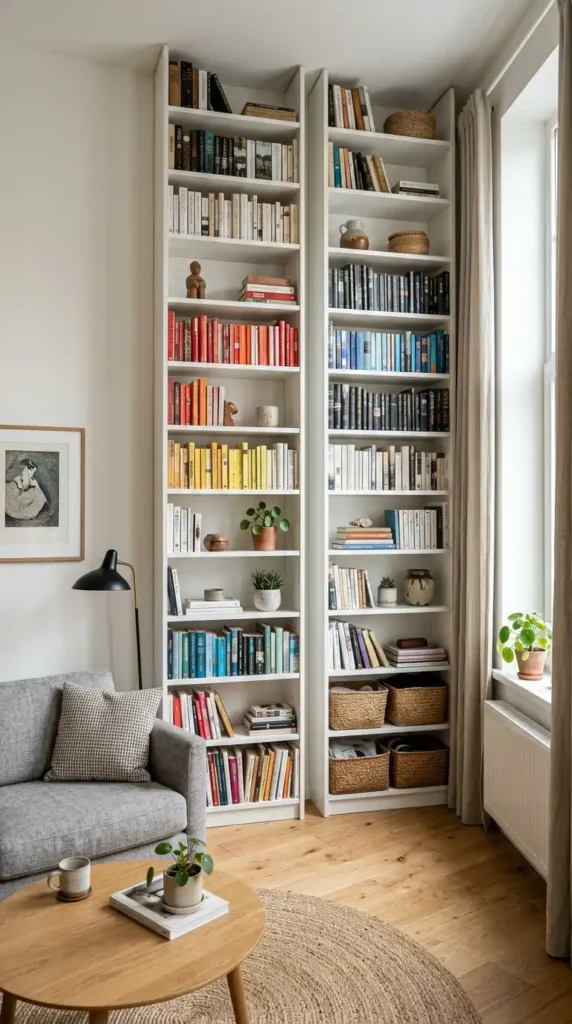
9. Swap Heavy Curtains for Sheer Fabric
Thick, heavy curtains block natural light and make a small room feel darker and more closed off. Sheer or light fabric lets daylight filter through while still offering privacy. This one small swap can brighten an entire room without touching the paint.
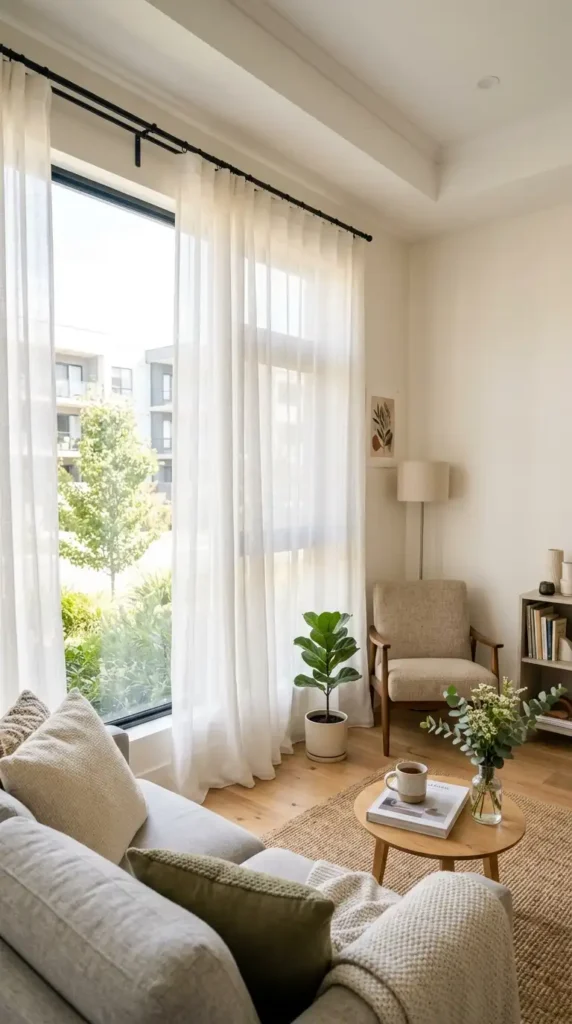
10. Create Zones With a Rug, Not Walls
If your living room shares space with a dining or entry area, you don’t need a wall to separate them. A rug placed under just the seating area visually defines the zone without physically dividing the room. Zoning with texture keeps the space feeling open, not chopped up.
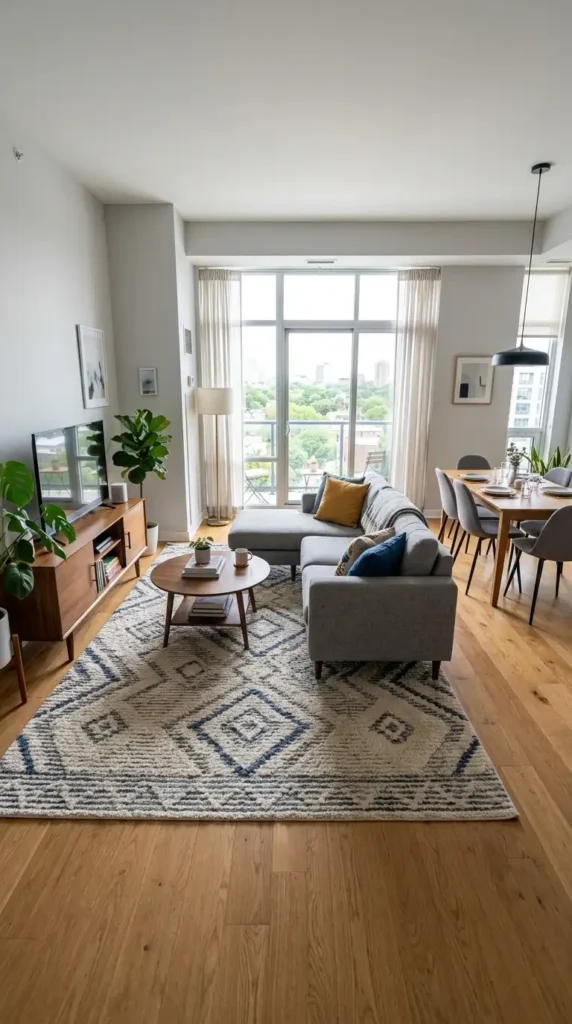
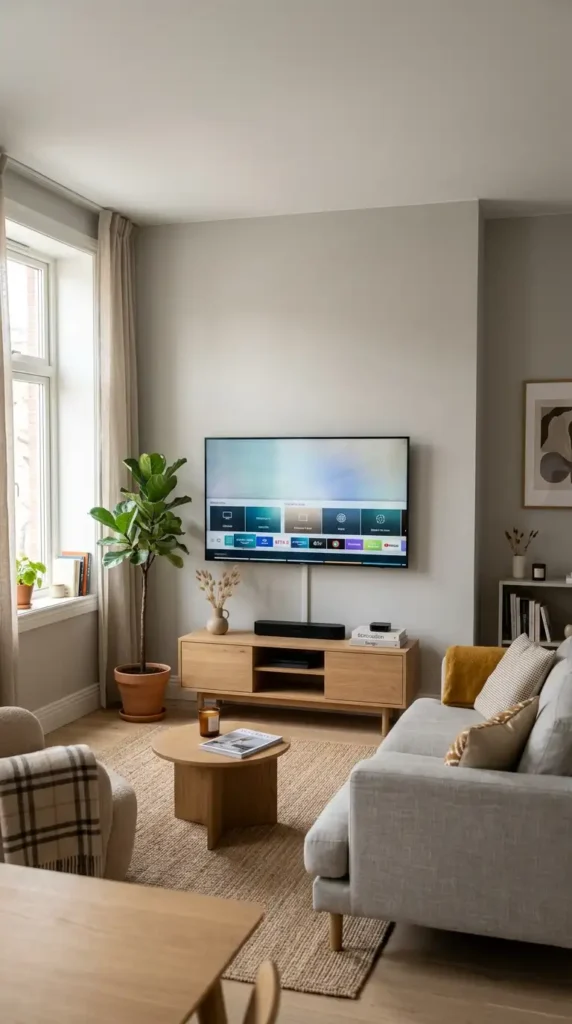
11. Choose a Streamlined Media Console
Bulky entertainment centers with heavy cabinetry make a small room feel more crowded than it needs to be. A slim, low-profile media console keeps the TV area from dominating the space. FYI, wall-mounting your TV entirely skips this problem altogether.
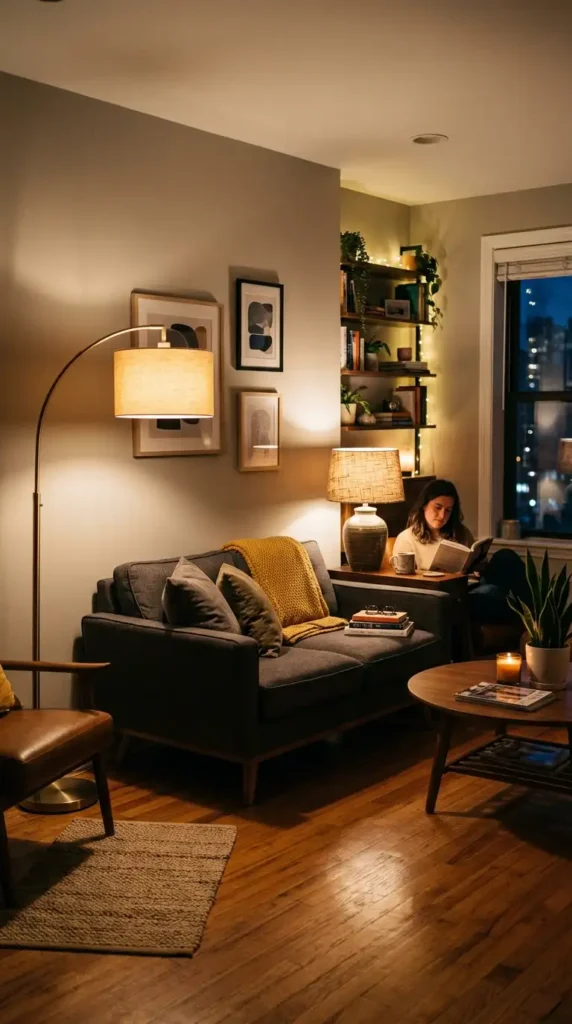
12. Add Layered Lighting Instead of One Overhead Fixture
A single ceiling light creates flat, uninteresting lighting and leaves corners dim and lifeless. Layering a floor lamp, a table lamp, and some ambient lighting makes the room feel warmer and more dimensional. Good lighting design does more heavy lifting than most people realize.
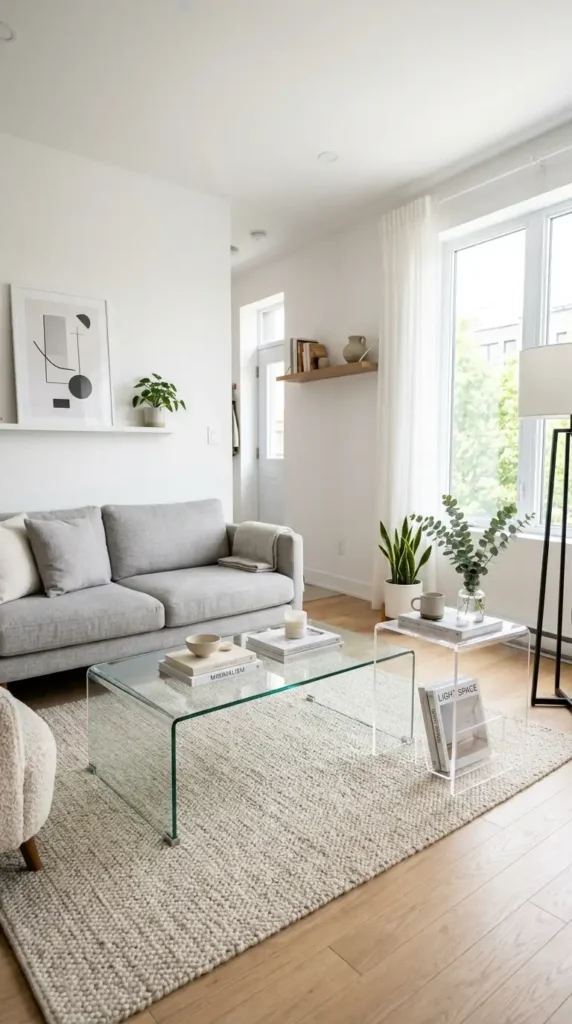
13. Use Glass or Acrylic Furniture
Solid wood coffee tables and side tables take up visual weight even when they’re not particularly large. Glass or acrylic pieces are functionally identical but nearly disappear visually. It sounds like a small detail, but it changes the whole feel of a room.
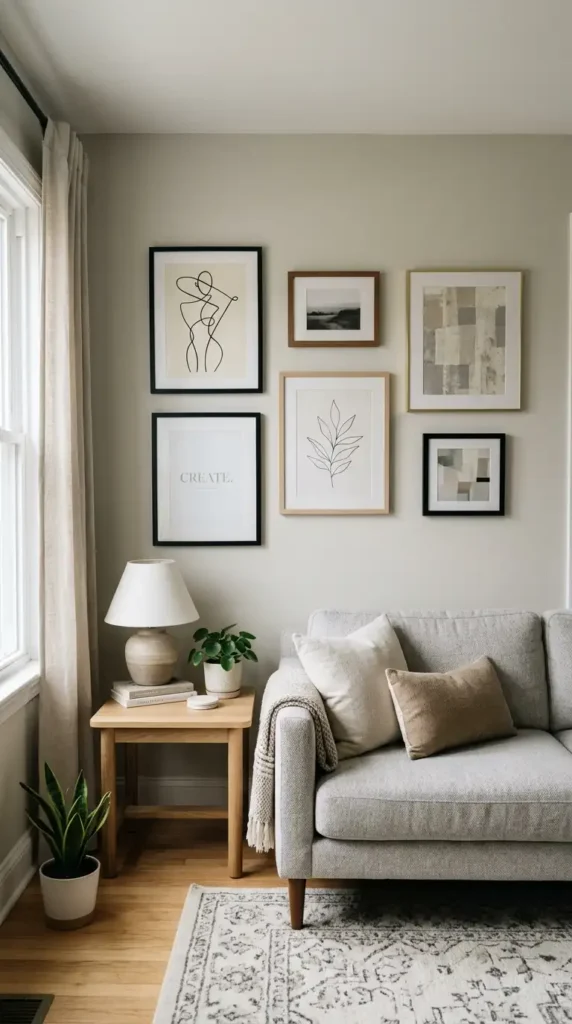
14. Hang Art at the Right Height
Art hung too high or too low throws off the visual balance of a room and can make ceilings feel oddly proportioned. Center your pieces at eye level, roughly 57 inches from the floor. Correct art height is one of the most overlooked design rules out there.
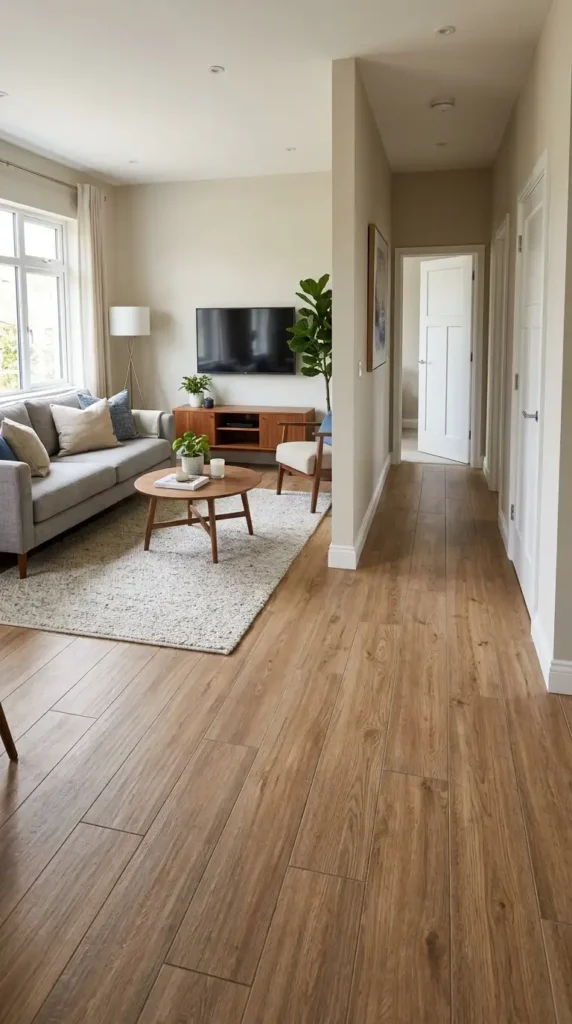
15. Keep a Consistent Flooring Throughout
Switching flooring materials between rooms creates a visual break that makes each individual space feel smaller and more separate. Consistent flooring lets the eye travel freely from one room to the next. It’s a subtle trick, but it works every time.
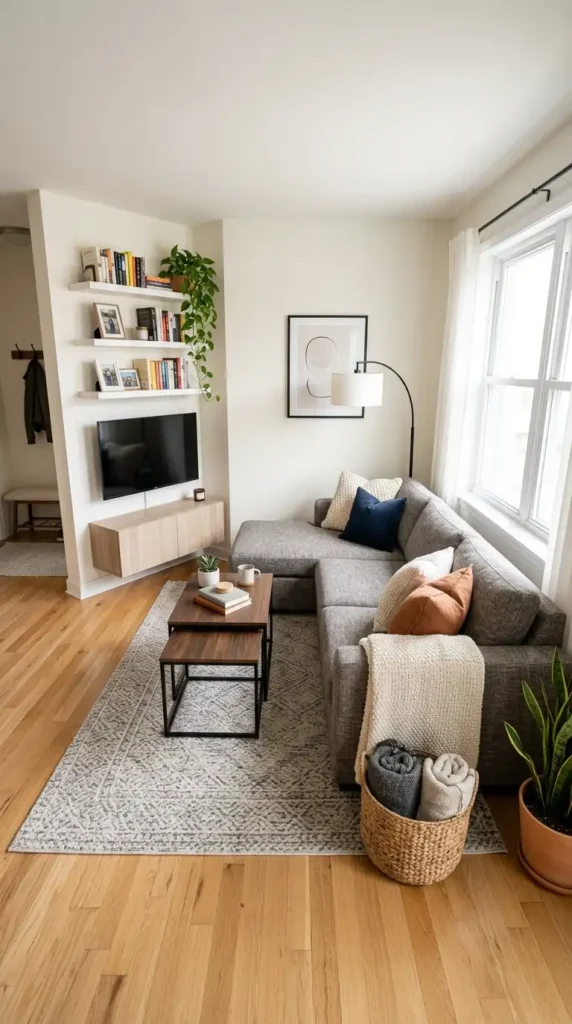
16. Choose a Compact Sectional Over a Bulky One
Sectionals are great for lounging, but an oversized one can swallow a small living room whole. A smaller, apartment-sized sectional gives you the same comfort without the footprint. Measure twice before buying—sectionals are notoriously deceiving in showrooms.
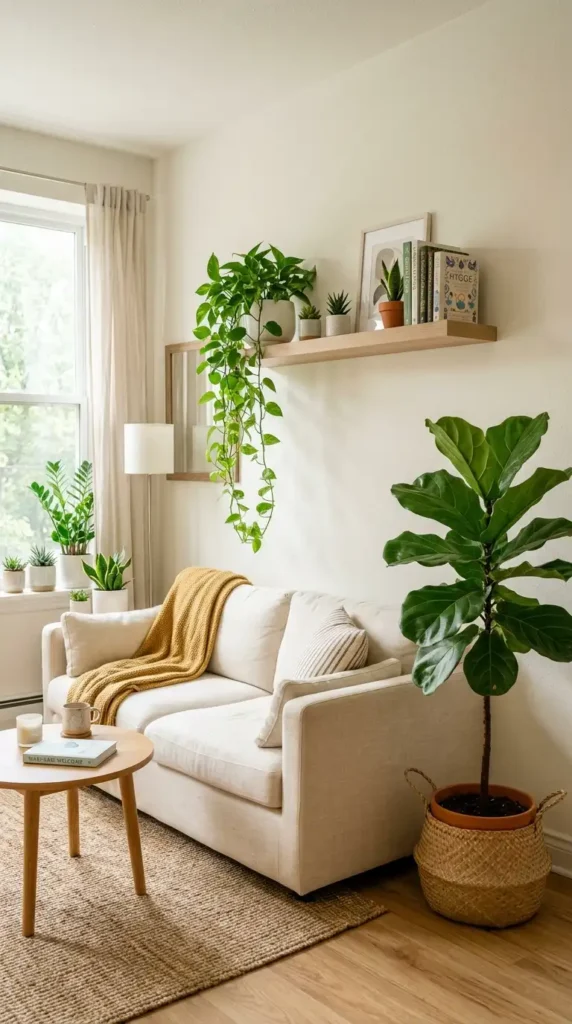
17. Add Greenery in Small Doses
A well-placed plant adds color and life without taking up much actual space. Fiddle leaf figs, snake plants, and trailing pothos all work beautifully in small living rooms. Just don’t go overboard—one or two plants make a statement, five turn into a jungle.
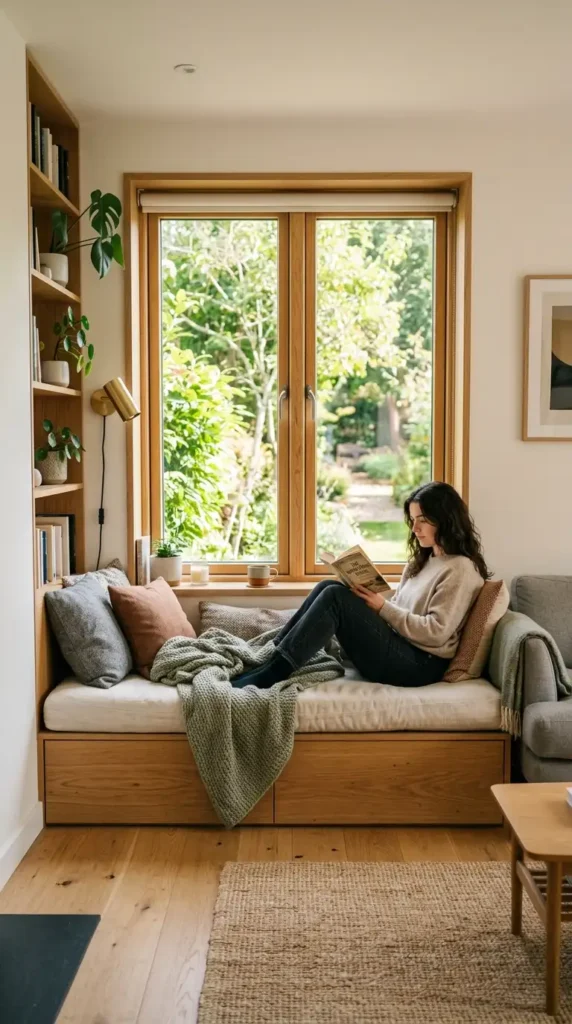
18. Use Window Seats or Built-Ins Instead of Extra Chairs
A window seat or built-in bench provides seating without needing a separate armchair taking up floor space. It’s a smart trade-off if your living room doubles as a reading nook. This is one of those upgrades that looks expensive but often costs less than a new chair.
19. Declutter Your Surfaces Ruthlessly
Coffee tables and shelves covered in knickknacks make any room feel busier and smaller than it actually is. Keep surfaces mostly clear, with just one or two intentional decor pieces. A clutter-free room always feels bigger, calmer, and more put-together 🙂
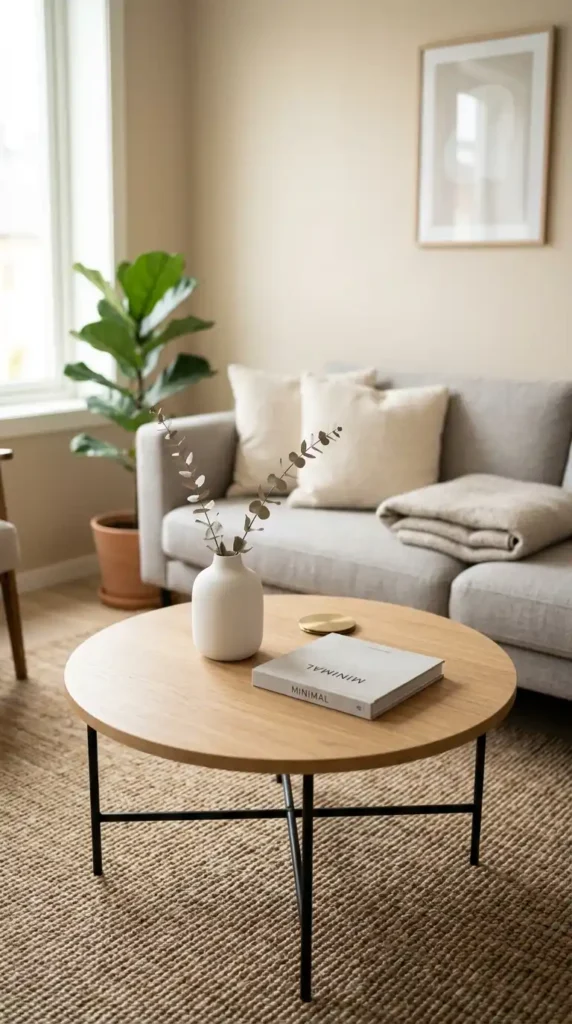
20. Paint Trim and Walls the Same Color
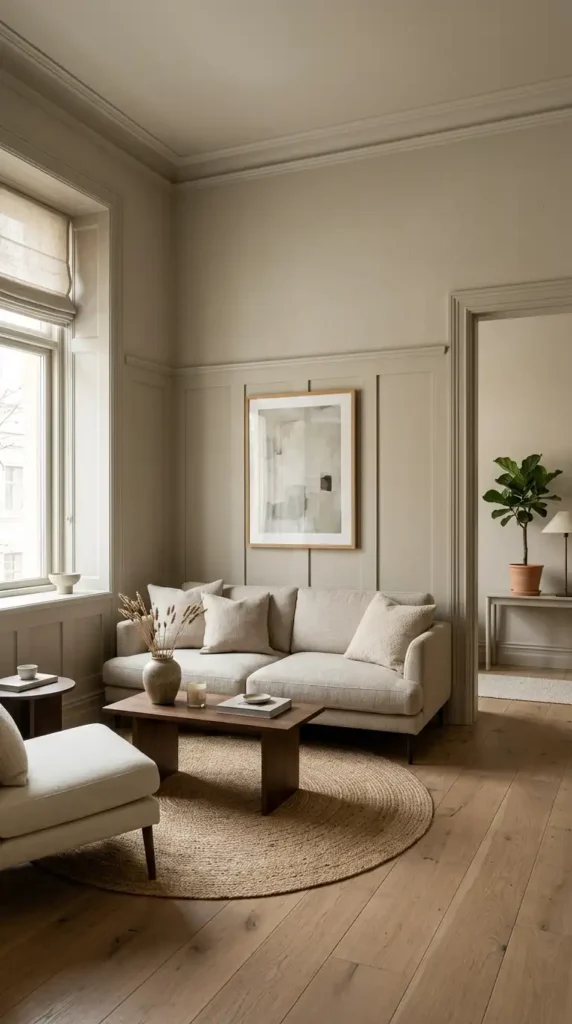
High-contrast trim draws attention to the boundaries of a room and can make it feel more boxed in. Painting the trim the same color as the walls creates a seamless, continuous look. It’s a simple change that instantly makes a small room feel more expansive.
Final Thoughts
A small living room isn’t a design problem—it’s a design opportunity, and honestly, one of the more fun challenges to solve. Between smart furniture choices, the right lighting, and a few clever color decisions, you can make even the tightest space feel open and welcoming. You don’t need more square footage. You need smarter choices.
Start with the easy wins: raise your curtains, clear your surfaces, and swap in a bigger rug. Once you see how much of a difference these small shifts make, you’ll probably start eyeing every other room in your house for the same treatment. Your tiny living room might just become the coziest room you own.