18 Small Living Room Ideas That Look Stylish & Expensive
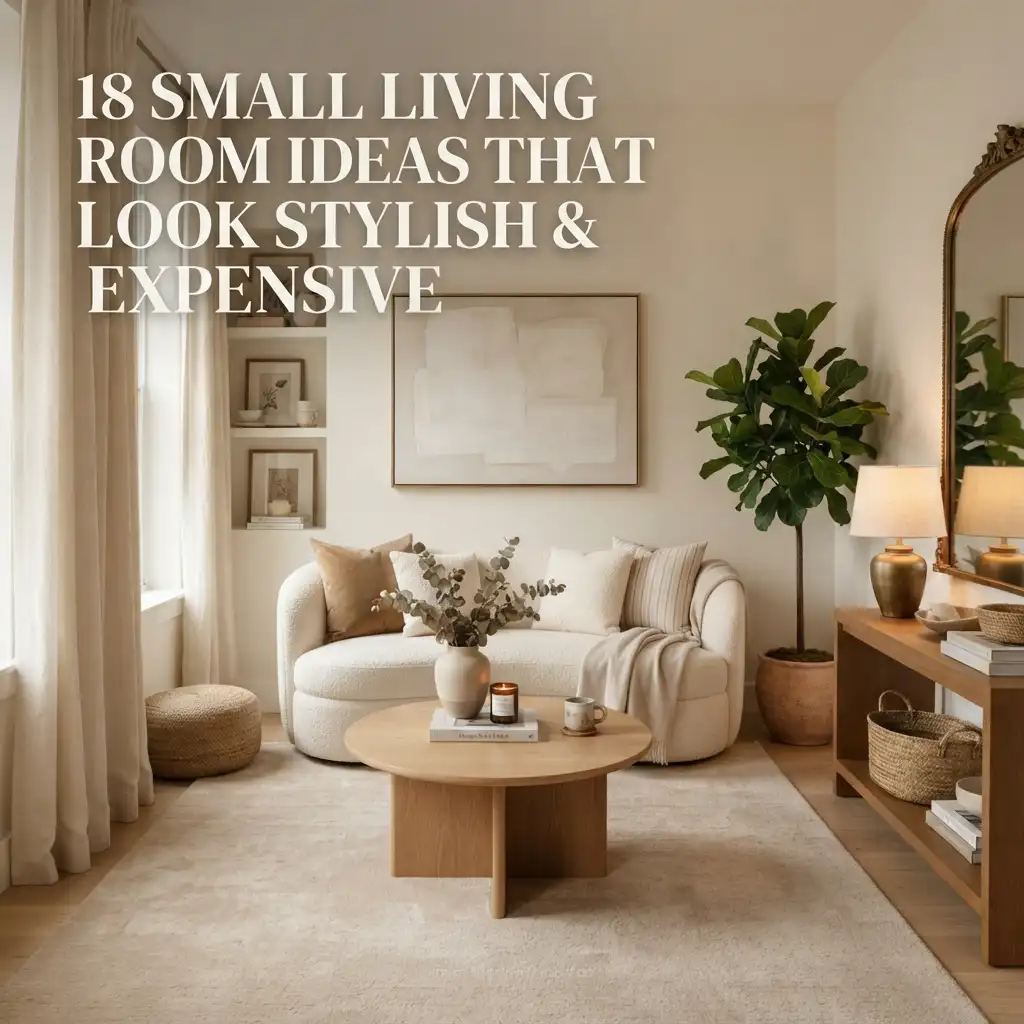
Small living rooms can absolutely look expensive. You just need to stop treating every inch like it needs a job and start choosing pieces that make the room feel intentional, cozy, and polished. A compact space actually gives you an advantage because a few thoughtful details can create a much bigger visual impact.
I’ve always found that the best small living rooms don’t try too hard. They use warm textures, smart furniture, soft lighting, and a restrained color palette to create that effortless “how is this tiny room so gorgeous?” feeling. And honestly, who doesn’t want that? 🙂
1. Choose a Warm Neutral Color Palette
Warm neutrals can make a small living room feel instantly more sophisticated. Think cream, beige, warm white, taupe, camel, and soft brown instead of stark white or overly cool gray. These shades create a calm backdrop and help the room feel connected from one corner to another.
I especially like layering two or three similar neutral shades rather than using one color everywhere. For example, pair cream walls with a beige sofa, warm wood furniture, and caramel-colored accents. The subtle contrast gives the room depth without making it feel visually crowded.
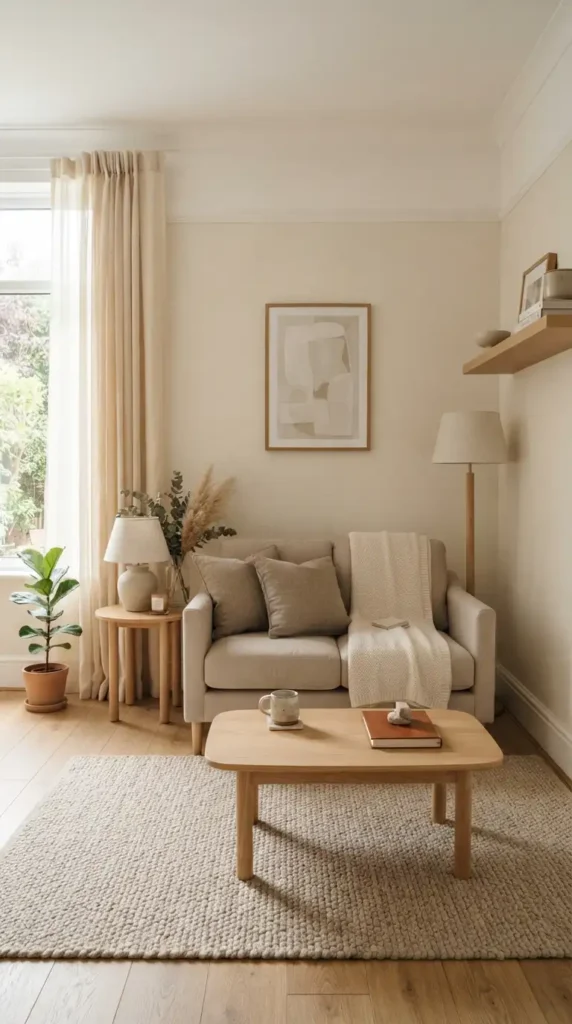
2. Pick a Compact Sofa With Clean Lines
Your sofa usually takes up the most visual space, so choose it carefully. A compact sofa with clean lines and raised legs can make a small living room feel much more open than a bulky sectional.
Look for a design that offers comfort without excessive arms, deep cushions, or oversized proportions. IMO, a smaller sofa with beautiful pillows looks far more expensive than a huge couch that swallows the entire room.
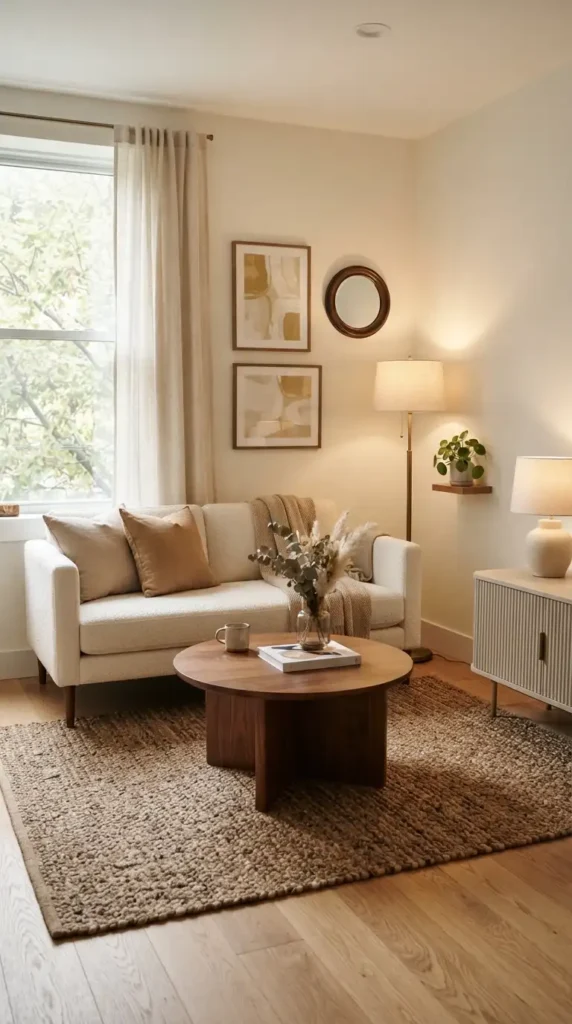
3. Add an Oversized Rug
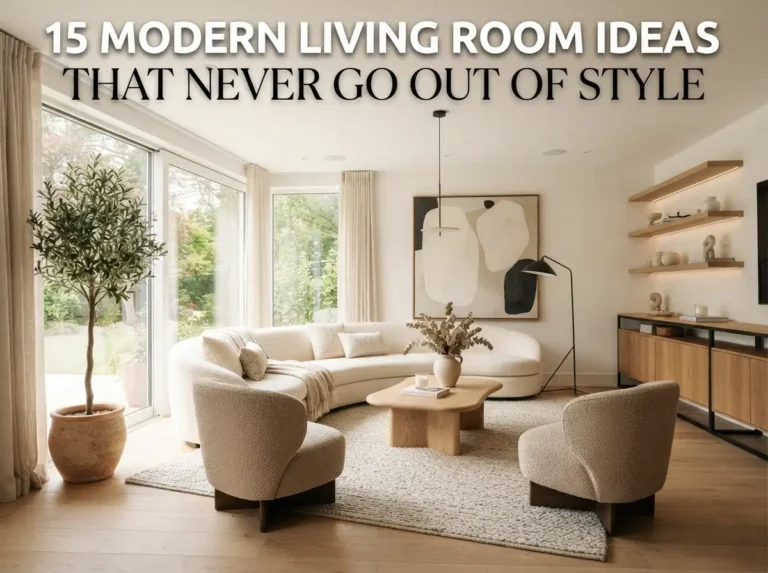
An appropriately sized rug can completely change how your small living room feels. Instead of placing a tiny rug directly under the coffee table, choose one large enough to visually connect the sofa and surrounding seating.
A soft textured rug in cream, beige, or subtle pattern adds warmth while making the room feel more cohesive. Why does this trick work so well? Your eye reads the larger rug as one unified zone instead of seeing several disconnected furniture pieces.
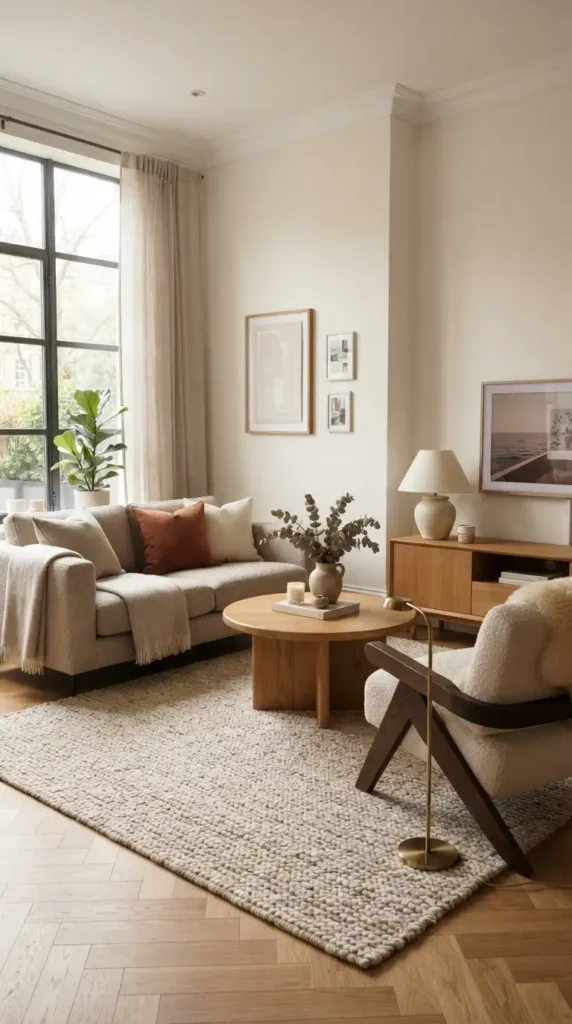
4. Use a Round Coffee Table
Sharp rectangular furniture can make a compact room feel cramped, especially when you need to walk around it. A round coffee table creates softer visual movement and makes circulation easier.
Try a small wood, travertine-look, or marble-style table for an elevated appearance. Keep the surface relatively clear too. A beautiful coffee table doesn’t need to become headquarters for every remote control you own.
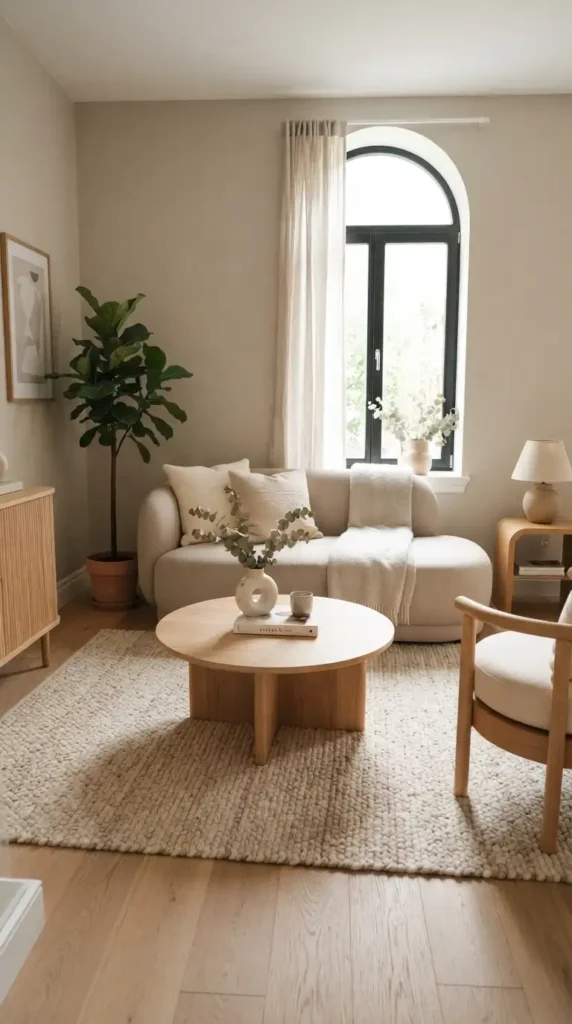
5. Bring in Warm Wood Accents
Nothing warms up a small living room quite like natural wood. Use a wood coffee table, floating shelf, side table, or decorative stool to add organic texture.
Light and medium wood tones work particularly well with cozy neutral interiors. They break up a sea of beige and give the room that relaxed, expensive-looking character that furniture catalogs somehow make look effortless.
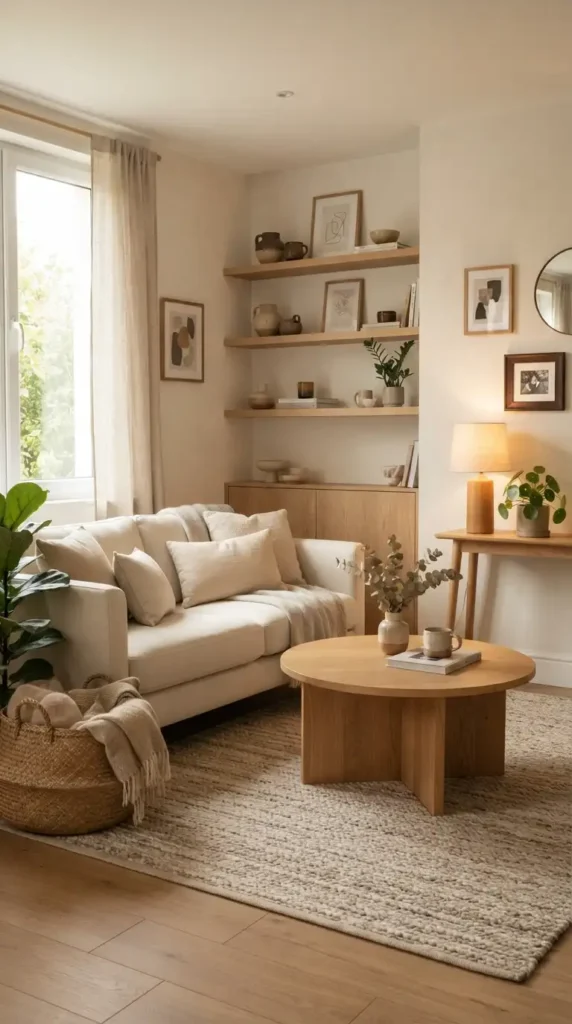
6. Hang Curtains Higher
Here’s one of the easiest small living room tricks: hang your curtains closer to the ceiling rather than directly above the window frame. This draws the eye upward and creates the illusion of taller walls.
Choose lightweight curtains in a warm ivory or oatmeal shade. Let them reach the floor for a more polished finish. Short curtains can make the room look chopped up, while long panels create a smoother vertical line.
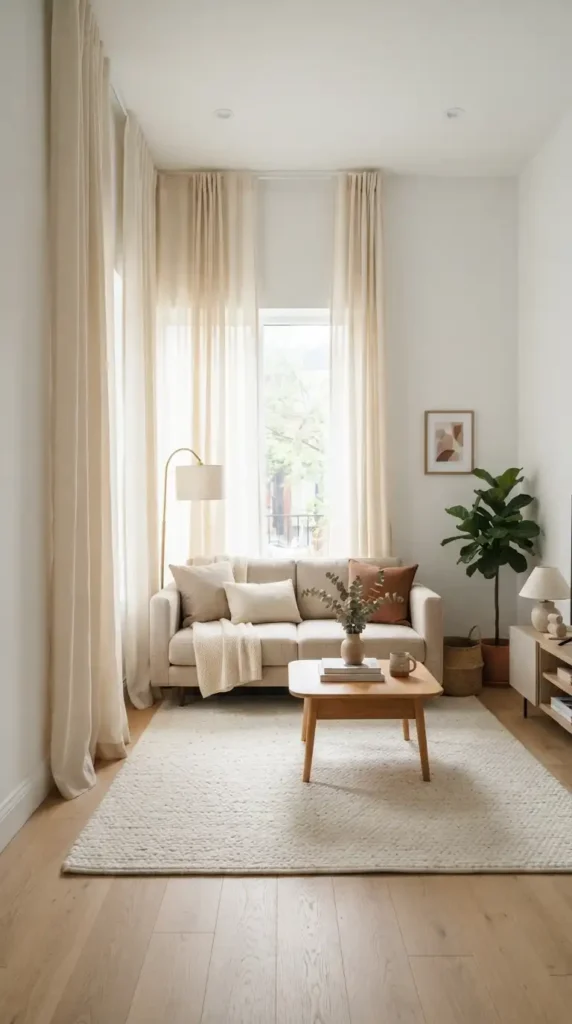
7. Create a Cozy Reading Corner
Even a tiny living room can handle a little personality. If you have an unused corner, add a slim accent chair, small side table, and floor lamp to create a cozy reading nook.
Choose a chair with a compact footprint instead of a massive lounge chair. Add one soft throw and a small cushion, and suddenly that forgotten corner becomes one of the most inviting spots in the room.
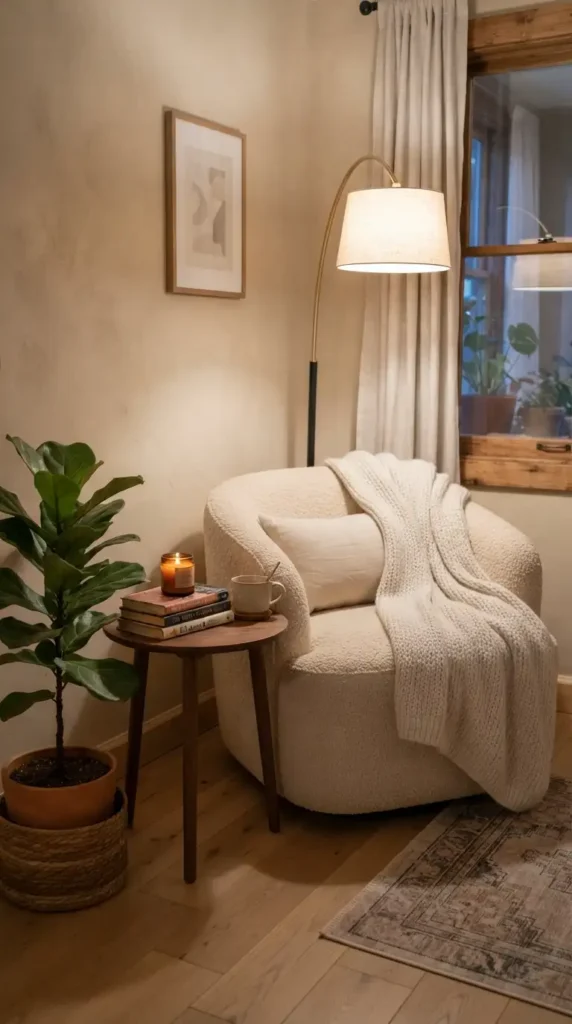
8. Use Mirrors to Open Up the Space
A well-placed mirror can make a small living room feel brighter and more spacious. Position a large decorative mirror opposite a window or light source so it reflects brightness around the room.
Choose a simple arched, round, or slim-framed design for a sophisticated look. I prefer one large mirror over several tiny mirrors because a single statement piece creates a cleaner visual effect.
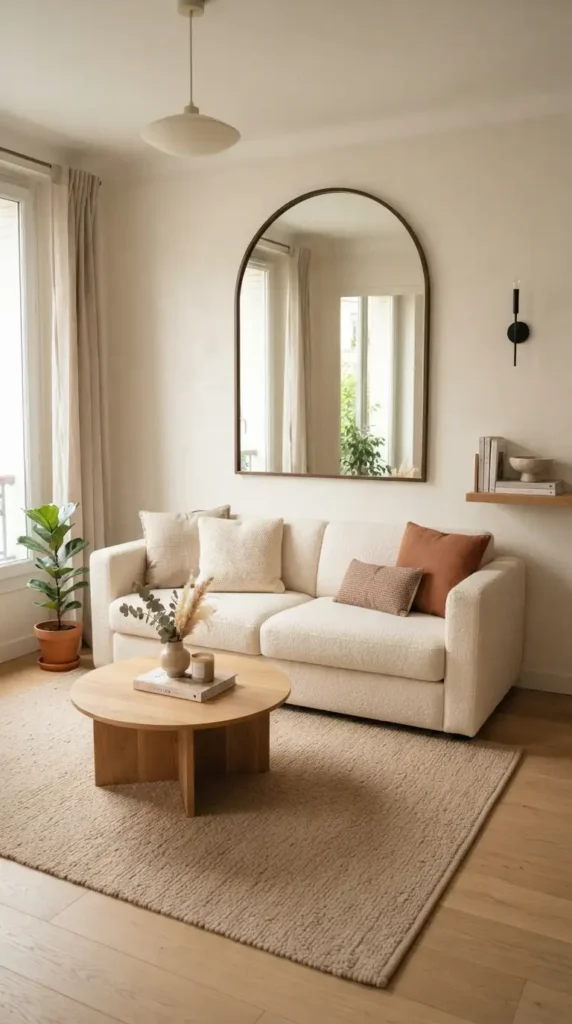
9. Install Floating Shelves
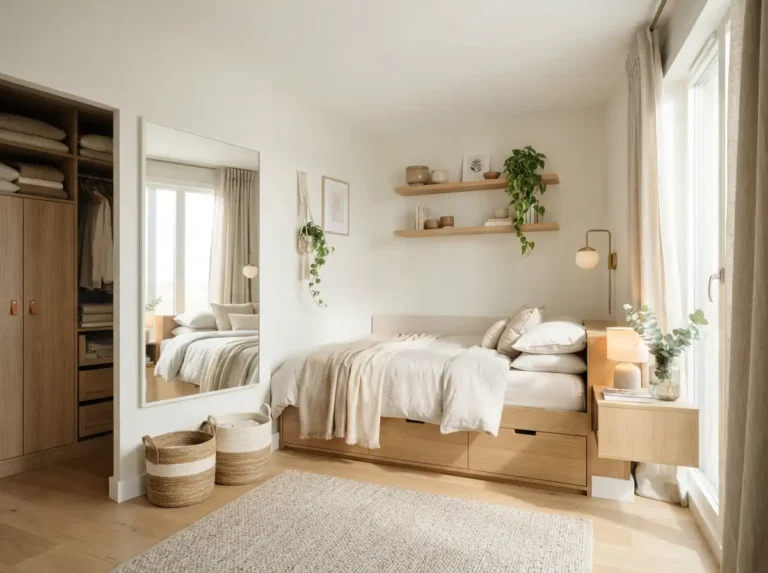
When floor space feels limited, move your storage upward. Floating shelves give you display space without taking valuable room away from the seating area.
Style them with a few books, small ceramics, framed art, candles, and greenery. Keep some empty space between objects because negative space helps the entire arrangement look more curated.
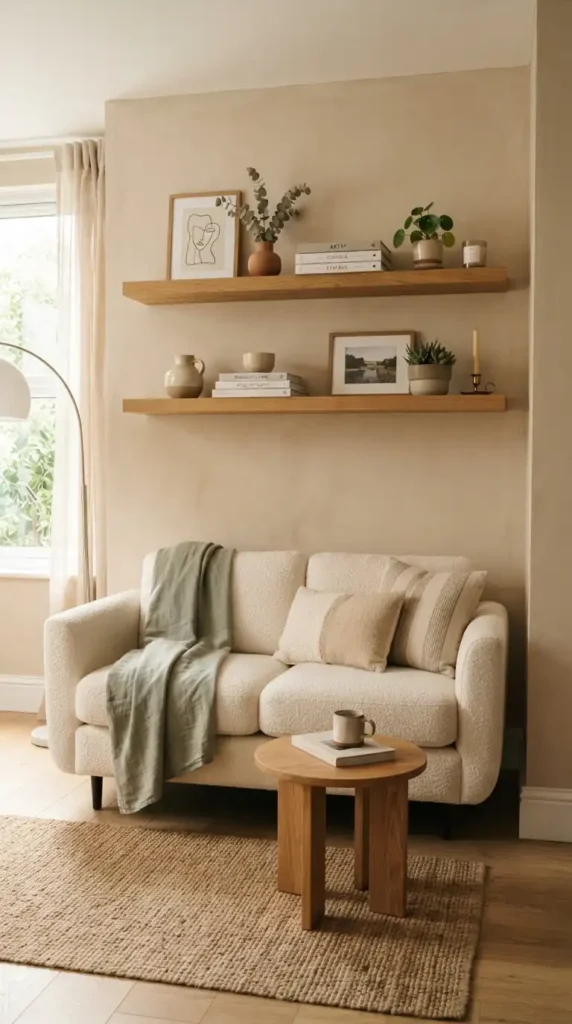
10. Add Layered Lighting
One ceiling fixture rarely creates the cozy atmosphere you want. Instead, layer floor lamps, table lamps, wall sconces, and soft accent lighting throughout the room.
Warm bulbs can make beige and cream interiors look especially inviting at night. Use multiple smaller light sources rather than relying on one bright overhead fixture. That simple change can make a basic room feel much more luxurious.
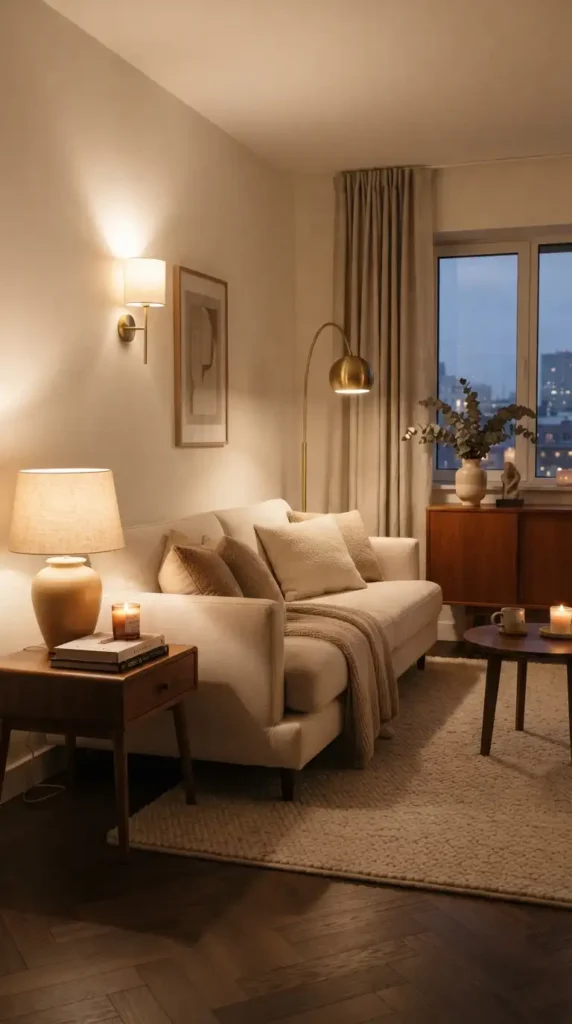
11. Choose One Statement Artwork
You don’t need to cover every wall with decorations. A single oversized artwork piece can create a strong focal point while keeping your small living room visually calm.
Look for abstract artwork, soft landscapes, botanical prints, or textured neutral pieces. Choose colors that already appear in your furniture and accessories so the artwork feels connected rather than randomly dropped onto the wall.
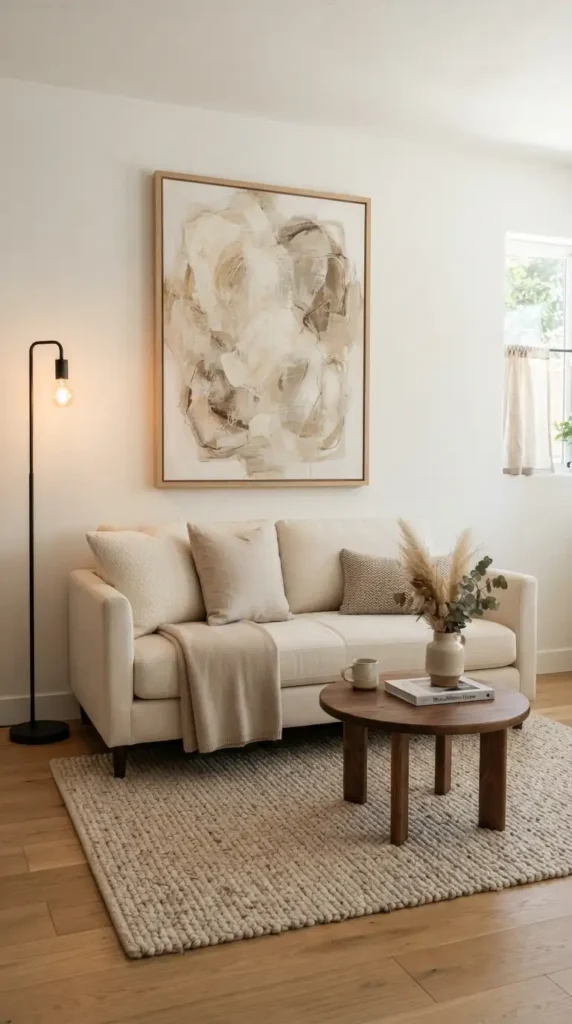
12. Add Texture With Throw Pillows
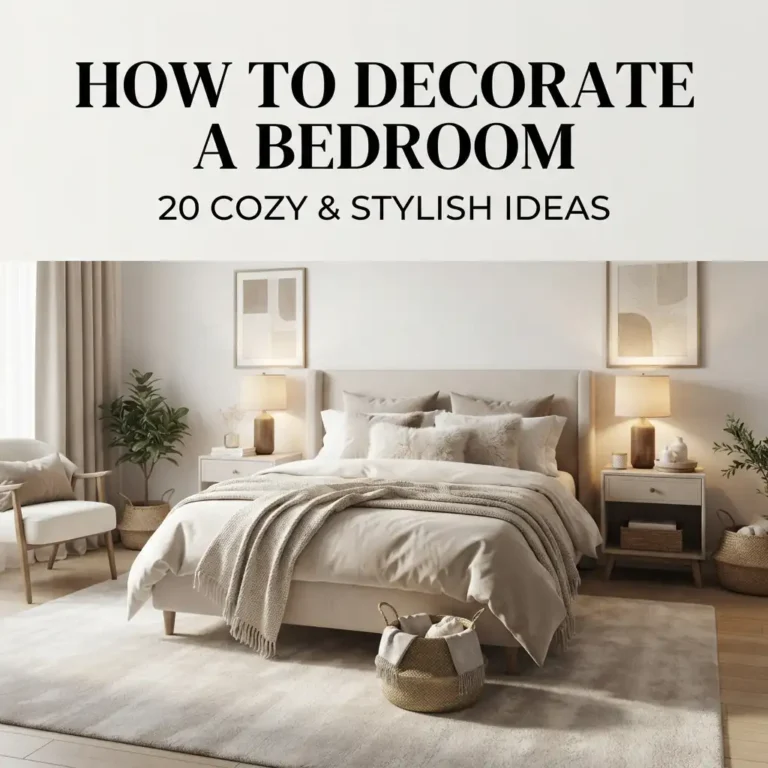
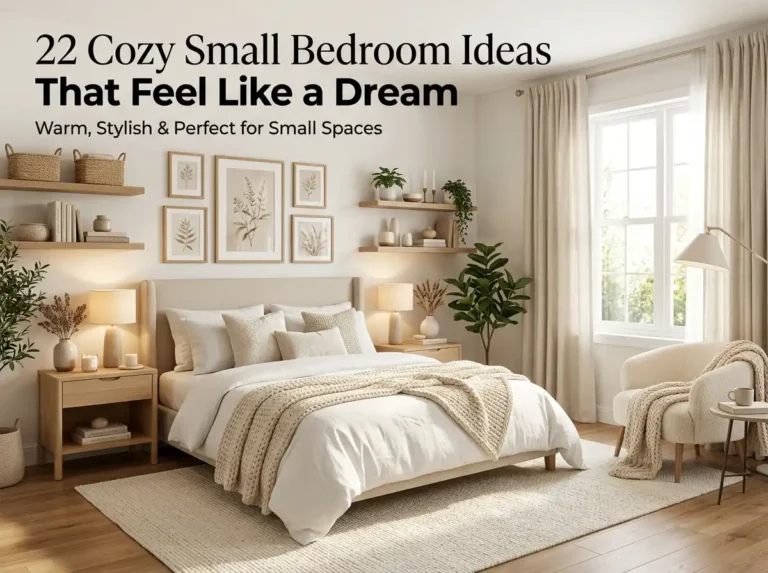
A cozy living room needs texture, especially when you use a neutral color palette. Mix linen, boucle, cotton, velvet, and knitted fabrics through your cushions and throws.
You don’t need ten pillows to create that layered effect. Try three or four cushions in different textures but related colors. The result feels comfortable and sophisticated without turning the sofa into a pillow obstacle course.
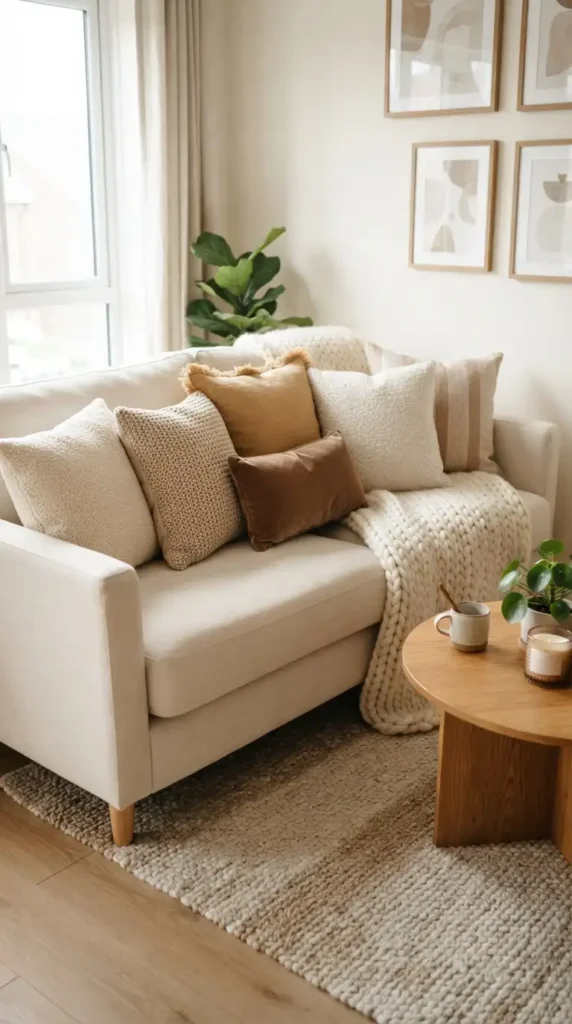
13. Use a Slim Console Table
A narrow console table can add storage and style without overwhelming the room. Place one behind the sofa or along an empty wall if the layout allows.
Choose a slim wood or warm-toned console and decorate it with a small lamp, vase, and one or two meaningful objects. Keep the arrangement simple because too many accessories can quickly make a small room look cluttered.
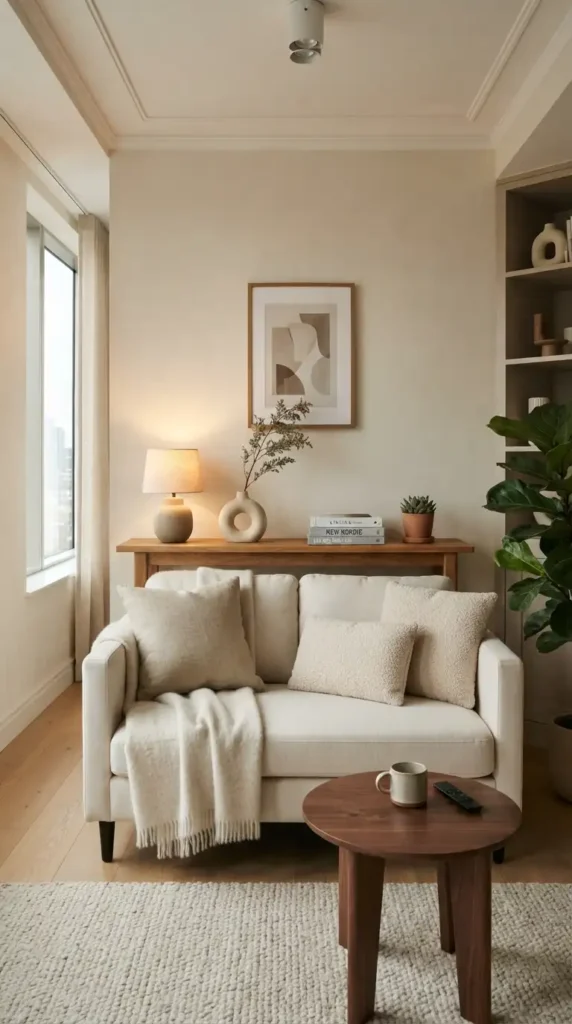
14. Bring in Indoor Plants
Plants add life, color, and softness to a small living room. If you don’t have room for a large floor plant, use small potted plants on shelves, side tables, or windowsills.
For a larger impact, place one tall plant in an empty corner. Choose a simple woven or ceramic planter that matches your overall color scheme. Even one beautiful plant can make the room feel fresher and more welcoming.
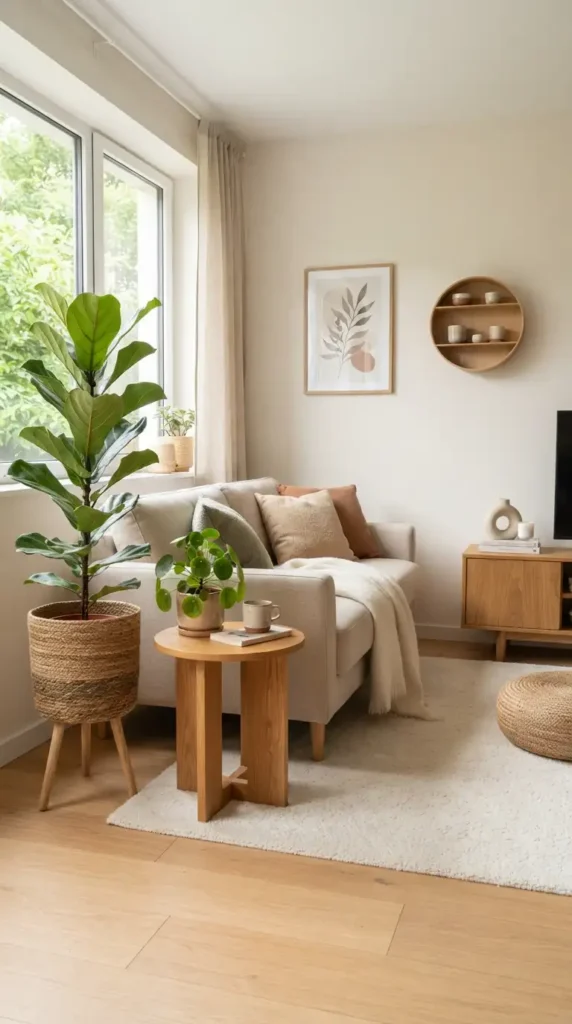
15. Choose Furniture With Visible Legs
Furniture that sits directly on the floor can make a small room feel heavy. Pieces with visible legs create more visual breathing room because you can see some of the floor underneath.
Try a sofa with slim legs, a raised media console, or an elevated accent chair. These small details may seem insignificant, but they can make a surprisingly noticeable difference in a compact space.
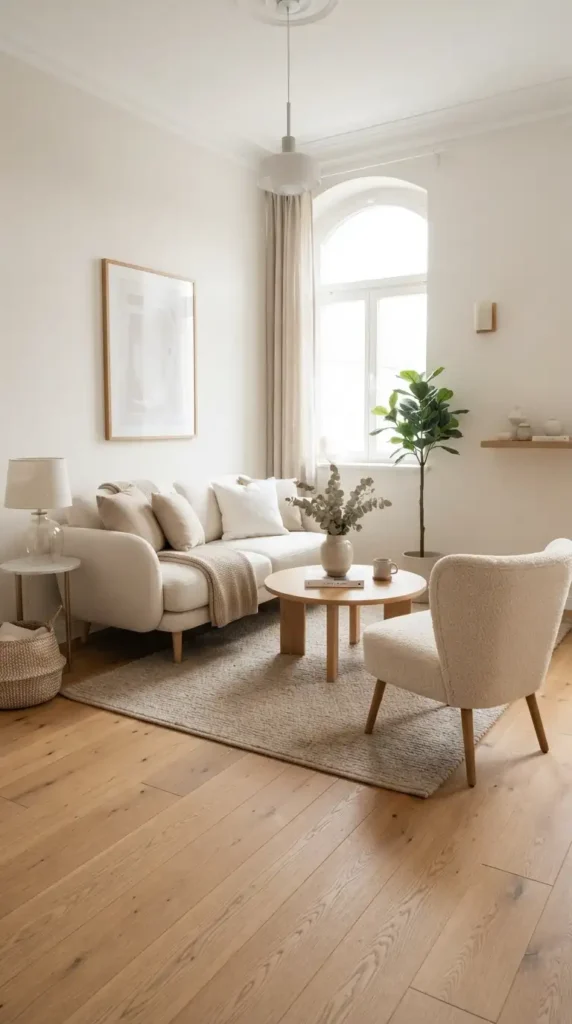
16. Keep the Decor Warm but Minimal
Cozy doesn’t mean cluttered. In fact, a small living room usually looks better when you choose fewer decorative pieces and give each one enough room to stand out.
Try this simple formula:
- One statement artwork
- One large rug
- Two or three textured pillows
- A few curated accessories
- One or two plants
- Warm layered lighting
That’s enough to create personality without sacrificing valuable visual space.
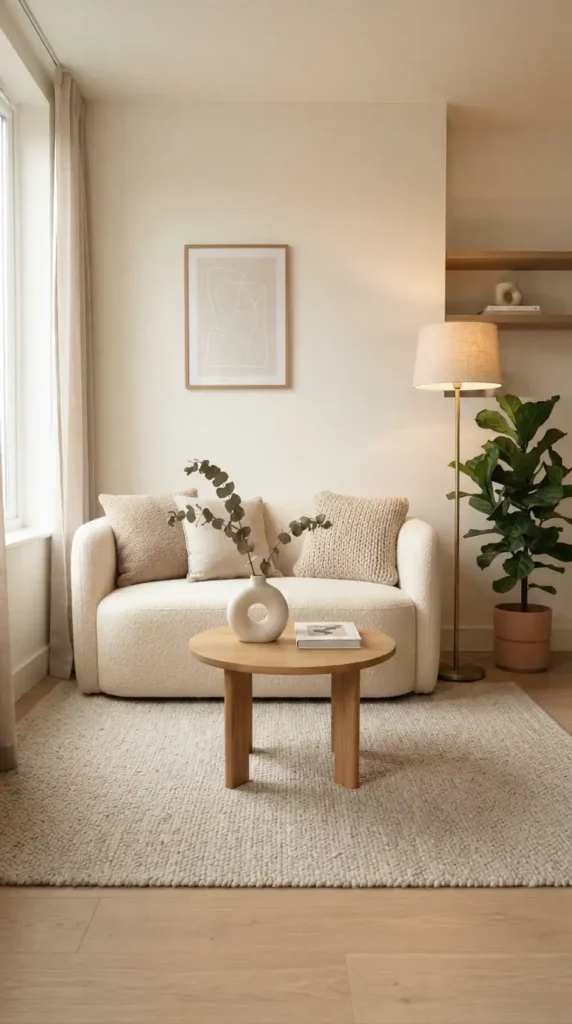
17. Create a Built-In Look With Smart Storage
Storage can become part of the design instead of something you try to hide. Use low-profile cabinets, wall-mounted shelving, or closed storage baskets to keep everyday items organized.
Closed storage works especially well for blankets, electronics, books, and miscellaneous items. Keep the visible surfaces tidy and let the decorative pieces do the talking. FYI, hiding clutter might qualify as one of the most underrated interior-design skills ever.
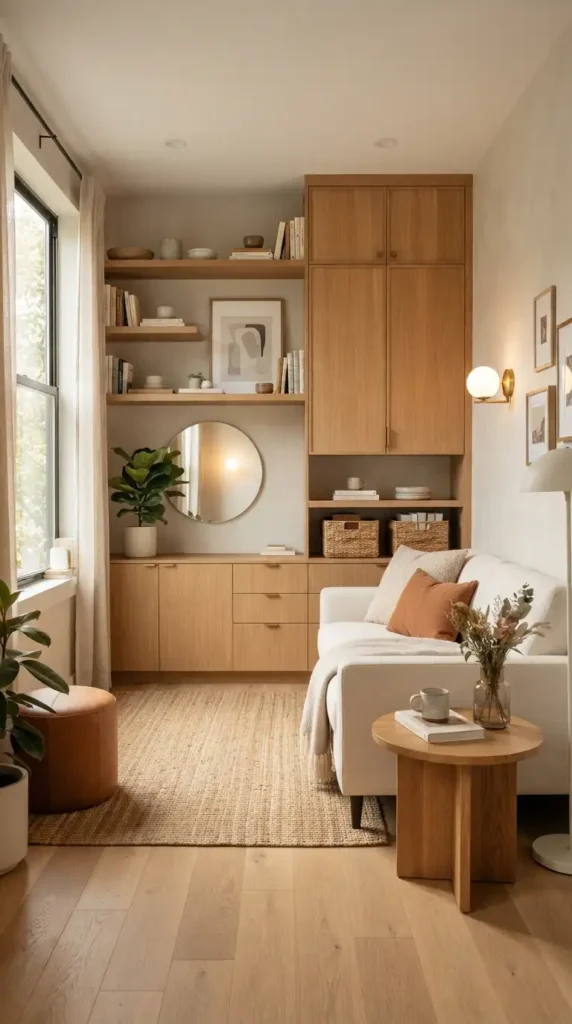
18. Use a Consistent Color Story
The easiest way to make a small living room look expensive? Repeat your colors throughout the space. If you choose cream, camel, warm brown, and soft green, echo those colors in your pillows, artwork, rug, curtains, and accessories.
This repetition creates a sense of harmony that makes even inexpensive pieces look more intentional. You don’t need designer furniture when your entire room speaks the same visual language.
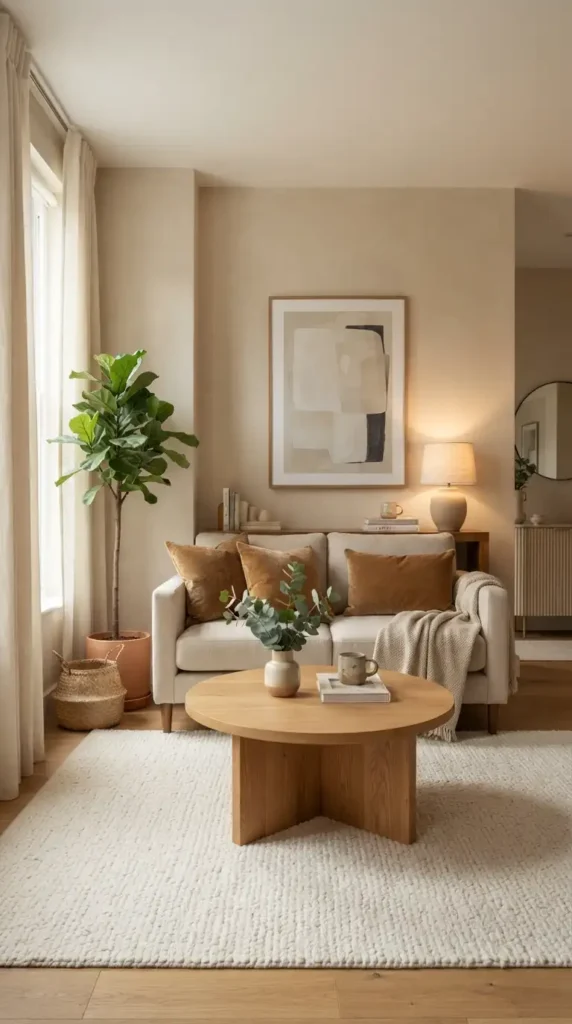
How to Make a Small Living Room Look More Expensive
You don’t need a huge renovation budget to create an elevated space. Focus your money and attention on the pieces that influence the room most.
Prioritize a quality-looking rug, comfortable sofa, attractive lighting, and well-chosen curtains. Then use affordable accessories such as cushions, baskets, plants, and decorative objects to add personality.
Also pay attention to scale. Oversized furniture can overwhelm a small room, while tiny furniture can make the space feel oddly unfinished. Choose pieces that fit comfortably while leaving enough room to move around.
Small Living Room Mistakes to Avoid
Even beautiful furniture can look awkward when the layout works against the room. Avoid pushing every piece against the walls simply because the room feels small. Sometimes pulling the sofa slightly away from the wall creates a more intentional and comfortable arrangement.
Also avoid using too many competing colors, patterns, and finishes. A small space can handle personality, but it needs visual breathing room. When everything demands attention, nothing actually stands out.
Finally, don’t sacrifice comfort just to make the room look fancy. Your living room should still feel like somewhere you actually want to sit, relax, chat, and watch TV.
Final Thoughts
A small living room can look warm, stylish, and surprisingly expensive when you focus on scale, texture, lighting, storage, and a cohesive color palette. You don’t need to squeeze more furniture into the room; you need to make every piece earn its place.
Start with the basics: choose a compact sofa, add a larger rug, warm up the space with wood, layer your lighting, and bring in a few carefully selected accessories. Then step back and ask yourself, “Does this room feel calm and inviting?” If the answer is yes, you’re already on the right track.
Remember, the goal isn’t to make your small living room look bigger at all costs. The goal is to make it feel beautiful, comfortable, intentional, and completely yours. And honestly, that sounds much better than simply having more square footage.