12 Very Small Living Room Ideas That Make Your Space Feel Bigger
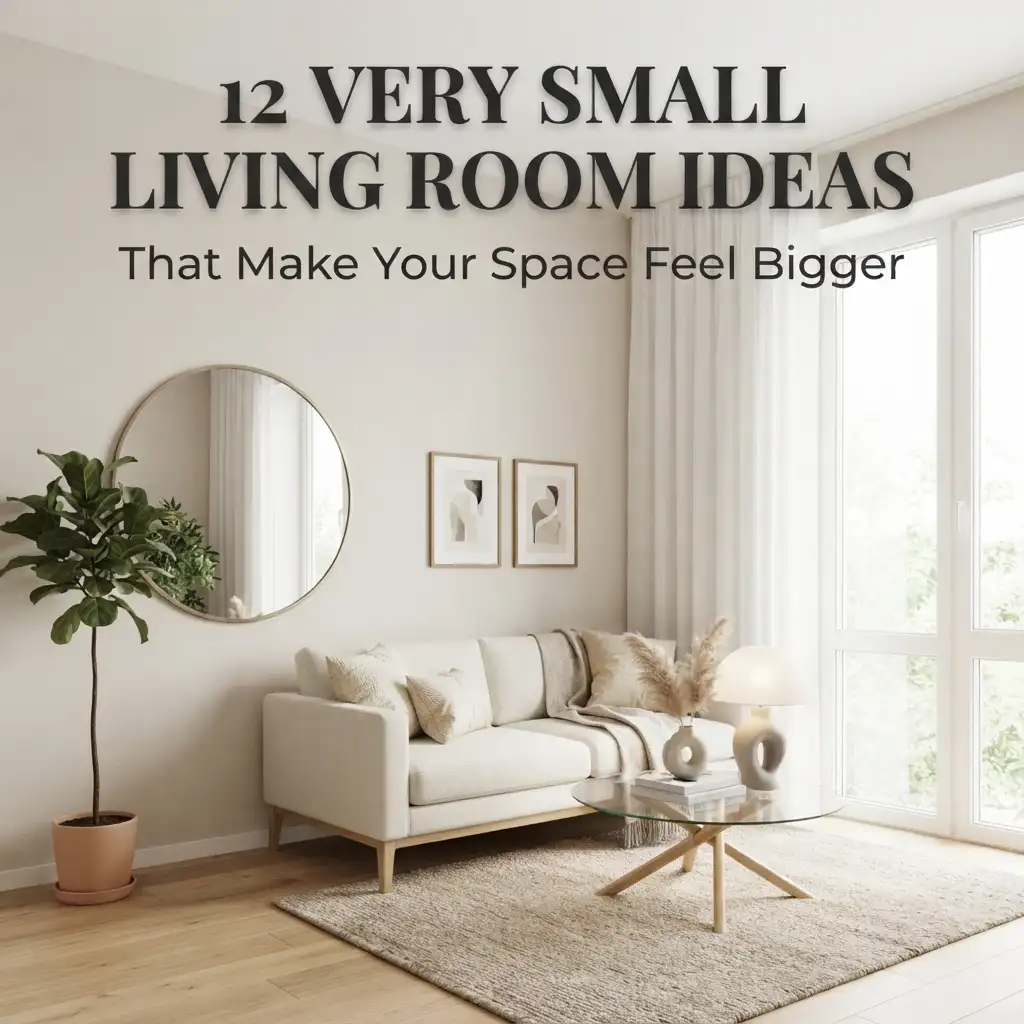
A tiny living room doesn’t have to feel like your sofa, coffee table, and walls are having a serious argument about personal space. With a few smart changes, you can make even the smallest room feel brighter, airier, and surprisingly spacious.
I love small rooms when they have the right layout because every design choice actually matters. You don’t need a bigger house; you need furniture, colors, lighting, and storage that work harder. Ready to make your tiny living room look bigger without knocking down a wall? Let’s get into it.
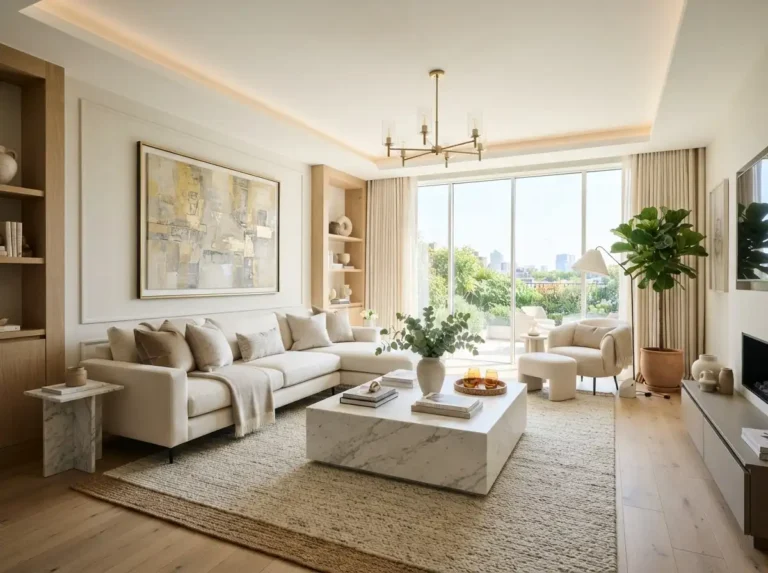
1. Choose a Light and Airy Color Palette
Color can completely change how your small living room feels. Light colors reflect more light and create a visual sense of openness, while darker shades can make walls feel closer.
You don’t have to paint everything stark white, either. Soft beige, warm ivory, pale gray, creamy taupe, and gentle greige can create a cozy atmosphere while keeping the room visually open.
Try using one main light color throughout the walls and larger furniture pieces. Then introduce personality through pillows, artwork, plants, and smaller accessories.
Try These Light Shades
- Warm white
- Soft beige
- Pale gray
- Cream
- Light greige
- Soft pastel blue
Ever notice how a bright room instantly feels less cramped? That little optical trick can work wonders.
2. Pick a Sofa With a Slim Profile
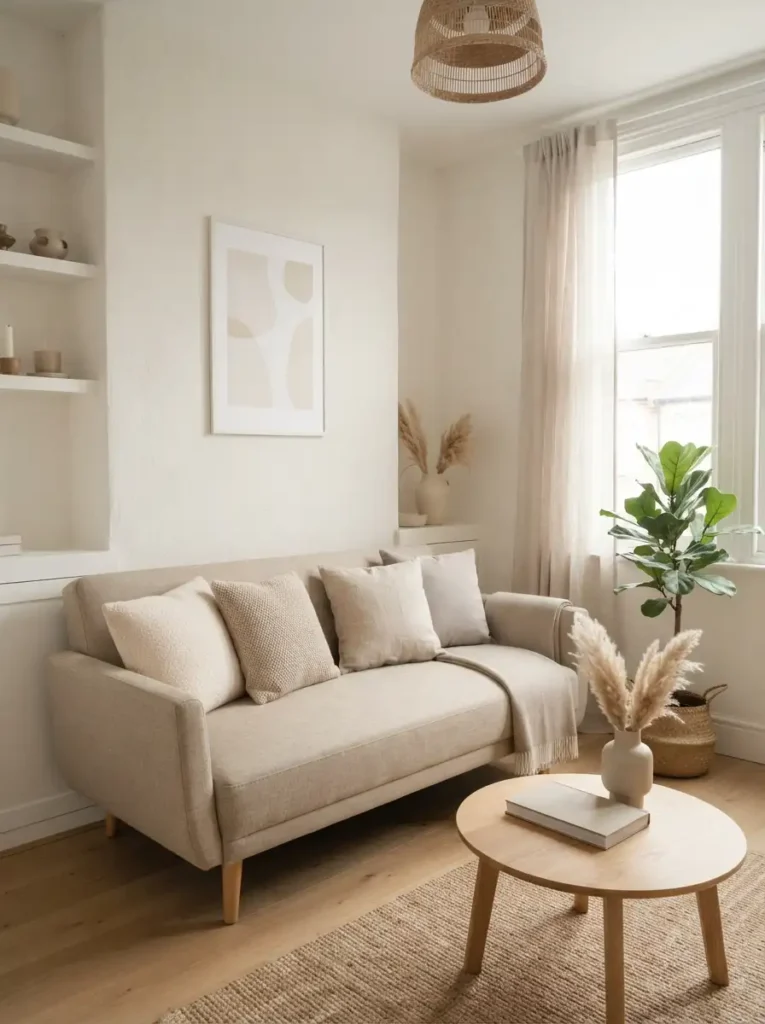
Your sofa usually takes up the largest amount of visual space in a living room. That makes it one of the most important pieces to consider when you want your very small living room to feel bigger.
Look for a sofa with slim arms, raised legs, and a relatively streamlined shape. Furniture that sits slightly off the floor allows you to see more floor underneath, which creates a lighter appearance.
A giant deep sofa might feel wonderfully cozy, but in a tiny room it can quickly dominate everything else. Choose comfort, but skip the unnecessary bulk.
3. Use a Large Mirror
Want one of the easiest small living room tricks? Add a large mirror.
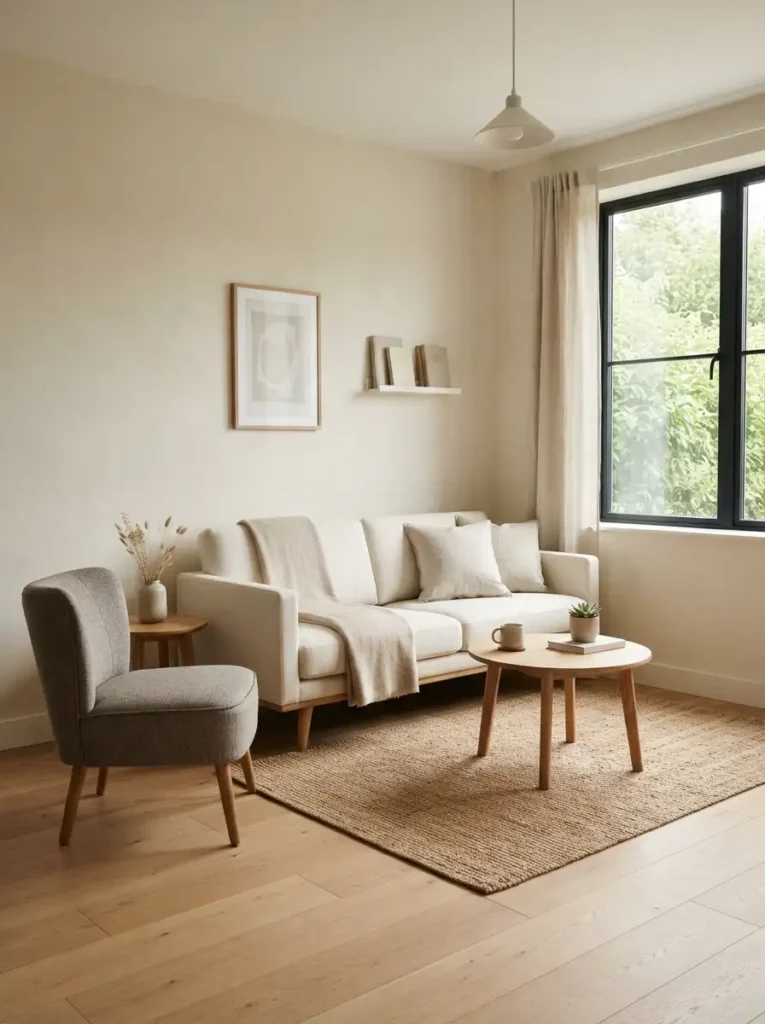
A strategically placed mirror reflects light and creates the illusion of another layer of space. Place it opposite a window when possible so it can reflect natural light deeper into the room.
You can choose a large rectangular mirror for a modern look or a rounded design for a softer feel. Either way, keep the frame relatively simple so the mirror doesn’t become visually heavy.
Best Mirror Locations
- Opposite a window
- Behind a sofa
- Beside a narrow console
- Across from an attractive light source
IMO, one large mirror usually works better than covering the wall with several tiny ones. Small rooms need clarity, not a mirror convention.
4. Choose Furniture With Exposed Legs
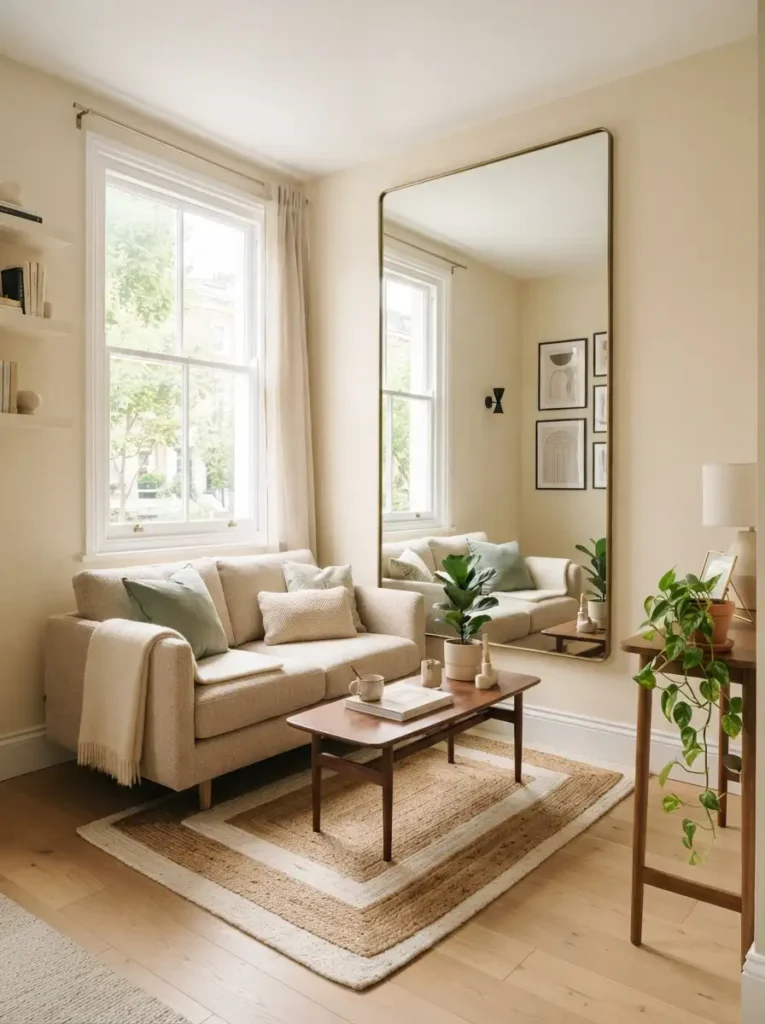
Furniture with visible legs creates more visual breathing room. Exposed floor space makes a room appear less crowded, even when you have the same amount of furniture.
Look for sofas, armchairs, coffee tables, and side tables with slim legs. Mid-century-inspired furniture often works particularly well because designers commonly use raised, streamlined silhouettes.
Avoid filling every inch underneath your furniture with baskets and boxes. A little open space can make a surprisingly big difference.
5. Try a Glass or Acrylic Coffee Table
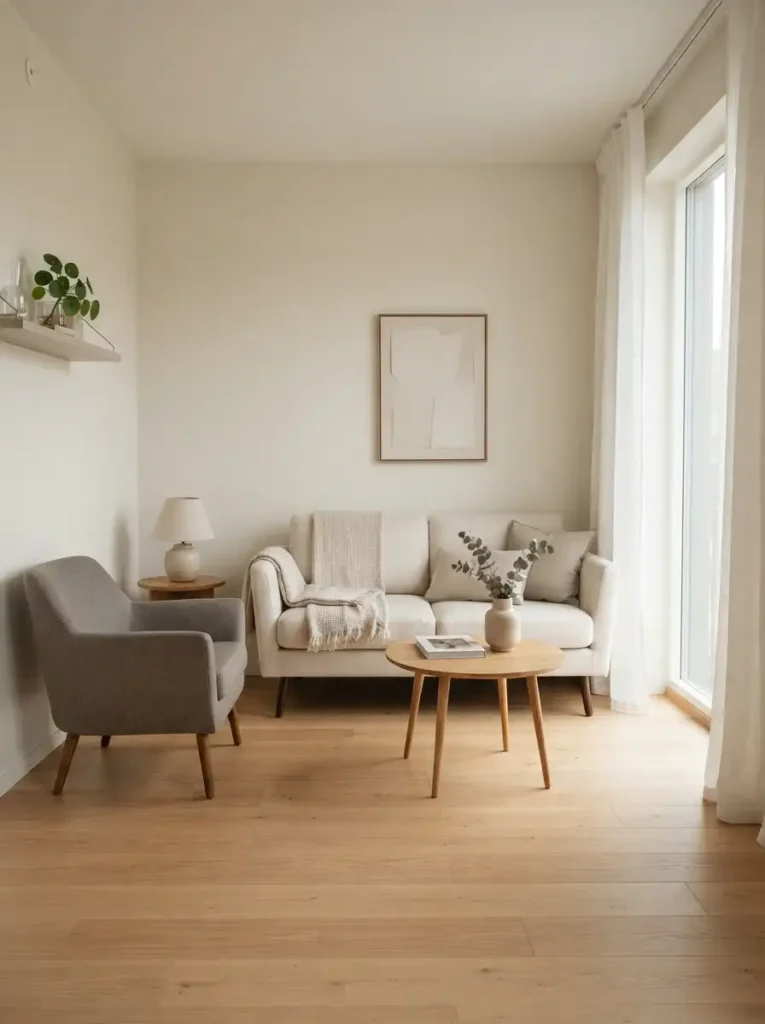
A bulky coffee table can interrupt the visual flow of a small living room. A glass, acrylic, or slim open-frame coffee table can give you useful surface space without creating a heavy visual block.
Clear materials allow your eye to travel through the room. That simple detail can make the floor feel more continuous.
If you prefer a solid table, choose a smaller round or oval design with thin legs. You’ll still get function without making the center of the room feel crowded.
6. Hang Curtains Higher and Wider
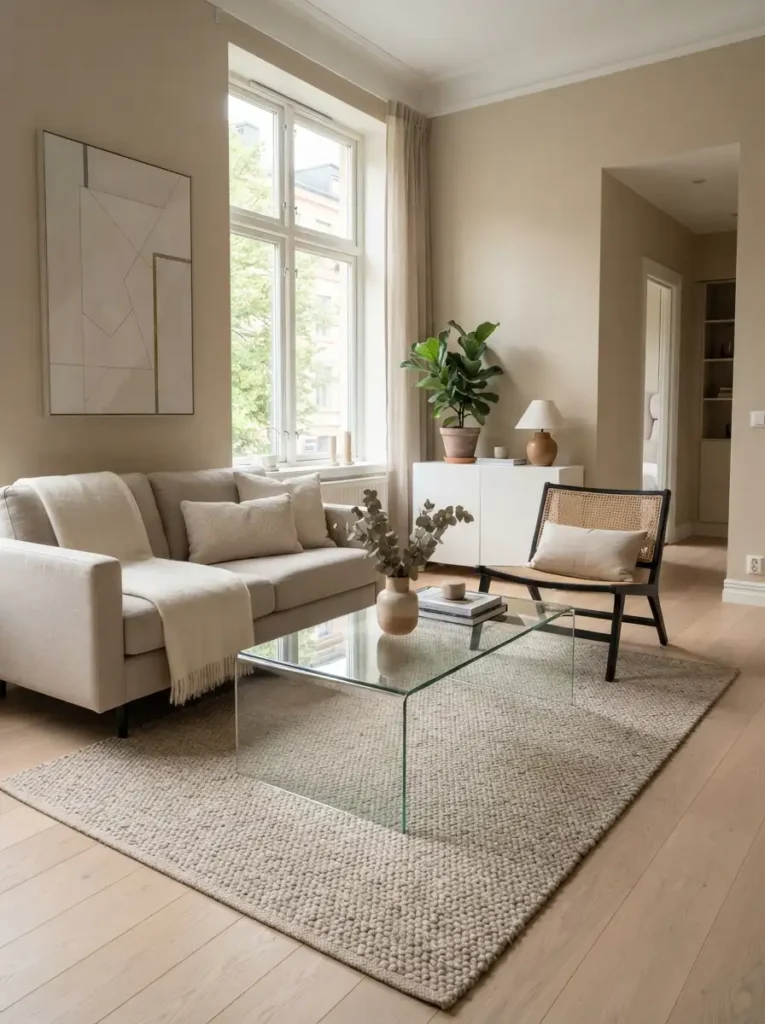
Here’s a small design trick that can make a big difference: hang your curtains closer to the ceiling rather than directly above the window frame.
Positioning the curtain rod higher draws the eye upward and makes the room feel taller. Extending the rod slightly beyond the window also allows the curtains to frame the window without blocking as much glass.
Choose lightweight curtains in a color close to your walls for an especially seamless effect. Heavy, dark curtains can work, but they may visually shrink a very small space.
Curtain Tips for Tiny Rooms
- Mount the rod several inches above the window.
- Extend it beyond both sides of the window.
- Choose full-length panels.
- Use lightweight fabrics.
- Keep the color close to the wall tone.
7. Keep the Floor as Visible as Possible
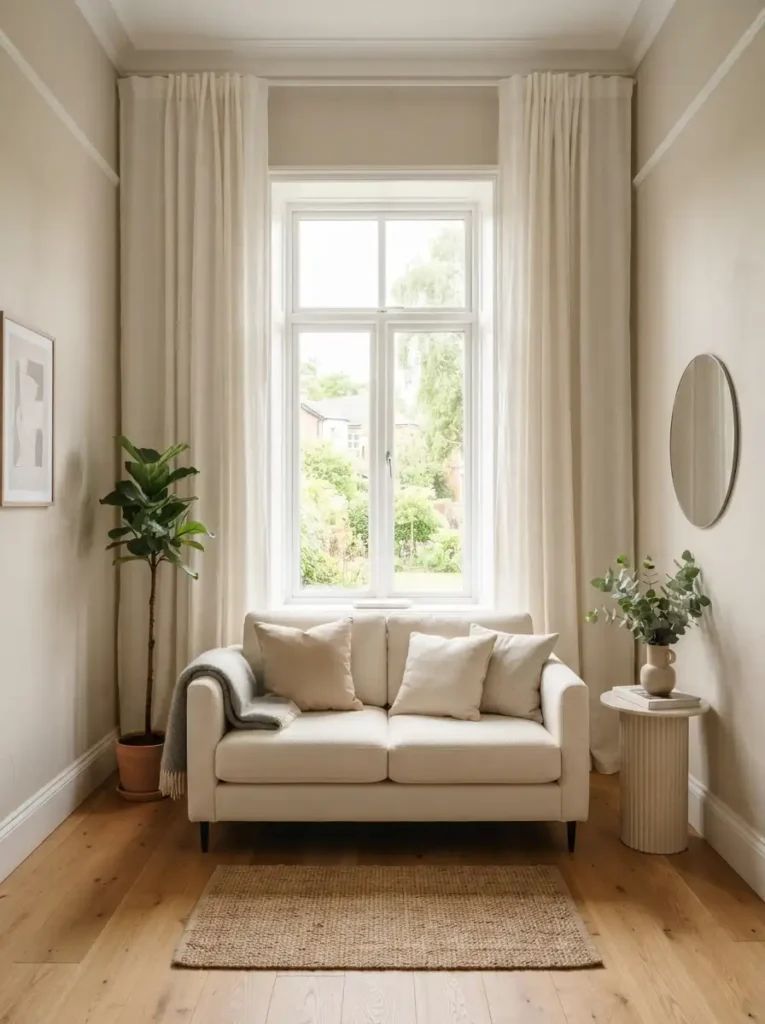
Your floor plays a surprisingly important role in making a small living room feel open. The more continuous floor area you can see, the larger the room can appear.
Avoid placing too many small pieces around the perimeter. Instead, choose fewer pieces with clear spacing between them.
A raised sofa, slim-legged chairs, and a compact coffee table can expose plenty of floor underneath. That open area creates visual breathing room without changing the room’s actual dimensions.
8. Use One Large Rug Instead of Several Small Rugs
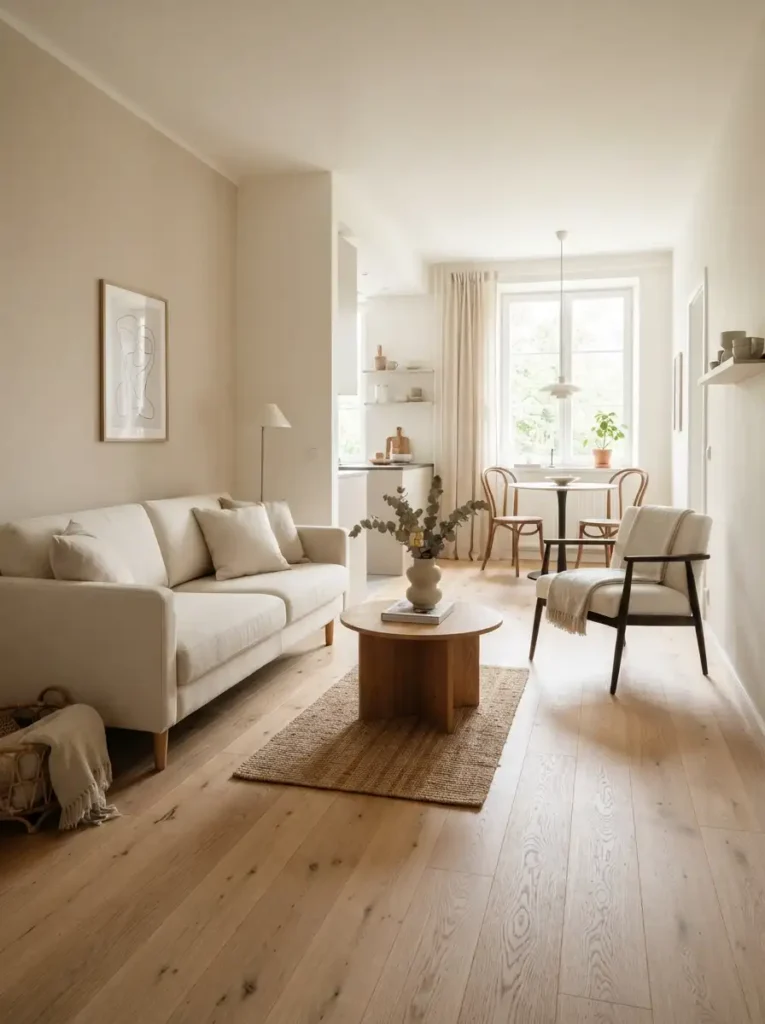
You might think a small rug will make a small room feel larger, but the opposite can happen. One appropriately sized rug can visually connect the furniture and create a more unified space.
Choose a rug large enough to sit beneath at least the front legs of your sofa and chairs. A subtle pattern can add personality without overwhelming the room.
Avoid using several tiny rugs that divide the floor into separate visual zones. In a compact living room, continuity usually works better.
What Works Best?
Choose:
- Light or medium neutral tones
- Subtle patterns
- Low-pile textures
- A size that connects the seating area
A unified rug can make your furniture arrangement feel intentional instead of randomly scattered around the room.

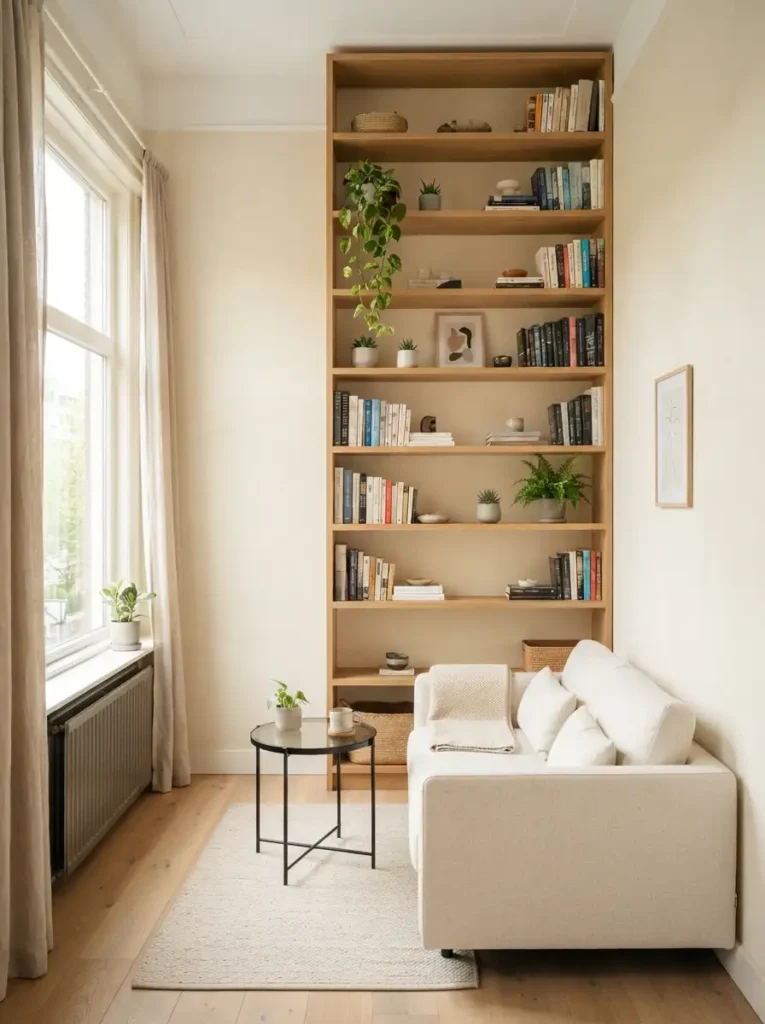
9. Use Vertical Storage
When floor space feels limited, look up. Vertical storage uses wall space instead of valuable floor space, making it ideal for small living rooms.
Install tall shelving, narrow bookcases, floating shelves, or wall-mounted cabinets. You can display books, artwork, plants, and decorative pieces without sacrificing much floor area.
Tall shelving also draws attention upward, which can make the ceiling feel higher. Just avoid filling every shelf with random objects because clutter defeats the whole purpose.
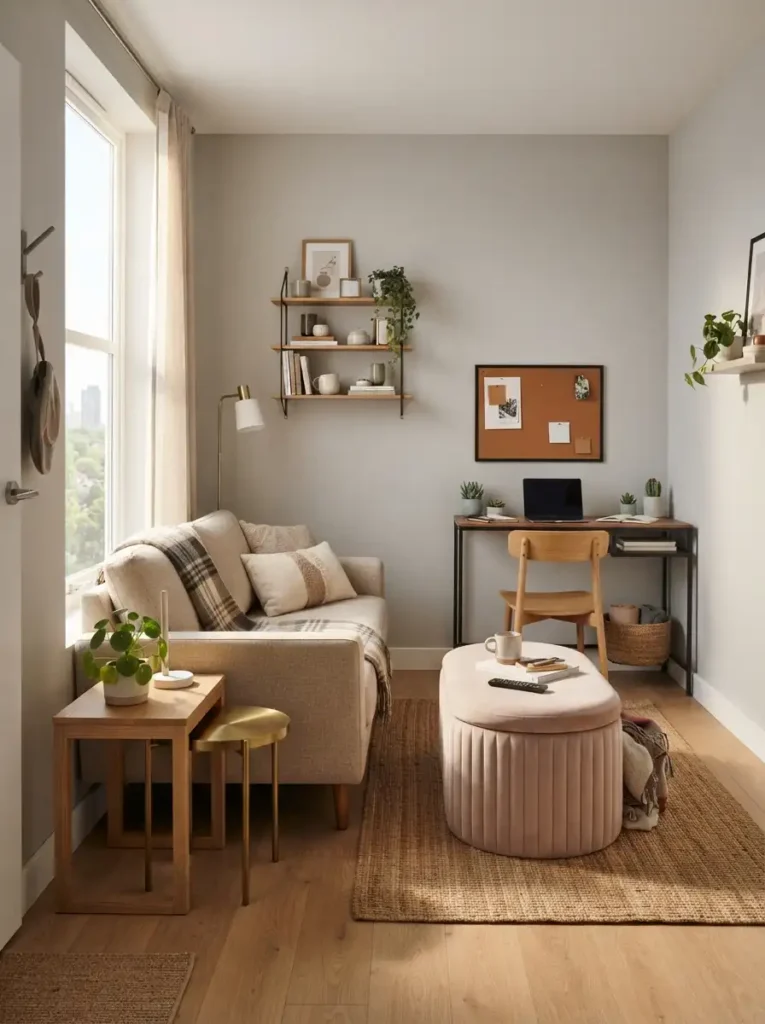
10. Choose Multi-Functional Furniture
Small rooms benefit enormously from furniture that performs more than one job. A storage ottoman can work as seating, a footrest, and hidden storage, while a console table can double as a small workspace.
You can also choose nesting tables that separate when you need extra surfaces and stack away when you don’t. A sofa bed can provide another sleeping option if your living room also functions as a guest room.
Smart Small-Room Furniture
- Storage ottoman
- Nesting tables
- Lift-top coffee table
- Slim console desk
- Storage bench
- Sofa bed
- Wall-mounted desk
Why waste precious space on furniture that only does one thing?
11. Keep Decor Intentional
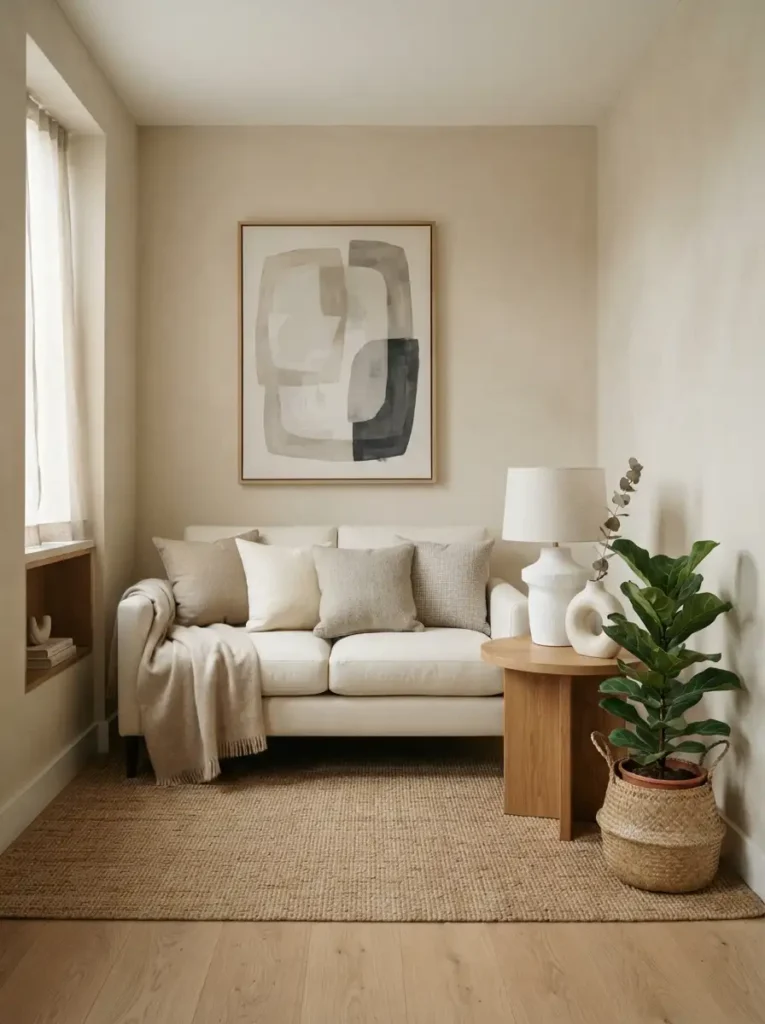
Decorating a tiny living room requires a little editing. You don’t need to remove every decorative item, but each piece should earn its place.
Choose a few larger accessories instead of covering every surface with tiny objects. A beautiful lamp, one large artwork, a plant, and a few carefully chosen pillows can create plenty of personality.
Keep your color palette consistent so the room feels connected. Too many unrelated colors and patterns can make a small space feel visually busy.
Follow the “Less but Better” Rule
Before adding another accessory, ask yourself whether it improves the room. If it simply fills an empty corner, you might want to leave the corner empty.
Empty space doesn’t mean unfinished. Sometimes it gives the room exactly the breathing room it needs.
12. Improve the Lighting
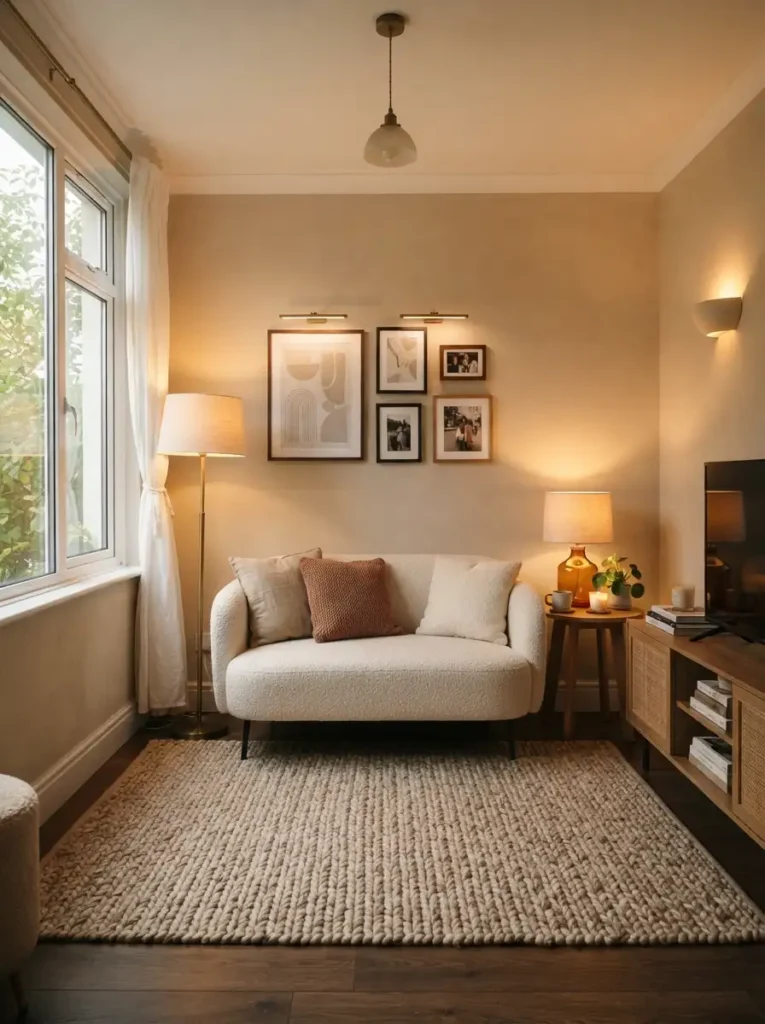
Lighting can completely transform a tiny living room. A well-lit room generally feels more open and inviting, while dark corners can make the space feel smaller.
Instead of relying on one ceiling light, layer several sources throughout the room. Use a floor lamp, table lamp, wall sconces, or small accent lights to distribute illumination.
Choose warm bulbs for a cozy atmosphere and place lights near darker corners. If your room has good natural light, avoid blocking windows with oversized furniture.
How to Arrange Furniture in a Very Small Living Room
The right furniture can still feel cramped if you arrange it poorly. Start by identifying the main focal point, such as a television, fireplace, window, or artwork.
Then create a simple seating arrangement around that focal point. Leave clear walking paths so people can move through the room without bumping into furniture.
Try pulling the sofa slightly away from the wall if the room allows it. A small gap can sometimes make the arrangement feel more intentional and less cramped.
A Simple Layout Formula
- Choose one main sofa.
- Add one compact accent chair if space allows.
- Use a small coffee table.
- Add one side table instead of several.
- Keep walking paths clear.
- Leave some visible floor around the furniture.
You don’t need to fill every corner. In fact, resisting that temptation often makes the room look considerably larger.
Small Living Room Mistakes to Avoid
Even beautiful furniture can make a tiny living room feel cramped when you choose too much of it. Oversized sofas, excessive accessories, dark bulky furniture, and poor lighting can quickly work against your design goals.
Another common mistake involves pushing every piece against the wall. Sometimes that arrangement creates an awkward empty center while making the room feel less balanced.
Avoid buying furniture simply because it looks beautiful in a showroom. Measure your room first, measure the furniture second, and then imagine how people will actually move through the space.
How to Make a Tiny Living Room Feel Expensive
You don’t need an enormous budget to create an upscale-looking small living room. Focus on cohesion, proportion, texture, and quality-looking details rather than buying lots of decorations.
Choose a limited color palette and repeat those colors throughout the room. Add natural textures such as linen, wood, woven baskets, cotton, and ceramic accessories.
A single oversized piece of artwork can also create more impact than a wall filled with inexpensive decorations. Add one beautiful lamp or a sophisticated coffee table, and let those pieces become the stars.
Final Thoughts
A very small living room can feel surprisingly spacious when you make smart choices. Light colors, streamlined furniture, mirrors, exposed legs, vertical storage, smart lighting, and intentional decor can completely change the way your room looks and functions.
You don’t need to remove everything you love or spend a fortune on new furniture. Start with the biggest visual problem, make one change at a time, and pay attention to how the room feels afterward.
And remember, small doesn’t have to mean boring. With the right layout and a little restraint, your tiny living room can feel stylish, comfortable, and genuinely inviting. Sometimes the best design move involves simply giving your furniture—and yourself—a little more room to breathe.