12 Tiny Kitchen Organization Ideas That Actually Work
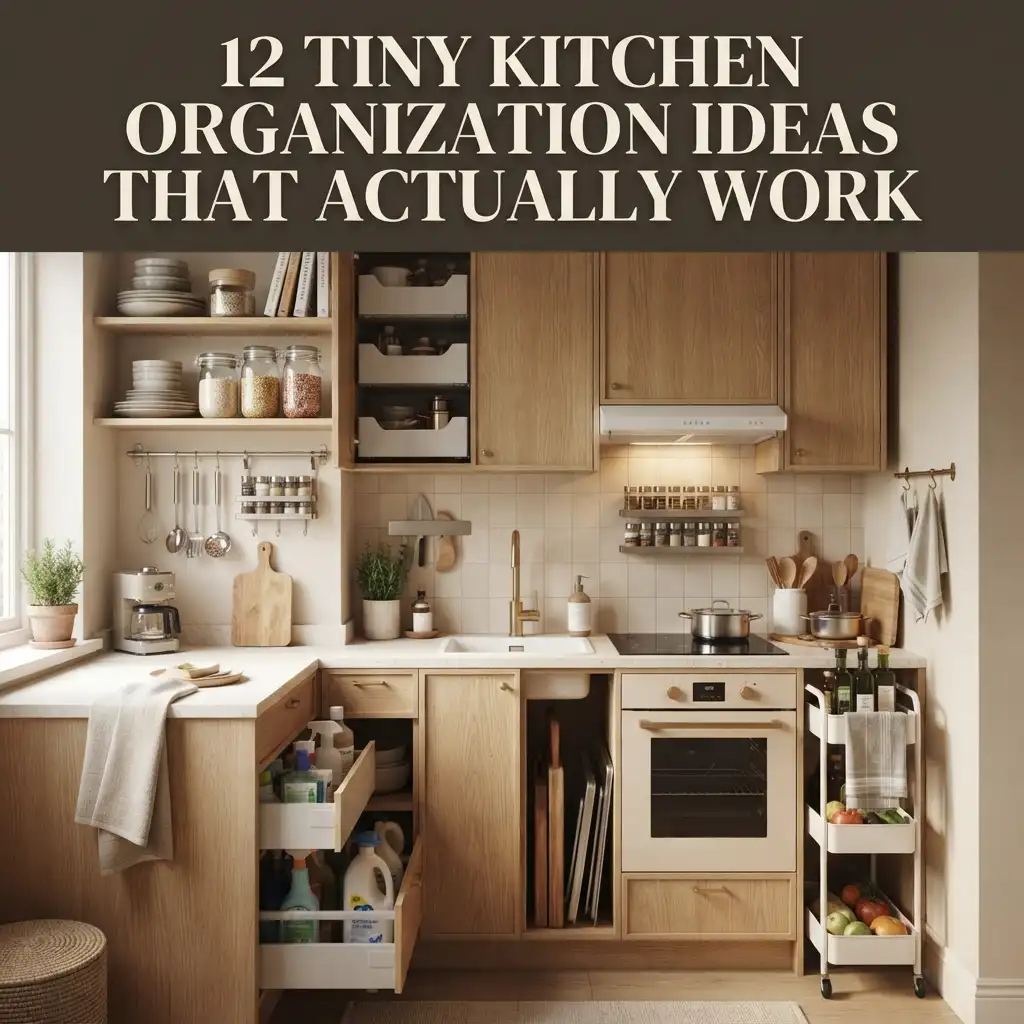
A tiny kitchen can make even a simple breakfast feel like a game of Tetris. One drawer refuses to close, the cutting board somehow lives on top of the toaster, and you can never find the one spoon you actually need. The good news? You don’t need a bigger kitchen—you need smarter organization.
I’ve found that the best tiny kitchen ideas focus on using space that often gets ignored. Think walls, cabinet doors, corners, and the awkward gaps between appliances. Ready to make your little kitchen work much harder without making it feel crowded?
1. Use the Wall for Everyday Kitchen Tools
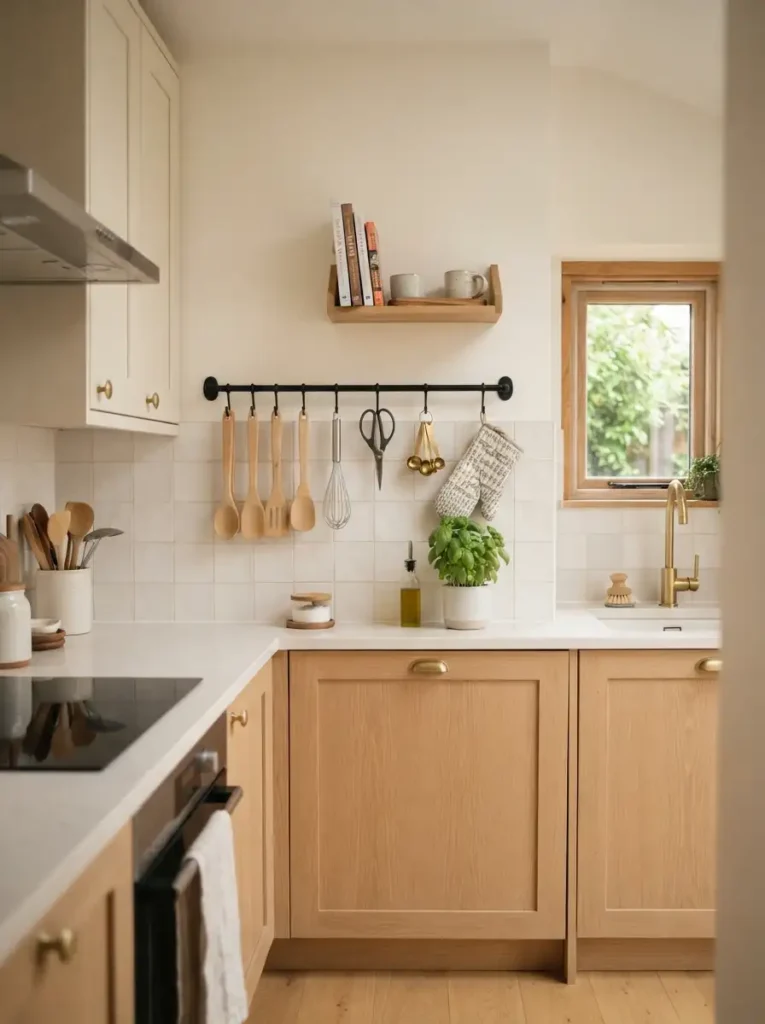
When counter space comes at a premium, look up. An empty wall can become valuable storage space for utensils, cutting boards, mugs, and even small shelves.
Install a slim rail with hooks near your prep area and hang the tools you reach for most. You’ll free up a drawer while keeping everything within easy reach.
Try hanging:
- Wooden spoons
- Measuring cups
- Small pans
- Kitchen scissors
- Whisks
- Oven mitts
I especially like this trick because it turns storage into part of the kitchen design instead of making everything disappear behind a cabinet door.
2. Add a Slim Rolling Cart
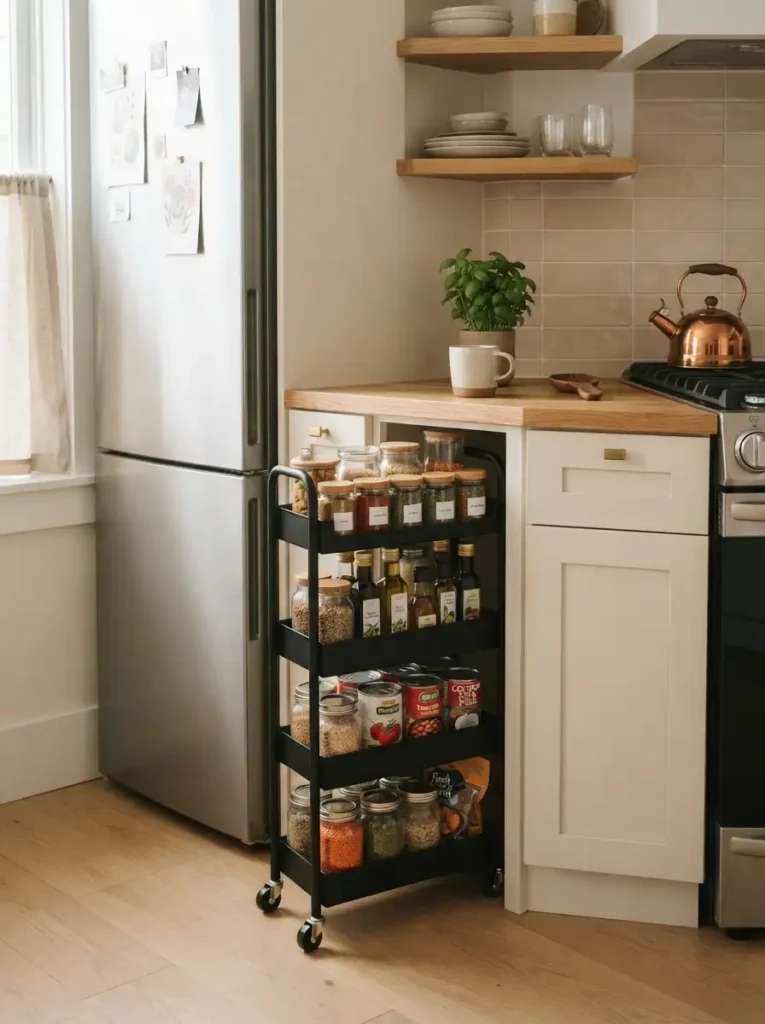
Ever stared at that narrow space beside your refrigerator and wondered what on earth you could do with it? A slim rolling cart can turn that useless gap into serious storage.
Choose a cart that fits tightly between your appliances or cabinets. Use each level for spices, oils, canned goods, coffee supplies, or baking ingredients.
The wheels make the cart even more useful because you can pull it out when you need something and slide it away afterward. FYI, that tiny gap you ignored for years might actually become your favorite storage spot.
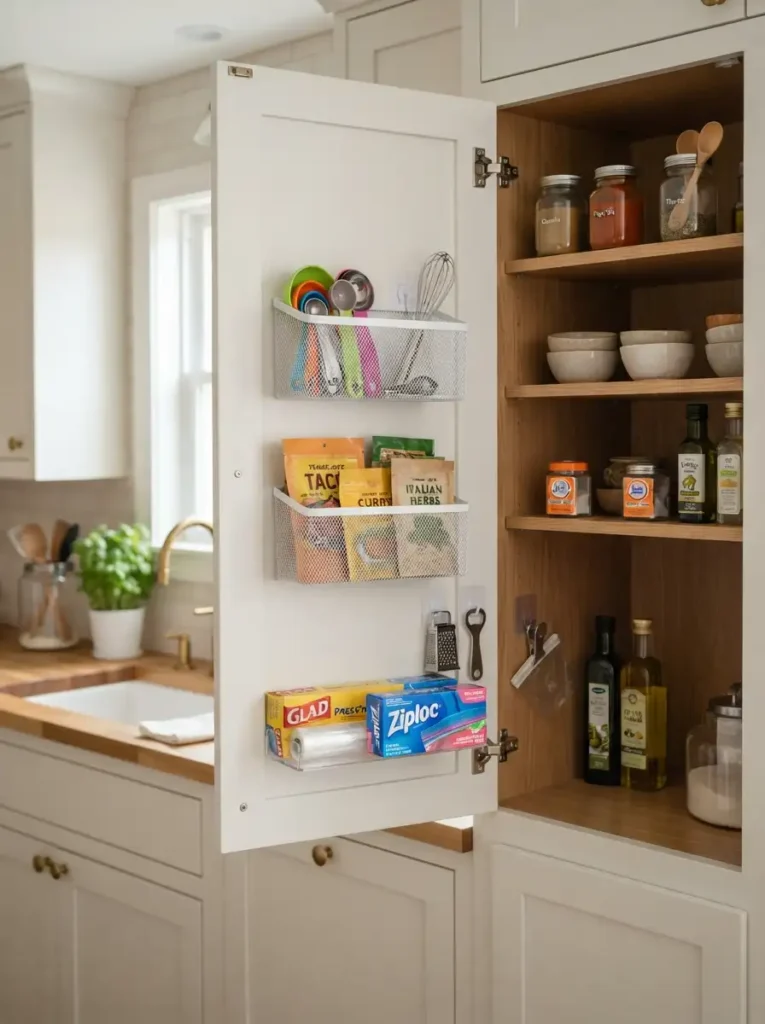
3. Make the Most of Cabinet Doors
Cabinet doors offer hidden storage that many people completely overlook. Add small adhesive bins, racks, or hooks to the inside of the doors and create a discreet spot for smaller items.
You can store:
- Measuring spoons
- Pot lids
- Cleaning supplies
- Spice packets
- Plastic wrap
- Sandwich bags
Use cabinet-door storage for lightweight items, especially if you rely on adhesive organizers. Nobody wants a storage basket crashing down every time they open the cabinet.
4. Install a Magnetic Spice Rack
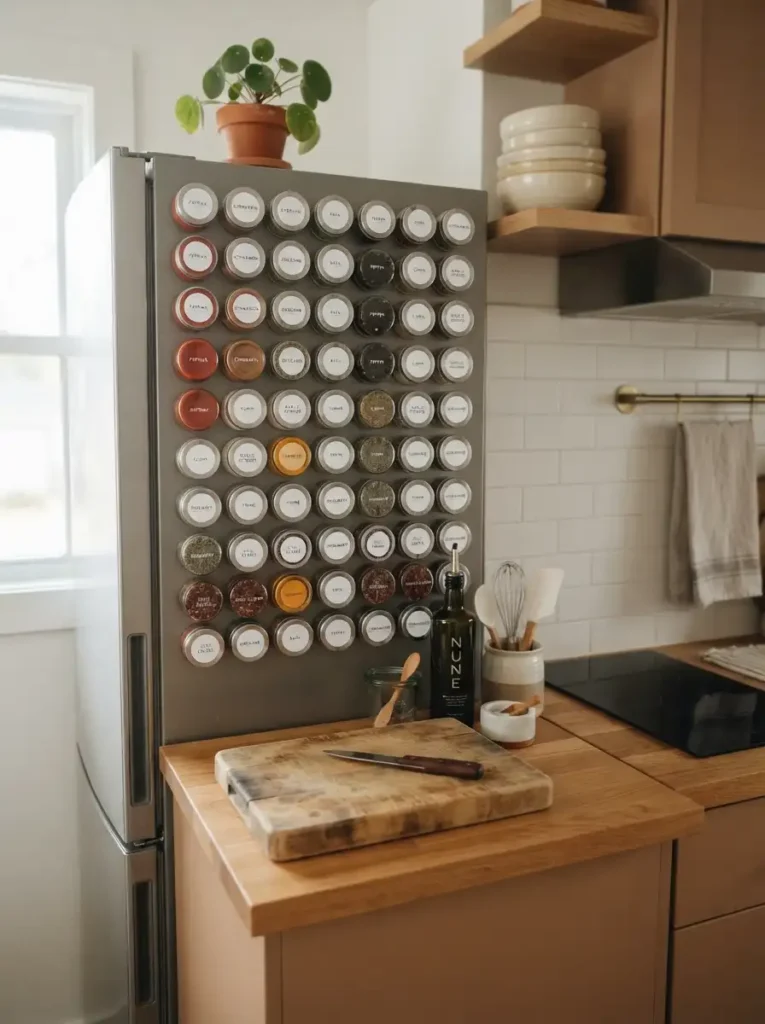
Spice jars can quickly take over a tiny kitchen. Instead of sacrificing an entire cabinet shelf, use a magnetic spice rack on the refrigerator or another suitable metal surface.
Small magnetic containers keep your spices visible and easy to grab. Arrange them alphabetically or group them by the spices you use most.
Does it look more organized? Absolutely. Does it also save you from digging through six nearly identical jars to find paprika? Even better.
5. Use Stackable Containers
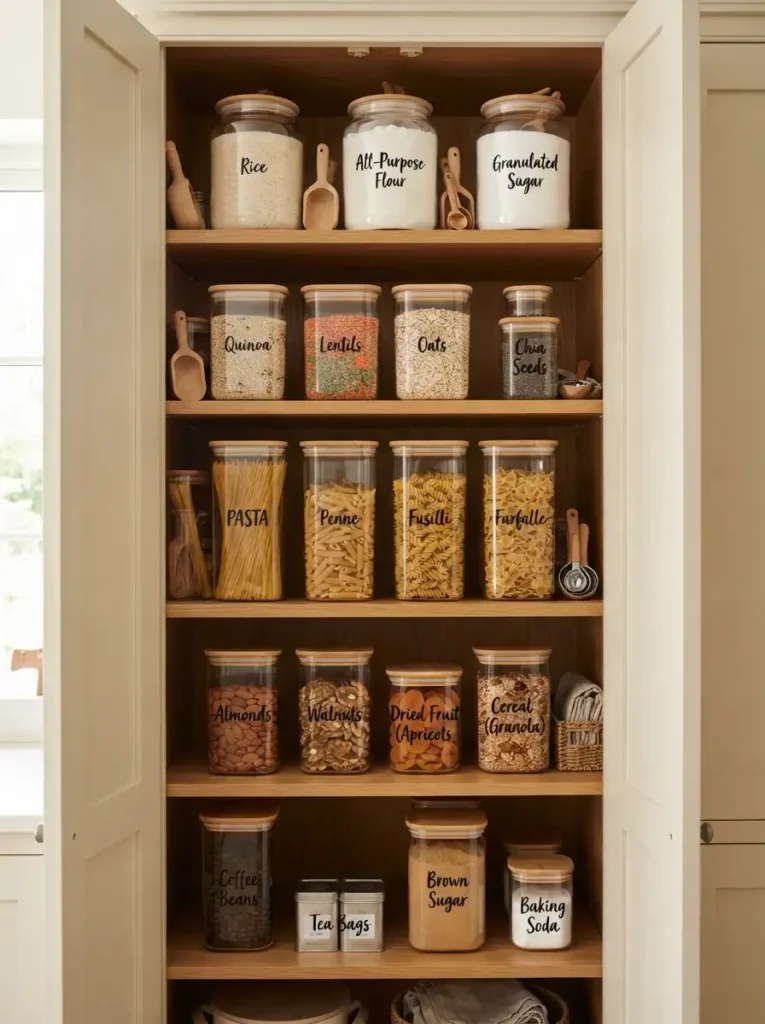
Tiny kitchens benefit enormously from vertical storage. Stackable containers let you use the full height of your cabinets instead of leaving empty air above every item.
Choose containers with similar shapes and sizes so they stack neatly. Clear containers also make it easier to see what you have before you buy another bag of rice you definitely did not need.
For the best results, use them for:
- Pasta
- Rice
- Flour
- Sugar
- Cereal
- Snacks
Uniform containers instantly make a small pantry look calmer and more organized.
6. Turn a Corner Into Useful Storage
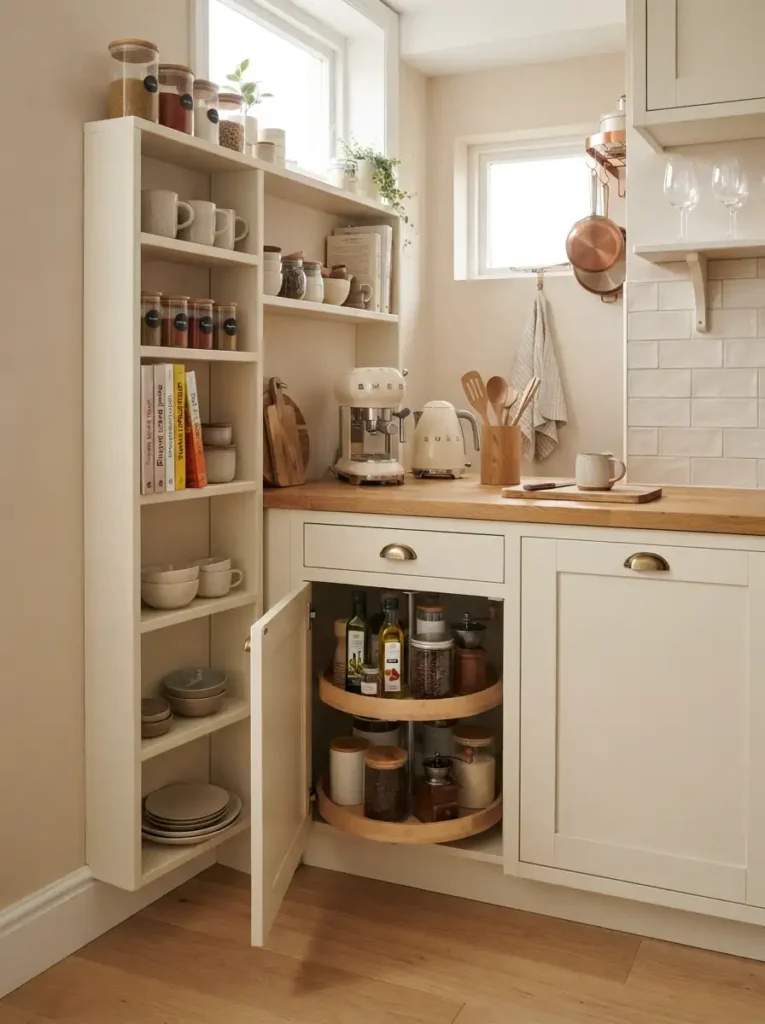
Awkward corners often become dead zones in small kitchens. Instead of letting that space collect random appliances and forgotten grocery bags, give it a specific purpose.
A corner shelf can hold coffee supplies, cookbooks, decorative dishes, or small appliances. You can also use a rotating lazy Susan inside a corner cabinet to make hard-to-reach items easier to grab.
Why reach all the way into the back when the shelf can simply spin toward you?
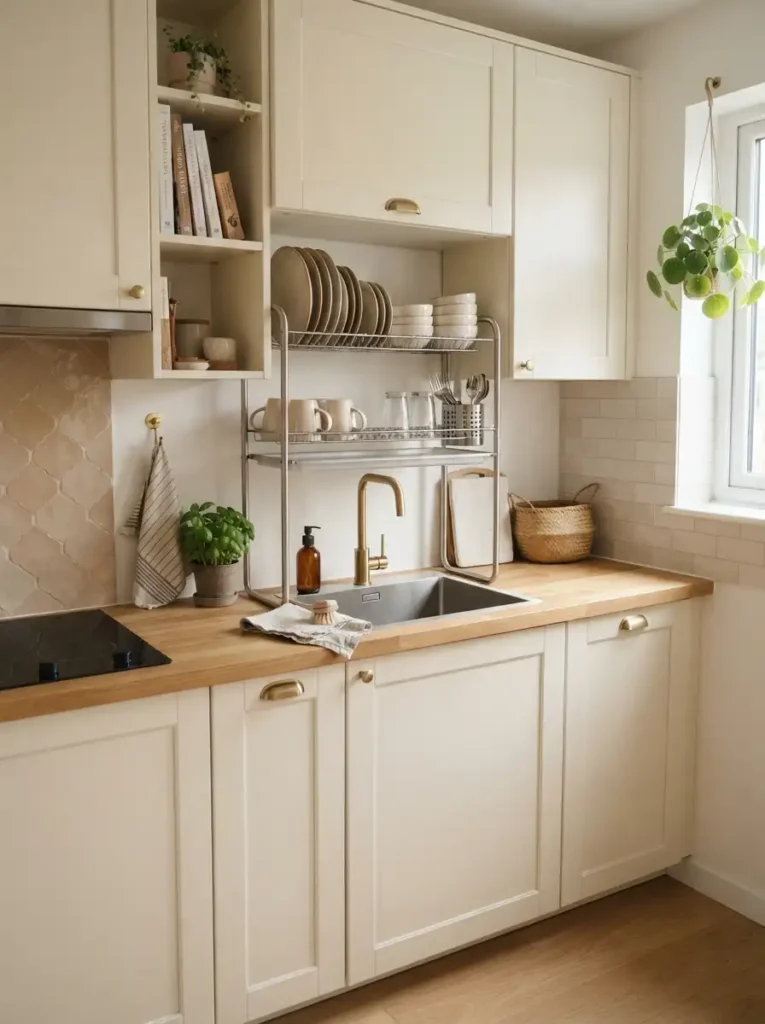
7. Choose a Compact Dish Rack
Traditional dish racks can consume an astonishing amount of counter space. In a tiny kitchen, that space matters.
Try a slim dish rack, over-the-sink rack, or roll-up drying mat instead. These options keep your sink area functional without permanently occupying valuable counter real estate.
An over-the-sink rack works particularly well because it lets water drain directly into the sink. Once your dishes dry, you can roll it up or move it aside.
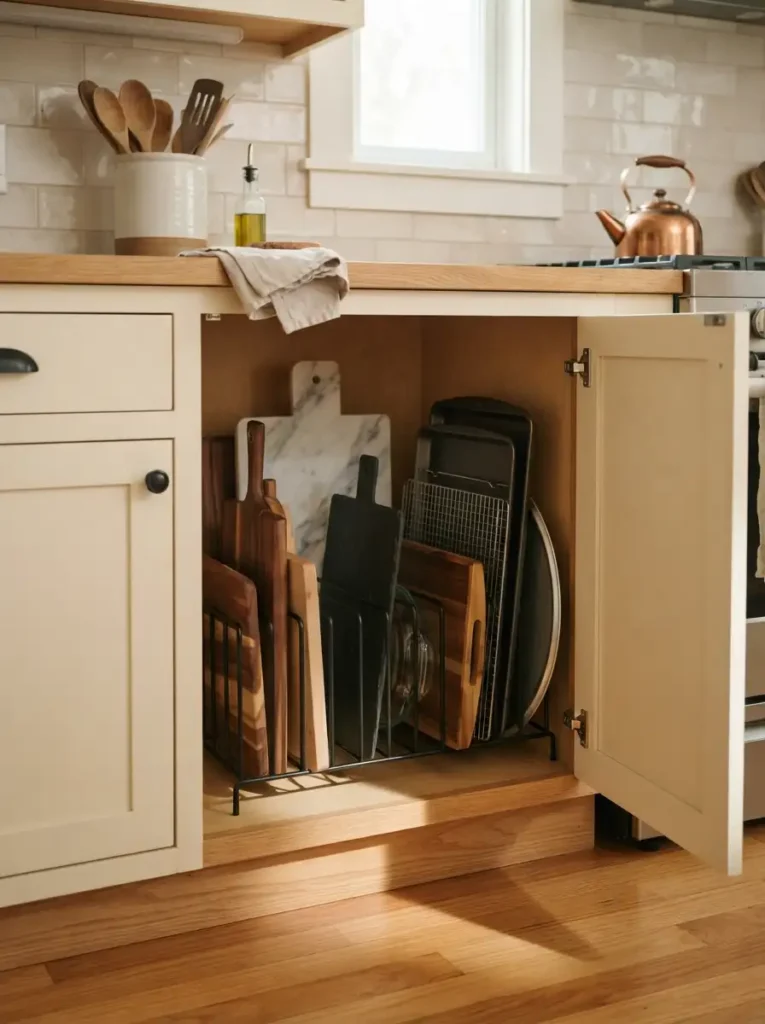
8. Store Cutting Boards Vertically
Laying cutting boards flat inside a cabinet wastes space. Stand them upright instead.
Use a simple divider or narrow rack to keep cutting boards, baking sheets, and serving trays organized vertically. Vertical storage makes these awkward items much easier to grab.
I prefer this method because you can see every board immediately. No more pulling out five pans just to reach the one hiding underneath.
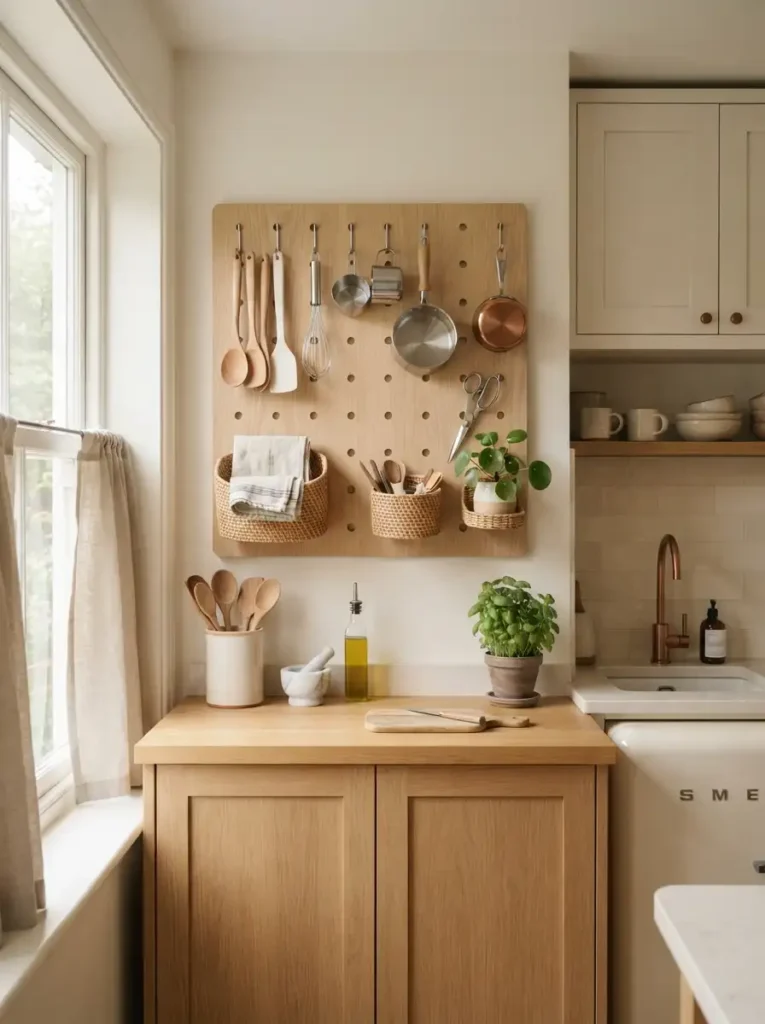
9. Use a Pegboard for Flexible Storage
If you want an organization system that can change with your needs, consider a pegboard. You can customize the hooks and shelves based on the items you actually use.
Hang measuring tools, utensils, small pans, or baskets from the board. As your storage needs change, simply move the hooks around.
This approach works especially well for renters or anyone who doesn’t want to commit to permanent shelving. Flexible storage gives a tiny kitchen room to adapt.
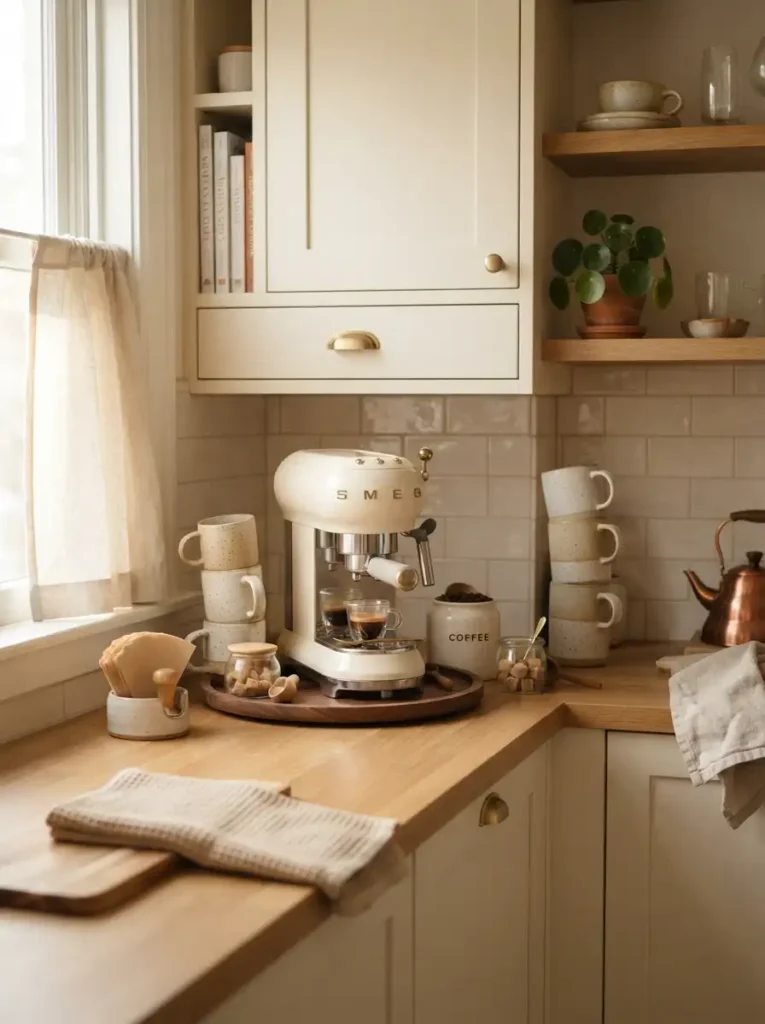
10. Create a Dedicated Coffee Station
Coffee supplies tend to spread everywhere in a small kitchen. Mugs sit beside the machine, sugar takes over another corner, and somehow coffee filters end up in a completely unrelated drawer.
Give everything a dedicated zone instead.
Use a narrow shelf, small tray, or compact cabinet section for:
- Coffee beans or grounds
- Mugs
- Sugar
- Filters
- Spoons
- Your favorite syrup
A small tray can also keep everything visually contained. That simple boundary makes the counter look much tidier.
11. Install Under-Cabinet Storage
Look underneath your upper cabinets. That unused area can provide surprisingly useful storage.
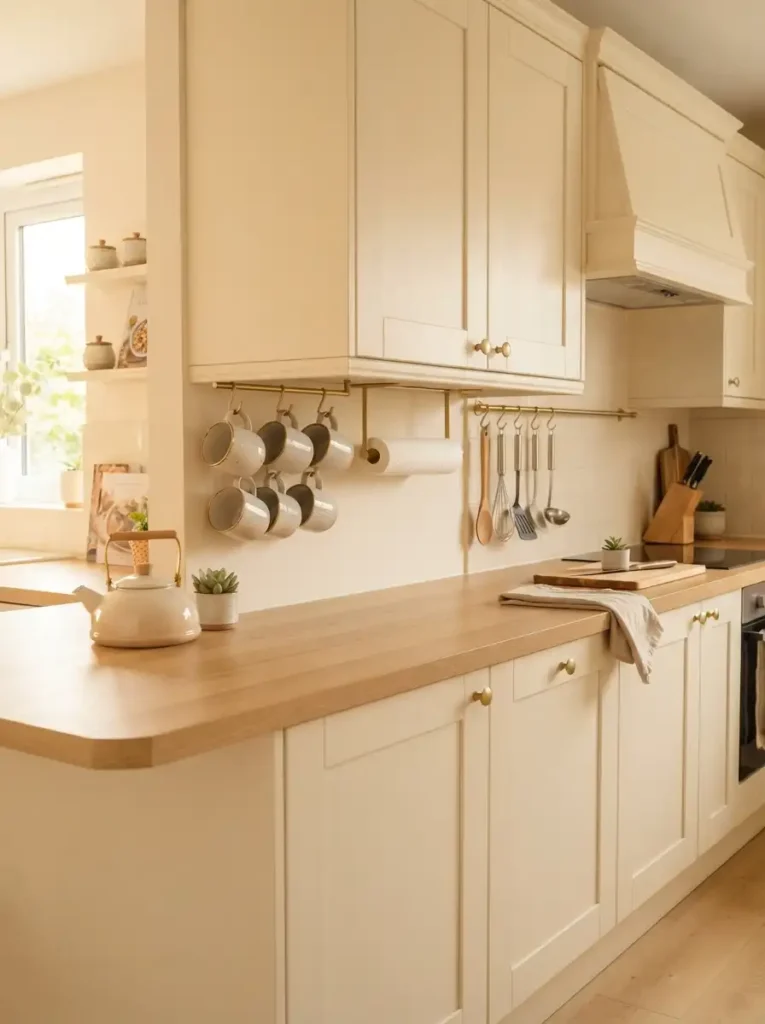
You can add an under-cabinet mug rack, paper towel holder, stemware rack, or small shelf depending on your layout. These solutions keep frequently used items accessible without stealing counter space.
Just avoid filling every inch. A tiny kitchen can quickly feel overwhelming when every surface holds something.
IMO, the best organization systems leave a little breathing room.
12. Declutter Before Adding More Storage
Here’s the organization tip nobody loves: sometimes the problem isn’t storage—it’s too much stuff.
Before buying another organizer, open every cabinet and ask yourself when you last used each item. Do you really need three vegetable peelers? What about that giant serving platter you use once every four years?
Start with the items you rarely use and remove anything broken, duplicated, or unnecessary.
A simple rule can help:
- Keep what you use regularly.
- Store seasonal items elsewhere.
- Donate duplicates.
- Recycle or discard damaged items.
- Keep counters as clear as possible.
More storage cannot fix a kitchen overloaded with things you never use.
How to Make a Tiny Kitchen Feel Bigger
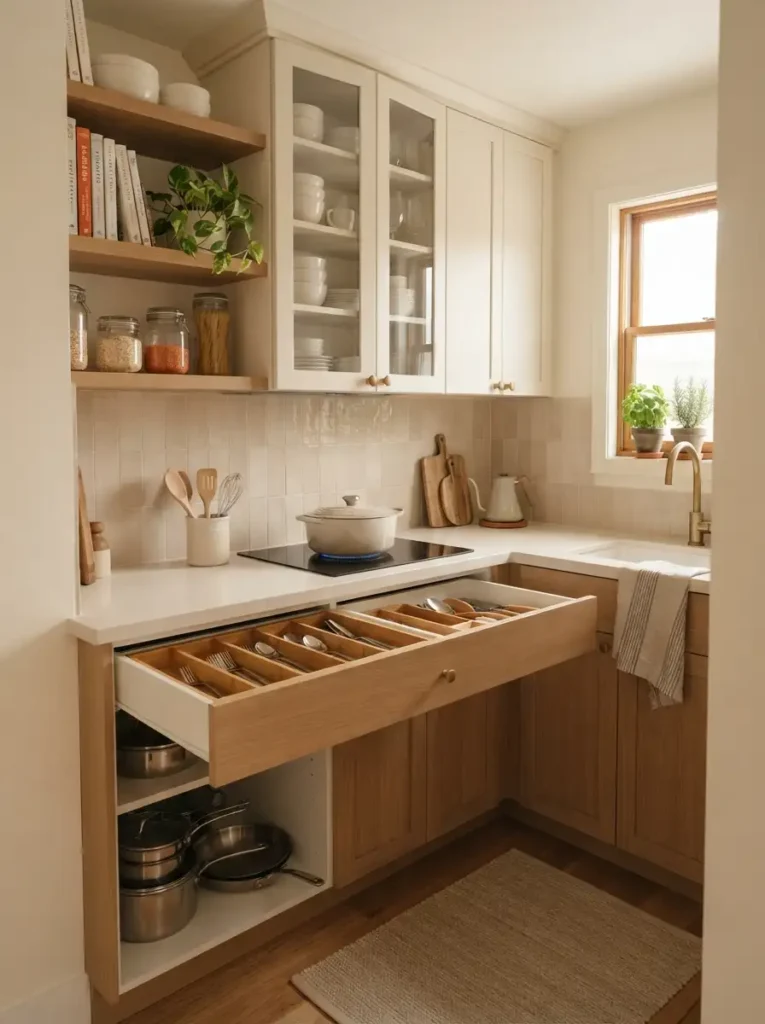
Organization does more than create storage. It can also make a tiny kitchen look and feel more spacious.
Start by keeping your most-used countertops clear. Store bulky appliances inside cabinets when possible and leave only the appliances you use daily on display.
You can also create a cleaner visual appearance by grouping similar items together. For example, keep cooking oils near the stove and baking supplies together in one cabinet.
A clear countertop instantly makes a small kitchen feel calmer.
Smart Storage Rules for Small Kitchens
You don’t need dozens of complicated organizing products to keep your kitchen under control. A few simple habits can make a much bigger difference.
Try these rules:
- Use vertical space first.
- Give every frequently used item a permanent home.
- Store similar items together.
- Keep heavy items on lower shelves.
- Use clear containers when they genuinely improve visibility.
- Avoid buying organizers before measuring your space.
- Keep your countertop as open as possible.
- Remove duplicates regularly.
Ever notice how quickly a freshly organized kitchen becomes messy again? That usually happens because the system takes too much effort to maintain.
Choose organization methods that make putting things away easier than leaving them out. That small detail can make all the difference.
Small Kitchen Organization Mistakes to Avoid
Even a good storage system can create problems if you overdo it. Filling every wall with shelves might give you more storage, but it can also make the room feel visually cramped.
Avoid oversized organizers that consume more space than they save. Also, don’t store everyday items in places that require three steps to reach them.
Think about how you actually cook. Your storage should follow your habits, not force you to completely change them.
For example, keep your favorite pan near the stove rather than hiding it at the back of a cabinet simply because the cabinet looks prettier that way. Pretty matters, but practical wins.
Final Thoughts
A tiny kitchen doesn’t need to feel chaotic or cramped. With the right approach, you can turn unused walls, cabinet doors, corners, and narrow gaps into genuinely useful storage.
The biggest improvement often comes from combining several small changes rather than relying on one dramatic solution. Use vertical space, reduce clutter, organize by function, and keep everyday essentials easy to reach.
So before you start dreaming about knocking down walls or moving into a mansion just for a bigger pantry, look around your kitchen one more time. You might already have all the space you need—you just need to use it smarter.